Palác šlechtičen: A Baroque Palace and Museum in Brno


Site at a Glance
- Rating
- 4.5
- Popularity
- Very Low
- Country
- Czechia
- Primary era
- Early Modern
- External website
- Open
- Eras represented
- Early Modern
- Civilizations
- Habsburg, Holy Roman Empire
- Site type
- Civic
- Remains
- Palace
On this page7 sections
History
Palác šlechtičen, also known as the Palace of Noblewomen, is a Baroque palace in Brno, Czechia, founded by the widowed Countess Johanna Franziska Priska von Magnis as an institution for educating girls from noble families. Formally called the Institute of the Presentation of the Virgin Mary, it was established in 1654 and later served orphaned girls from both noble and bourgeois families. The palace was built in the late seventeenth century, with the work attributed to the Brno architect and builder Jan Křtitel Erna.
Foundation and construction
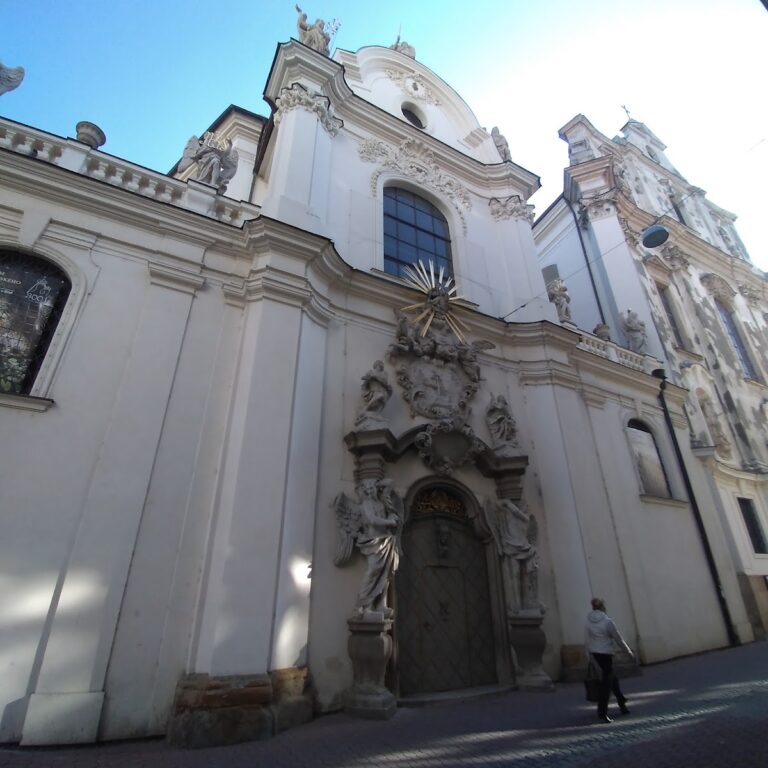
Johanna Franziska Priska von Magnis died in 1655. Her testament was first entrusted to Maximilian von Dietrichstein, who also died that year, after which his son Ferdinand von Dietrichstein took responsibility for carrying out the foundation project. Ferdinand’s role is commemorated in a cartouche, an ornamental framed panel, above the palace portal.
In 1669, Ferdinand von Dietrichstein purchased Waldstein Palace. After that building was demolished, the present Palác šlechtičen was constructed on its site. The institution’s religious character was expressed by its chapel, where Bishop Karl II von Liechtenstein-Kastelkorn celebrated Mass in 1680.
Chapel, expansion, and wartime damage
Between 1751 and 1756, the chapel received late-Baroque frescoes by the painter Josef Stern. In 1790–1791, the architect Václav Jan Eitelberger enlarged the palace by adding another storey and connecting it with the neighboring Althanský Palace.
American bombing severely damaged the Althanský Palace in 1944, and it was demolished in 1948. The demolition of Palác šlechtičen was also initially planned, but the building was preserved during the 1950s as a valuable historic structure and transferred to the Moravian Land Museum.
Adaptation as a museum
Bohuslav Fuchs designed the palace’s reconstruction for museum use while retaining its historic appearance. The principal rebuilding took place from 1957 to 1960. In 1961, the ethnographic permanent exhibition People in Five Generations opened and remained in place, with minor changes, until autumn 1999.
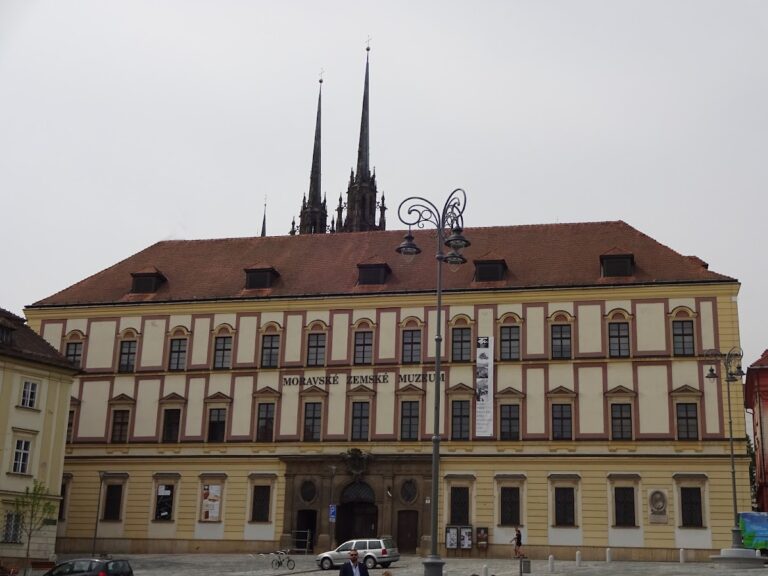
A further reconstruction was carried out from 2000 to 2002. From 2003, the palace hosted temporary exhibitions, public lectures, and concerts. It later underwent another period of reconstruction connected with the preparation of two permanent exhibitions. Palác šlechtičen houses the ethnographic branch of the Moravian Land Museum, a major institution responsible for historical, ethnographic, archaeological, and natural-history collections relating especially to Moravia. The palace has been protected as a cultural monument since 1958, and a commemorative plaque records its designation as a national cultural monument.
Remains
Palace exterior and layout
The Baroque palace stands in central Brno near Freedom Square, on Kobližná Street. It was originally a one-storey building with a portal opening onto the street. The 1790–1791 enlargement added another storey and physically linked the palace to the adjacent Althanský Palace. That neighboring building was later demolished after the wartime damage, while Palác šlechtičen survived and was adapted for museum requirements.
Chapel interior
The palace contains a chapel dedicated to the Presentation of the Virgin Mary, a Christian feast commemorating Mary’s presentation at the Temple. Its interior includes late-Baroque fresco decoration by Josef Stern, an altar, and an organ. The reconstruction designed by Bohuslav Fuchs preserved the building’s historic appearance while adapting its spaces for museum use.