Palác Chlumeckých: A Nineteenth-Century Urban Palace in Brno
Site at a Glance
- Rating
- 4.6
- Popularity
- Very Low
- Country
- Czechia
- Primary era
- Modern
- External website
- Open
- Eras represented
- Modern
- Civilizations
- Austrian Empire, Habsburg
- Site type
- Civic
- Remains
- Palace
On this page7 sections
History
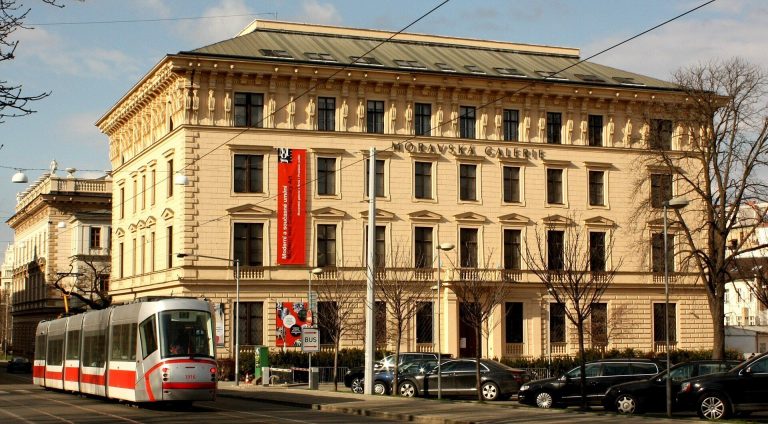
Palác Chlumeckých is a nineteenth-century urban palace in Brno, Czechia, built in the mid-nineteenth century in a Classical or Neo-Renaissance style on the site of four medieval burgher houses. The building was commissioned for Anna Chlumecká, its first owner, whose husband Anton Johann Ritter von Chlumetzky was a court councillor, a senior official in a court or central administrative institution, and a large-estate owner.
Construction and nineteenth-century uses
From 1852, the new palace housed the Chamber of Commerce and Trades. The Military Provincial Court joined it in 1856, while the German Ruprecht Commercial School operated in the building from 1853 to 1897. A singing and reading association for workers and tradespeople, founded at the end of 1867, was also active there.
Ownership passed in 1885 to Anna Chlumecká’s two daughters, Terezie von Amberg and Emilie von Fiedler, both born Chlumecká. The palace consequently combined private ownership with a succession of commercial, educational, military, and civic functions.
Journalism and twentieth-century activity
The editorial office of Lidové noviny moved into the building from Běhnouská Street and remained there from 1907 to 1942. In 1928, Rudolf Těsnohlídek, a Czech writer, poet, and journalist, died by suicide in the editorial office. Bricht’s Café operated on the ground floor from 1910, and before the later reconstruction the same level also contained the Středověká krčma pub and restaurant.
Reconstruction and protection
The company Magnum bought the palace in 2011 and began reconstructing it in 2012, when the building was in critical condition. The work moved the atrium, an interior open or roof-lit courtyard, two storeys upward from the ground floor, thereby increasing the commercial space. It also transferred the principal entrance from Česká Street to Jakubská Street and created underground garages. The palace opened to the public at the end of April 2014 and is protected as a cultural monument of the Czech Republic, a legally protected heritage property recognized for historical, architectural, or artistic importance.
Remains
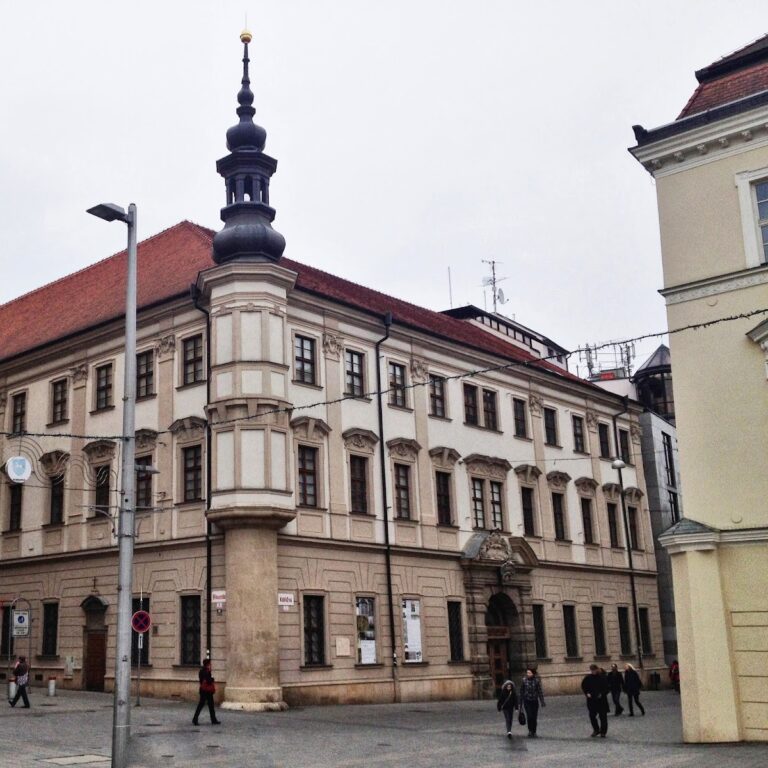
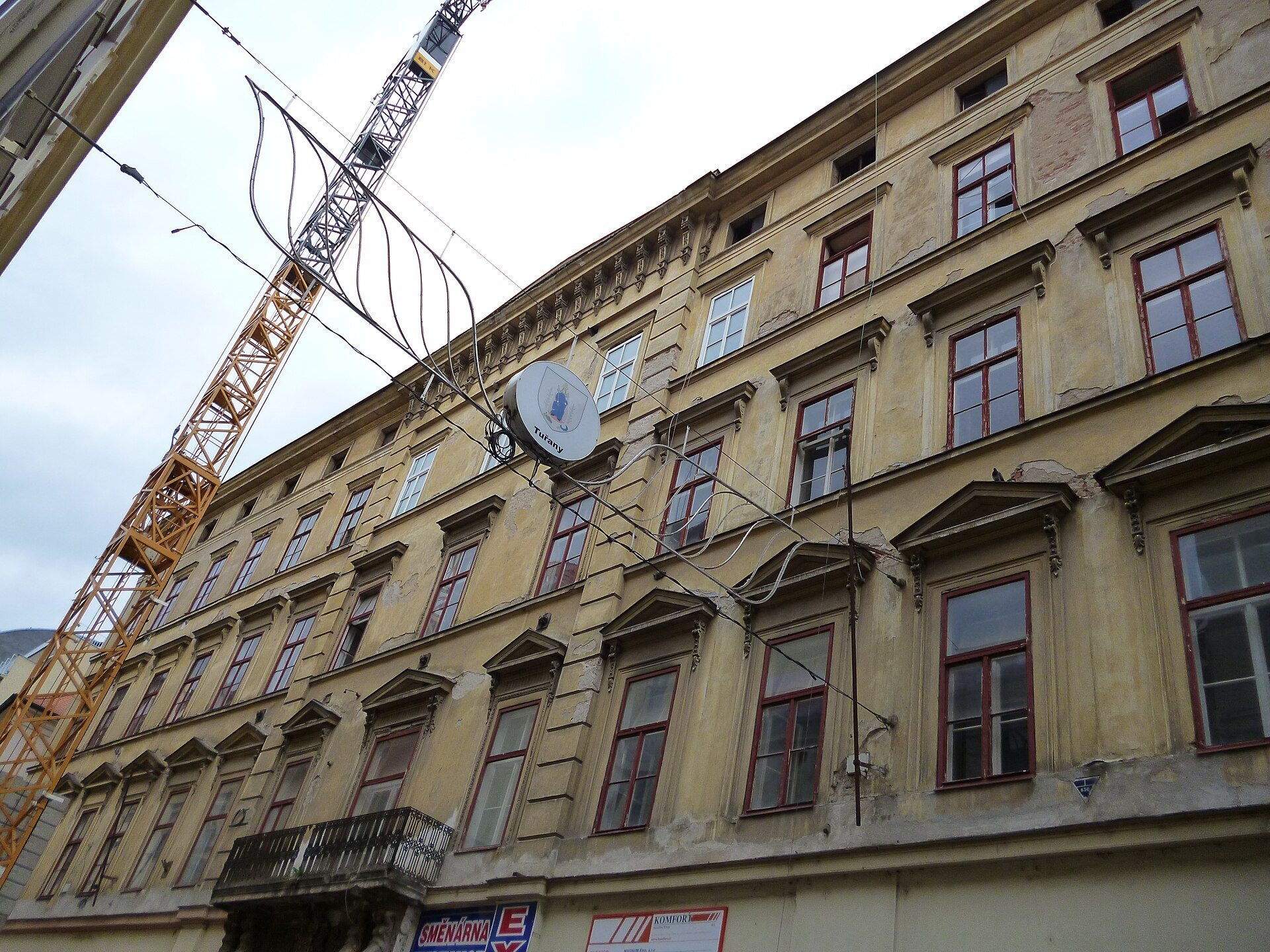
Palác Chlumeckých stands at the corner of Česká Street and Jakubská Street in central Brno, at Česká 156/6 and Jakubská 156/2. The surviving tenement building follows a Classical or Neo-Renaissance design and incorporates the site of four earlier medieval burgher houses. Its historic fabric includes the original entrance portal on Česká Street, while the former courtyard was transformed into an interior atrium during the reconstruction.
Street elevations and entrance portal
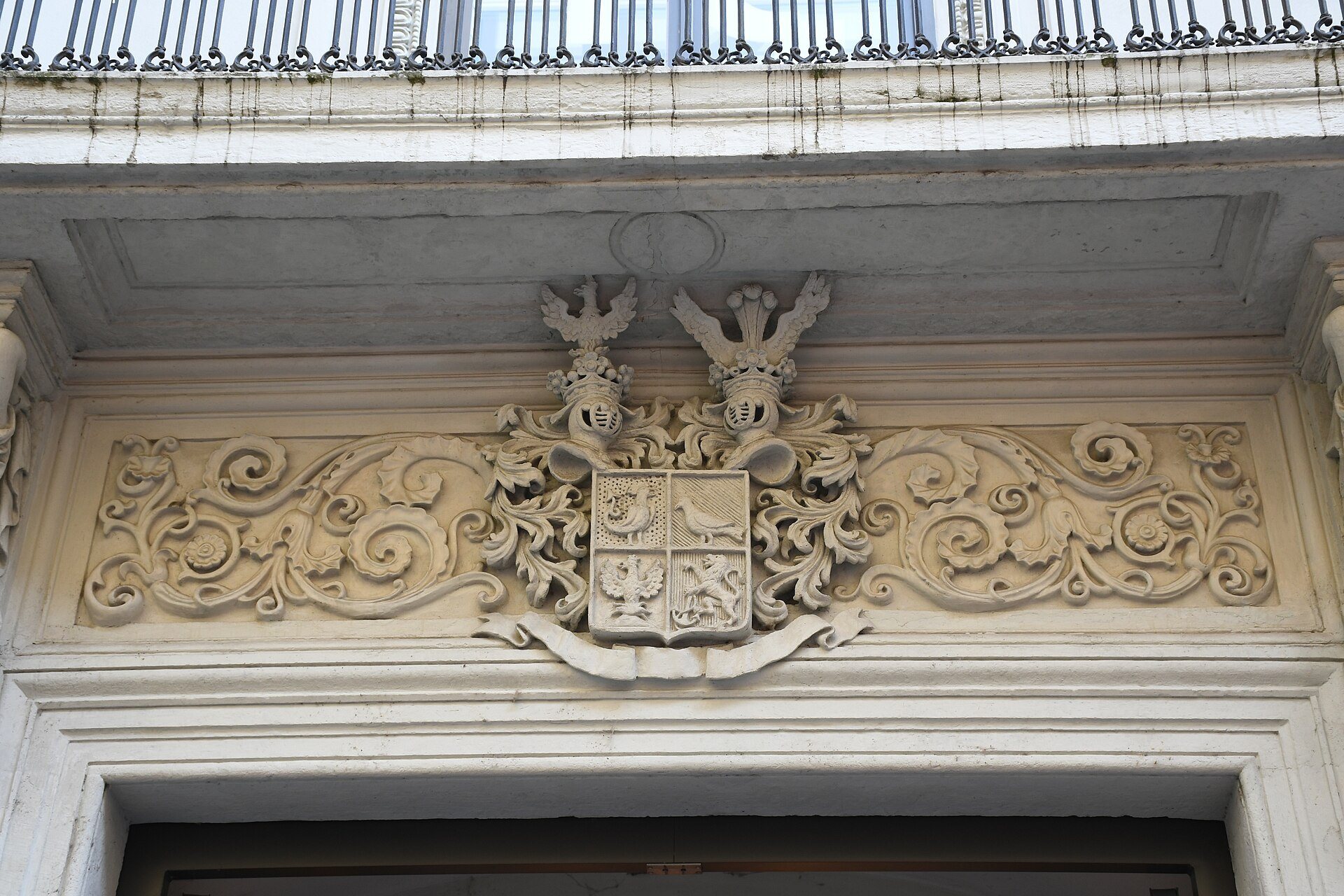
The palace presents its urban form at the junction of Česká and Jakubská streets. The original portal on Česká Street carries the coat of arms of the Chlumecký family. Although the principal entrance was relocated to Jakubská Street during the reconstruction, the older portal remains a visible element of the building’s nineteenth-century identity.
Courtyard atrium and Saint Anne
A late-Classical statue of Saint Anne stands on a courtyard wall. In Christian tradition, Saint Anne is the mother of the Virgin Mary. When the courtyard was converted into an atrium, the statue was intended to be raised by half a storey. Its poor technical condition made disintegration likely, so it was left in place. A newly built gallery, an elevated passage giving access to rooms or spaces, was therefore arranged around it. Fire-safety authorities rejected interrupting the gallery, while heritage authorities approved a final design containing a short glazed section that allowed the walkway to pass the statue.