Prinzesshof: An Aristocratic Palace and Museum in Itzehoe, Germany

Site at a Glance
- Rating
- 4.4
- Popularity
- Very Low
- Country
- Germany
- Primary era
- Early Modern
- External website
- Open
- Eras represented
- Early Modern, Modern
- Civilizations
- Danish, Holy Roman Empire
- Site type
- Domestic
- Remains
- Palace
On this page8 sections
History
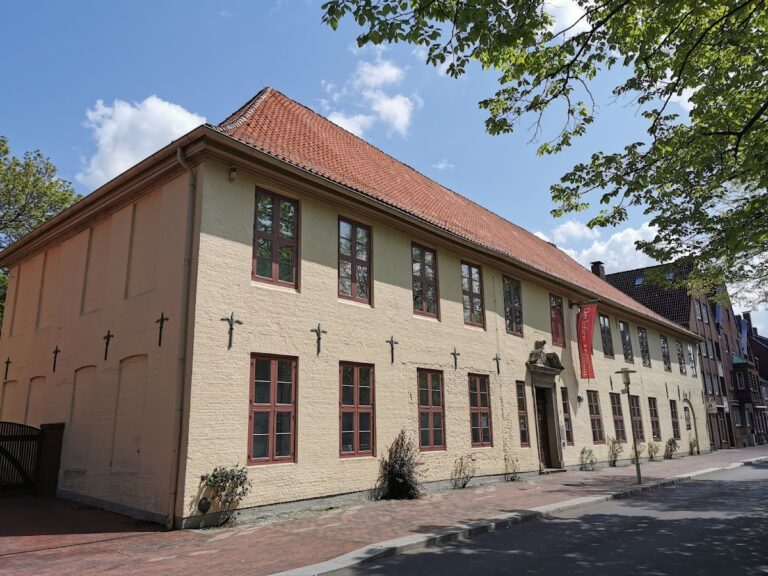
Prinzesshof is a former aristocratic palace in Itzehoe, Germany, whose oldest building parts date from the sixteenth century. Built and developed under successive local and noble residents, it is regarded as the city’s most important secular building. The palace served both as a residence and as an administrative seat before becoming a museum.
From monastery residence to Thienenhof
A building on the site was first recorded in 1556 as a residence belonging to the Itzehoe monastery. In 1569, Otto von Thienen, the Amtmann, an official who governed a district and could use an official residence as both home and workplace, acquired the property. He built a semi-detached house and renamed the complex Thienenhof. The von Thienen family lived there for approximately 80 years.
Prinzesshof was one of the few buildings in Itzehoe to survive the Thirty Years’ War largely undamaged. This major European conflict, fought from 1618 to 1648, brought warfare, occupation, and destruction to many towns and buildings in the German lands.
Expansion and changing ownership
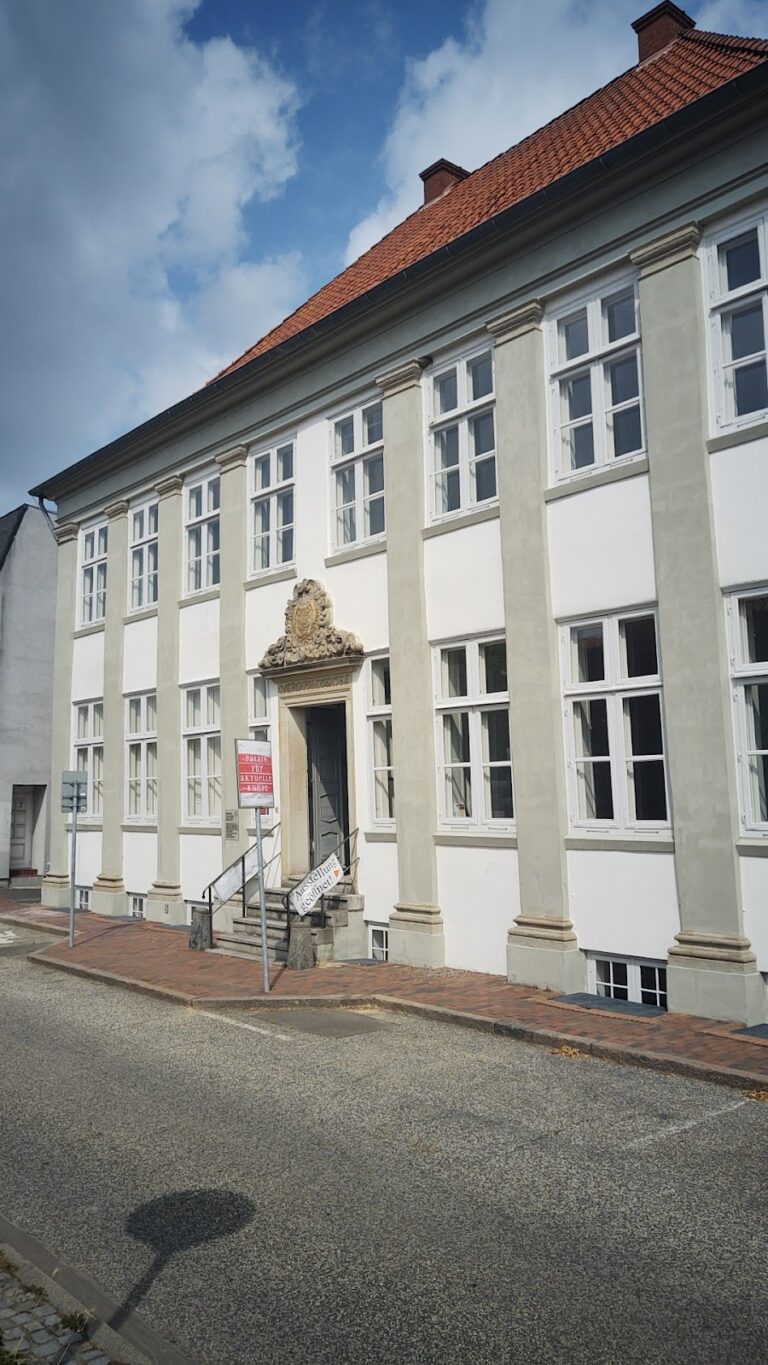
In 1674, under Amtmann Niklas von Brüggemann, the building was enlarged by approximately one third. Its central portal was redesigned in the Baroque style, known for elaborate entrances and strong visual emphasis, and the palace received a tall hipped roof that slopes down on all four sides.
Until the beginning of the nineteenth century, the palace was repeatedly remodeled and its furnishings were renewed to suit the changing needs of its residents. Several Amtmänner used it as both their home and administrative seat. It later belonged to the aristocratic Blome family and to Count Rochus Friedrich zu Lynar.
Princesses and later institutional use
From 1807, Prinzesshof briefly became the residence of Elector Wilhelm I of Hesse-Kassel. An elector was a prince entitled to participate in the election of the Holy Roman Emperor. Wilhelm had fled into exile because of Napoleon.
After 1810, the palace acquired a Classicist ballroom. Classicism drew on the forms and proportions associated with ancient Greece and Rome. The building then became the residence of various princesses, giving it its present name. Three abbesses of the Itzehoe convent for noblewomen lived there in succession: Juliane of Hesse-Kassel from 1810 to 1860, Luise from 1860 to 1894, and Marie of Schleswig-Holstein-Sonderburg-Glücksburg from 1894 to 1941. Juliane was the daughter of Karl of Hesse-Kassel, the governor of Holstein.
The city of Itzehoe purchased Prinzesshof in 1958. The building briefly housed the Social Court and the district farmers’ association. In 1964, the district museum received several rooms there and was gradually integrated into the palace. A complete renovation began in 1984.
The palace as a museum
The Kreismuseum Prinzeßhof presents the history of Steinburg district, with the palace itself forming part of that history. Its displays include historical domestic culture, the estate of the Low German writer Johann Hinrich Fehrs, and the cement industry, which was formerly important in Itzehoe and remains important in neighboring Lägerdorf. The museum also presents temporary exhibitions on changing subjects.
Remains
Prinzesshof is an aristocratic palace composed of building parts originating in the sixteenth century and later additions. The 1569 rebuilding created a semi-detached house, while the enlargement of 1674 extended the complex by about one third. The tall hipped roof and centrally placed Baroque portal belong to the palace’s later seventeenth-century appearance. A Classicist ballroom added after 1810 reflects another phase in the building’s architectural development.
Interior museum rooms
The palace contains rooms used for museum displays. A Biedermeier room presents domestic culture and furnishings associated particularly with the period after the Napoleonic Wars. The Fehrs Room contains the estate of Johann Hinrich Fehrs, a nineteenth- and early twentieth-century writer known for literature in Low German.
Prinzeßhofpark
Prinzeßhofpark directly adjoins the museum. It was redesigned from 2006 to 2008, when three sculptures made of Corten steel were installed. This weathering steel develops a stable protective rust-colored surface. Designed by Anthony Newsom, the sculptures represent the women after whom the park was named.
Nearby sites