Château de Brou: A Fifteenth-Century Château in France


Site at a Glance
- Rating
- 4.8
- Popularity
- Low
- Country
- France
- Primary era
- Medieval
- External website
- Open
- Eras represented
- Medieval, Modern
- Civilizations
- French
- Site type
- Domestic
- Remains
- Castle
On this page9 sections
History
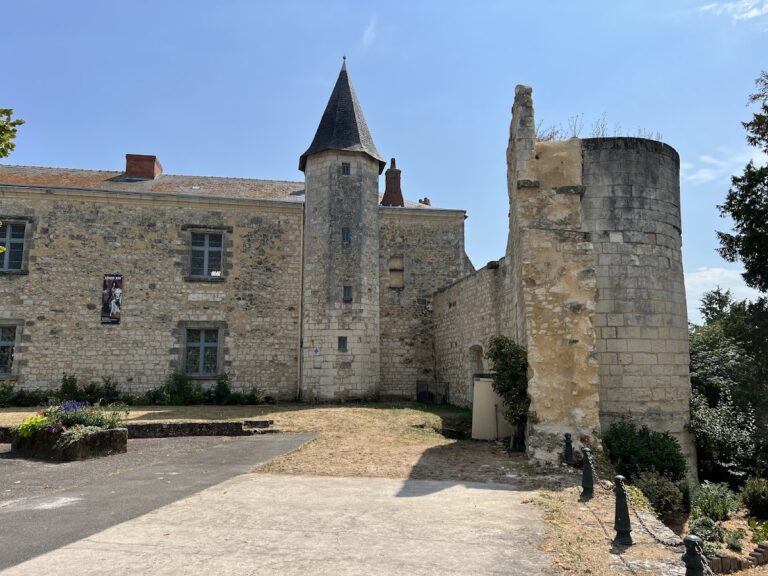
Château de Brou is a fifteenth-century château in France, located in Noyant-de-Touraine in Indre-et-Loire. Chevalier François de Gebert, Lord of Noyant and Le Rivau, had it built in 1475 on the site of a thirteenth-century fortress belonging to Guillaume de Chergé. The new building was created as a residence, while the earlier defensive site survived in part through a cylindrical tower and sections of its enclosure wall.
The de Gebert family
The de Gebert family retained Château de Brou until 1813. Among its recorded owners was Jean de Gebert, a marshal of the king’s camp, a senior military officer, in 1571. Gabriel de Gebert, treasurer of France in the généralité of Tours, held the property in 1680. This office involved financial administration within a major royal district. In 1748, ownership was associated with Joseph François de Gebert, captain of grenadiers in the Bourbonnais regiment, a commander of troops trained for assault operations.
The property later passed to Antoine Armand Félix d’Absac, Marquis of Mayac, after his marriage in 1746 to Louise-Magdeleine de Gebert. The château then changed hands several times in the nineteenth century. Monsieur and Madame Troncin-Mersan bought it from the Marquise de Carbonnières of La Jaulnaye at Noyant on 22 December 1860. They acquired part of the Baugé estate on 9 September 1861 and two buildings adjoining the town of Noyant on 23 October 1863, partially reconstituting the former fifteenth-century estate of Brou. On 27 October 1865, they sold the château to the Marquis and Marquise de Moges.
The Moges restoration
Between 1866 and 1868, the Marquis and Marquise de Moges undertook major restorations that gave Château de Brou the architectural appearance it retains today. French heritage authorities stated that this work certainly prevented the château from being at least entered in the supplementary inventory of historic monuments. After the Marquise de Moges died on 29 May 1900 and the Marquis on 11 February 1903, the male line of the family became extinct.
The Little Gardeners of Brou
Around 1906, at the initiative of Abbé Brault, parish priest of Noyant, Ida des Acres de l’Aigle and Madame de Chézelles established an orphanage with a horticultural vocation. Known as the Work of the Little Gardeners of Brou, it brought a new educational and institutional use to the estate. Additional buildings were constructed for a dormitory, refectory, kitchen, and classroom.
During the First World War, Château de Brou served as an annex of the Sainte-Maure-de-Touraine hospital, with Ida des Acres de l’Aigle acting as chief nurse. By then aged and financially ruined, she transferred the château on 30 June 1950 to Les Amis des Jeunes, an organization devoted to vocational, moral, family, and domestic education. Dominican sisters, members of a Catholic religious order, continued to live at Brou with her. The château functioned as a Maison Familiale, a residential educational institution centered on family, vocational, and practical training, until 1996, when the sisters decided to sell it.
Restoration and later use
In 1997, the new owners opened Château de Brou to the public and began a complete restoration directed by a dedicated project manager. Regional firms carried out work on the stonework, painting and decoration, stained glass, and architectural lighting. The château became a hotel-restaurant in 1998. Since 2016, the estate has operated as a venue for events, filming, and photography sessions.
Remains
The château and former fortress
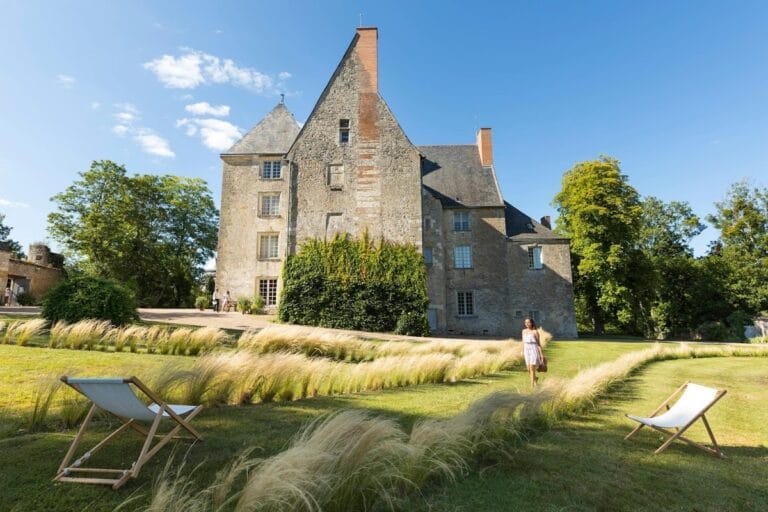
Château de Brou occupies an estate of 100 hectares and combines a fifteenth-century residential château with surviving elements of the thirteenth-century fortress that preceded it. The earlier fortification is represented by a cylindrical tower and remains of an enclosure wall. These defensive fragments preserve the outline of the site’s medieval origin, while the principal château reflects its later residential purpose.
Buildings of the horticultural orphanage
The estate also retains the historical context of the buildings added for the Work of the Little Gardeners of Brou around 1906. A dormitory, refectory, kitchen, and classroom were constructed to support the orphanage’s horticultural and educational program. Their presence records the transformation of the property from a private residence into an institution for residential training.
Restored architectural fabric
The major restoration of 1866 to 1868 shaped the château’s present architectural appearance. The comprehensive campaign begun in 1997 addressed the building’s stonework, painted and decorated surfaces, stained-glass elements, and architectural lighting. Regional stonemasons, painters and decorators, master glassmakers who succeeded Lobin, and lighting designer Bidault participated in this later work.