Château de Grillemont: A Historic Estate in France

Site at a Glance
- Rating
- 4.5
- Popularity
- Very Low
- Country
- France
- Primary era
- Early Modern
- External website
- Open
- Eras represented
- Medieval, Early Modern, Modern
- Civilizations
- French
- Site type
- Domestic
- Remains
- Castle
On this page10 sections
History
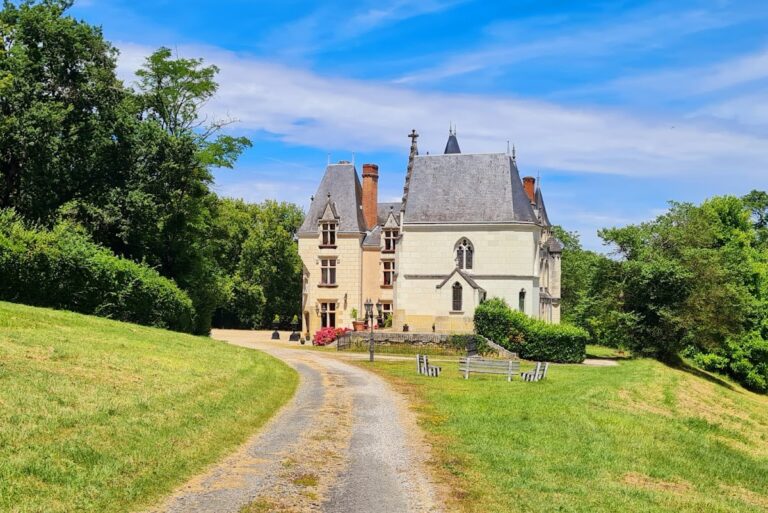
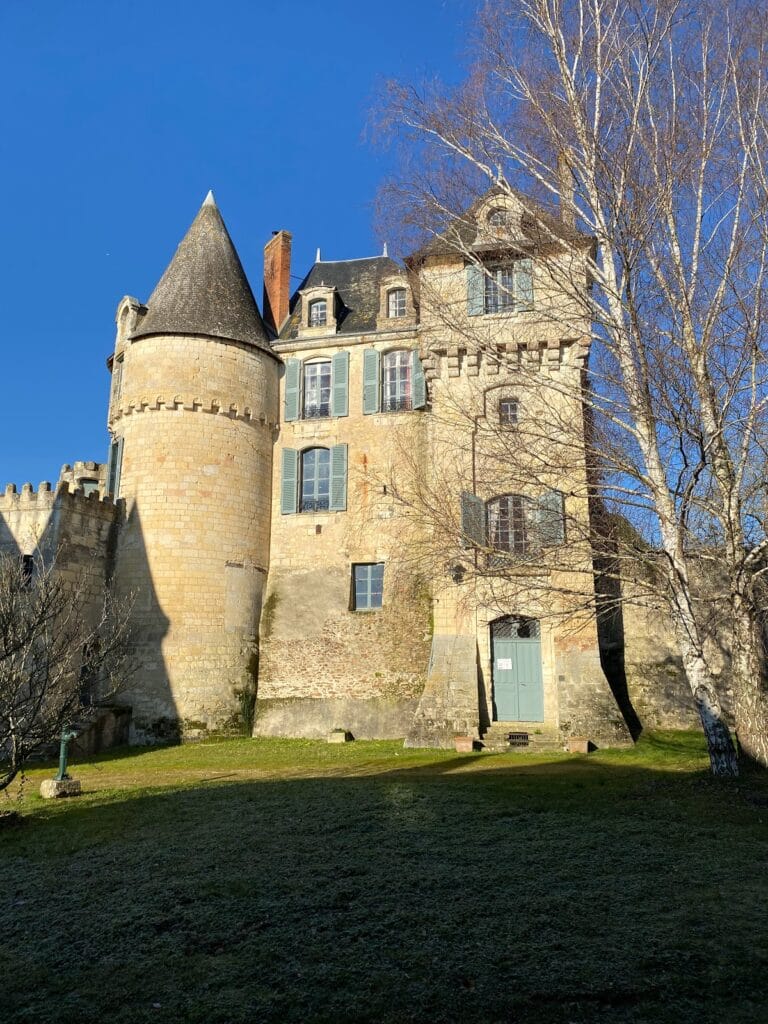
Château de Grillemont is a château in La Chapelle-Blanche-Saint-Martin, France, whose construction history extends from the fifteenth to the nineteenth centuries. Developed from a medieval fortress, it was successively associated with the Payen and d’Amboise families before passing through the hands of prominent royal officials, merchants, bankers, and landowners.
Royal connections in the fifteenth century
Around 1465, Roland de Lescoët became the owner of Grillemont. He served King Louis XI, who ruled France from 1461 to 1483, as counsellor and chamberlain, grand huntsman of France, and captain-governor of the Château de Loches. During this period, Louis XI visited Grillemont with Tristan L’Hermite and Olivier Le Daim, both prominent members of the king’s entourage. Olivier Le Daim was also a trusted royal adviser.
Changing ownership in the eighteenth century
On 13 February 1739, François Balthazard Dangé d’Orsay acquired the lordship. He was a fermier général, a private tax farmer who collected certain royal taxes under the French monarchy. In 1771, the estate passed to his nephew René-François-Constance Dangé d’Orsay, a senior general officer.
Joseph Hippolyte Collineau, a shipowner from Nantes, purchased the château in 1798. He later sold it to Louis-Auguste Pilté-Grenet, a merchant from Orléans, to finance the purchase of land in the Richelais. Pilté-Grenet subsequently exchanged Grillemont with the Count of Gasville for Château de Tracy-sur-Mer.
The Lecointre family and restoration
Gérasime Lecointre, a banker and humanist from Poitiers, acquired the estate in 1850. His son Pierre Lecointre and Pierre’s wife, Henriette Delamarre de Monchaux, later entrusted the restoration of the château to the architect Charles Guérin.
After his father’s death in 1928, Georges Lecointre, Gérasime’s grandson and a noted geologist, settled at Grillemont. Alongside his geological and paleontological work, he modernized the estate’s agricultural operations with his wife Solange and their daughter Colette. Colette, who became Countess Christian de Saint-Seine, later made Grillemont known for greyhound breeding, its cynodrome, a track for greyhound racing, and innovative dairy-goat breeding.
Wartime occupation and later status
During the Second World War, Grillemont successively accommodated a department of the Ministry of Commerce, a German army detachment with 500 horses, and reportedly barracks for German customs officers. The château also housed 846 prisoners and nuns from Saint-Gatien Hospital in Tours.
Château de Grillemont has received historic-monument protection through registrations in 1942 and 1987, followed by classification under an order dated 9 May 1989. It has been open for visits and receptions since the 1980s.
Remains
Fortified remains and courtyard layout
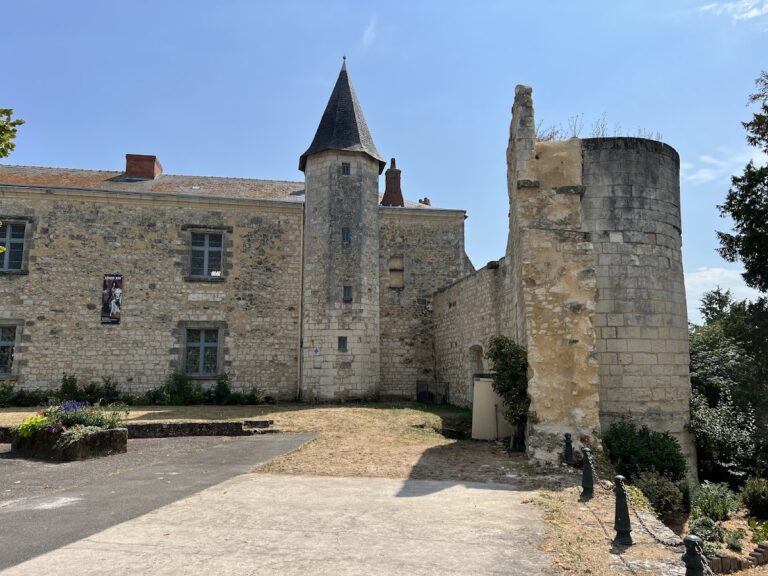
The surviving site combines fragments of a medieval fortress with the later château. Three towers and massive curtain walls remain from the earlier stronghold. Machicolations, projecting defensive structures with openings used to drop or pour objects onto attackers, survive in the history of the fortress, while those of two towers and the keep have been destroyed. The surrounding moats have been filled in.
The present château
Main courtyard
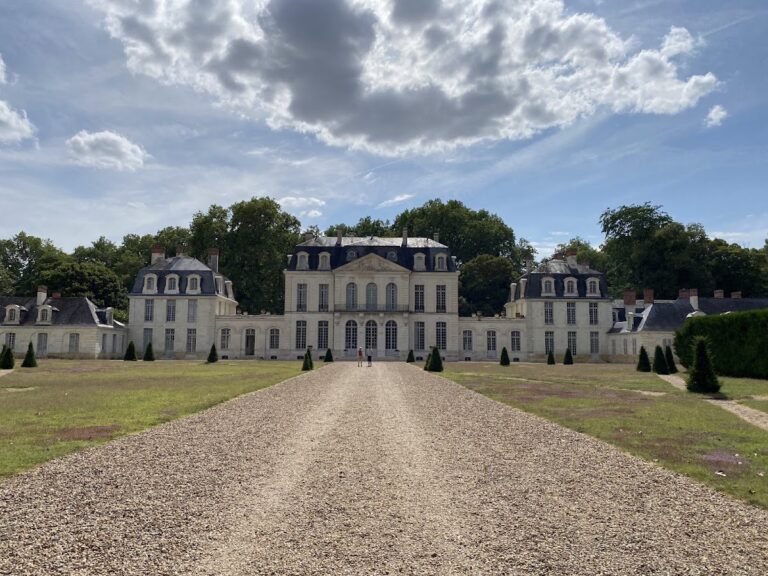
The present château is arranged around a main courtyard occupying the former site of the keep, the principal fortified tower of a medieval castle. Building ranges enclose the courtyard on three sides, while the fourth side opens toward the surrounding view and overlooks the countryside and Étang Fourché. Two small pavilions extend the lateral ranges, and the ensemble retains an eighteenth-century character when seen from the courtyard.
Service buildings and interiors
Substantial service buildings stand back to the north of the main château. They were constructed at the end of the eighteenth century and form part of the estate’s later organization. Inside the château, the music room is the most prestigious interior. Its decoration dates from the Second Empire, the French imperial regime of Napoleon III that lasted from 1852 to 1870.
Nearby sites