Elewijt Castle: From Medieval Fortress to Rubens Residence


Site at a Glance
- Rating
- 4.2
- Popularity
- Low
- Country
- Belgium
- Primary era
- Medieval
- External website
- Open
- Eras represented
- Medieval, Early Modern, Modern
- Civilizations
- Belgian, Spanish
- Site type
- Domestic
- Remains
- Castle
On this page9 sections
History
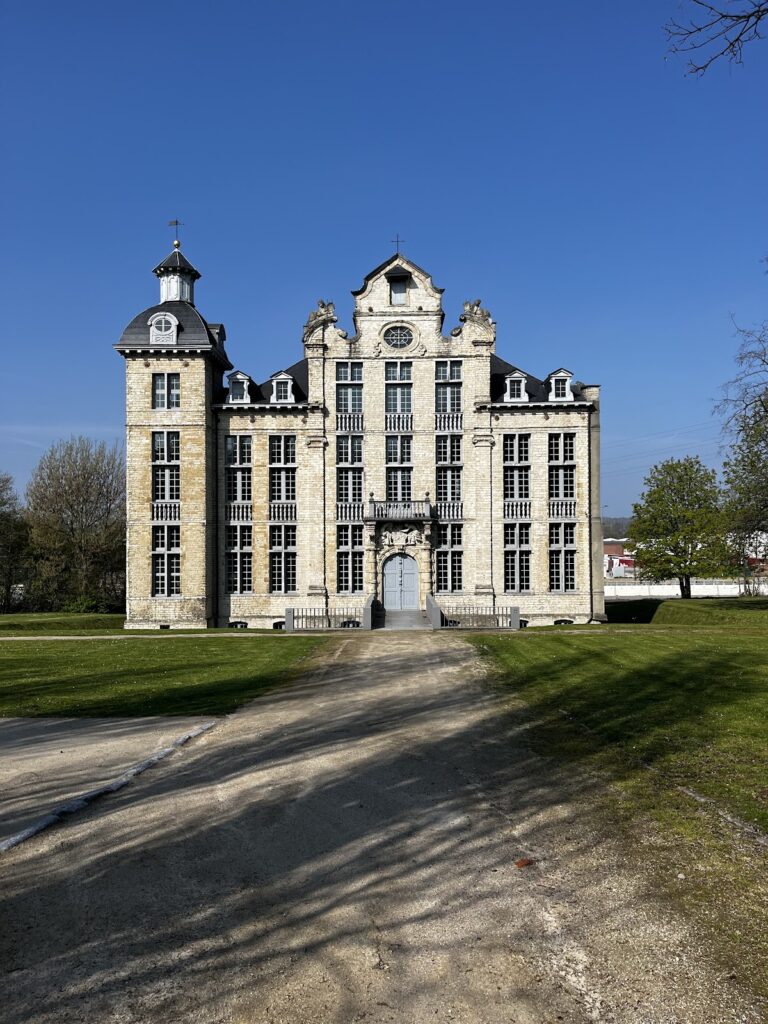
Elewijt Castle is a historic castle in Zemst, Belgium, whose origins reach back to the eleventh century. It began as a medieval motte castle and later developed into a stone fortress before Peter Paul Rubens transformed it into a country residence in the seventeenth century. The castle is also popularly known as Rubens Castle.
Medieval fortress
The first castle was built to protect the lands of Grimbergen from the Duchy of Brabant in a landscape with few natural obstacles. Its main defense was a large artificial mound beside a meander of the Baerebeek. A substantial wooden building and a watchtower stood on the raised ground, forming a motte castle, a medieval fortification centered on a fortified structure placed on an artificial mound.
A stone fortress replaced the earlier construction around 1300, with the work also dated to 1304. During Louis of Male’s mid-fourteenth-century attempt to take Brabant from his sister-in-law Joanna, Gijsbert Taye, then lord of Elewijt, equipped the castle with 28 armed men. A Spanish garrison occupied the castle in the sixteenth century during the period of Alexander Farnese, the military commander and governor associated with the Spanish Netherlands.
Noble ownership and the Rubens period
Elewijt Castle passed through several noble hands, including the Borchgrave family, Paul de Carondelet, lord of Maulde, and Marie-Christine d’Egmont. Frédéric de Marselaer, lord of Opdorp, acquired it in 1622. By 1631 the property had become dilapidated and was sold.
Peter Paul Rubens purchased the castle in May 1635 for 93,000 carolus guilders, together with the noble title Lord of Steen. He extensively renovated the fortress and converted it into a country or summer residence. Rubens lived there with his second wife, Hélène Fourment, and their family from 1635 until his death in 1640. Fourment was also a frequent subject of his paintings.
After Rubens’s death, the castle passed through Hélène Fourment’s remarriage to Jean-Baptiste de Brouchoven, Count of Bergeyck. Their son, Hyacinthe de Brouchoven, inherited it in 1681. The estate later passed to the architect Laurent-Benoît Dewez in 1773. Louis XV of France and his court reportedly stayed at the castle on 11 May 1746.
Prison, wartime damage, and restoration
The castle became a state prison in 1792. Repeated alterations removed the tower and drawbridge, changing the physical character of the earlier stronghold. The Coppens family owned the estate from at least the 1850s and carried out major alterations between 1875 and 1883.
Elewijt Castle was protected as a monument in 1948. During the Second World War, occupation caused heavy damage, and British Field Marshal Montgomery also resided there. The businessman and patron Paul Maison bought the castle in 1954 and completely restored the damaged estate. He later allowed visits and exhibitions that supported Elewijt’s parish organizations. After his death in 1992, ownership passed to his heirs Michel and Thierry Maison. Toerisme Vlaanderen acquired the property in 2019, and in 2021 it was being converted into meeting rooms and an interactive Rubens experience center.
Remains
Fortification and grounds
Motte and stone fortress
The earliest defensive layout centered on an artificial mound beside the Baerebeek. The mound carried a large wooden building and watchtower before a stone fortress replaced them around 1300 or in 1304. Later rebuilding removed the original tower and drawbridge, while Rubens’s alterations changed the fortified stronghold into a country residence.
Brick castle and Baerebeek
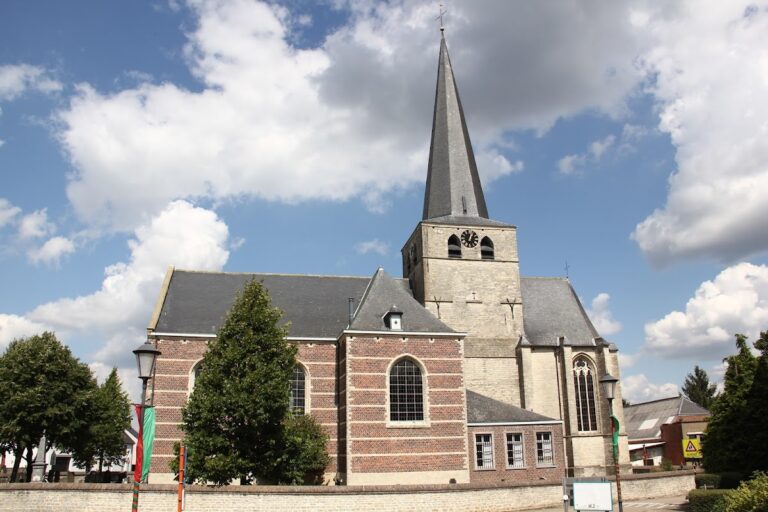
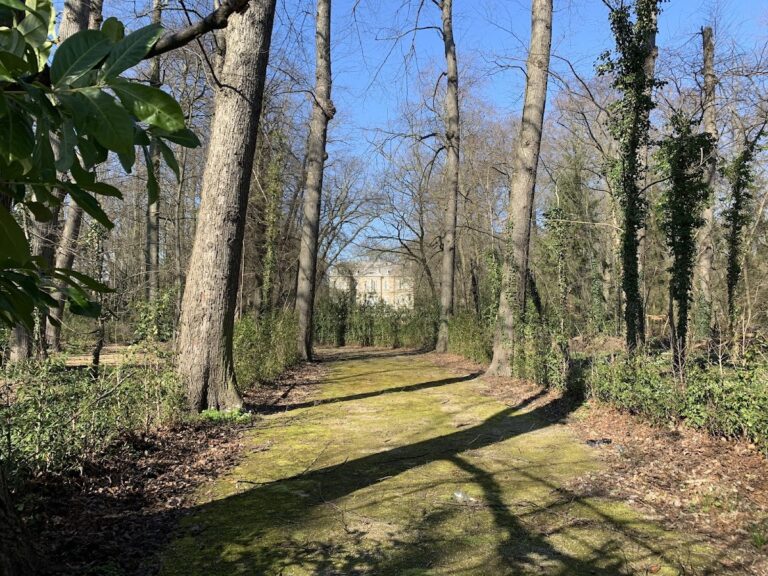
The present castle is described as neo-traditional, with brick as its principal building material. A small stream, the Baerebeek, runs through the grounds, recalling the watercourse beside which the original motte was established. The castle lies at the center of an imaginary circle passing through the churches of Weerde, Elewijt, Eppegem, and Houtem.
Rubens’s artistic association
Rubens represented Het Steen, the castle’s name in his paintings, in several late landscapes. These include Autumn Landscape with a View of Het Steen, painted about 1636, The Rainbow Landscape of 1636, A View of Het Steen in the Early Morning of 1636, and Tournament in Front of Steen Castle, dated 1637 or 1638–1640. The latter two paintings are associated with the National Gallery and the Louvre respectively.
Nearby sites