Château de Nervers: A Historic Château and Vineyard Estate


Site at a Glance
- Rating
- 4.7
- Popularity
- Low
- Country
- France
- Primary era
- Early Modern
- External website
- Open
- Eras represented
- Early Modern, Modern
- Civilizations
- French
- Site type
- Domestic
- Remains
- Castle
On this page6 sections
History
Château de Nervers is a historic château and vineyard estate in Odenas, France. Its central body is attributed, although not certainly, to a hunting lodge built around 1780, while its later enlargement introduced features characteristic of Second Empire architecture, the period of Napoleon III’s rule from 1852 to 1870. The property began as a hunting lodge belonging to Château de la Chaize and later became an independent family estate.
Early References and the Montaigu Family
The earliest recorded reference to Nervers appears in an inventory prepared after the death of Marquis Antoine-Dreux de la Chaize d’Aix. He was captain of the King’s Gate Guards, the nephew of Father de la Chaize, and the owner of Château de la Chaize. The inventory included the “Nerevert estate” among his possessions.
After Antoine-Dreux de la Chaize d’Aix and his son François died in 1723, the Chaize estate and associated properties, including Nervers, passed to the Montaigu family. This transfer followed the marriage of Antoine’s second daughter, Anne-Françoise de la Chaize d’Aix, to Count Pierre de Montaigu, who served as Louis XV’s ambassador in Venice.
Around 1780, their son Charles-François de Montaigu built a hunting lodge on the Nervers estate. The lodge is generally associated with the central body of the present château, though the attribution remains uncertain. The name Nervers derives from the Nerval stream, which crosses Odenas, joins the Sancillon, and eventually flows into the Saône.
The Denoyel Transformation
Nervers remained with the Montaigu family until the nineteenth century. During that period, the marquis transferred the estate to Pierre Denoyel to settle a debt. Pierre Denoyel and his son Antonin then commissioned major works under the direction of the architect Pierre Richard, transforming the former hunting lodge into a château.
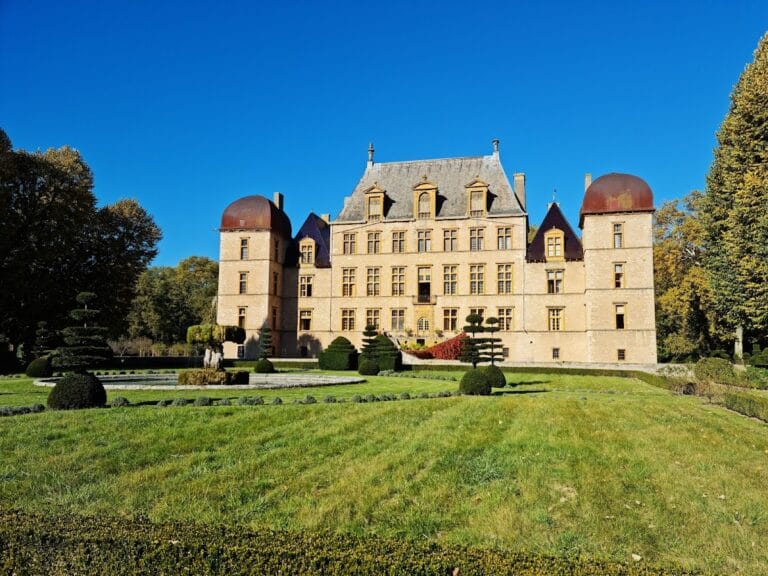
The nineteenth-century works added wings to both sides of the central building and gave it a second storey associated with Second Empire design. After Antonin Denoyel died in 1920, unmarried and without children, the château passed to the Chabannes family through the marriage of one of his nieces to Lieutenant-Colonel Benoît de Chabannes.
Remains
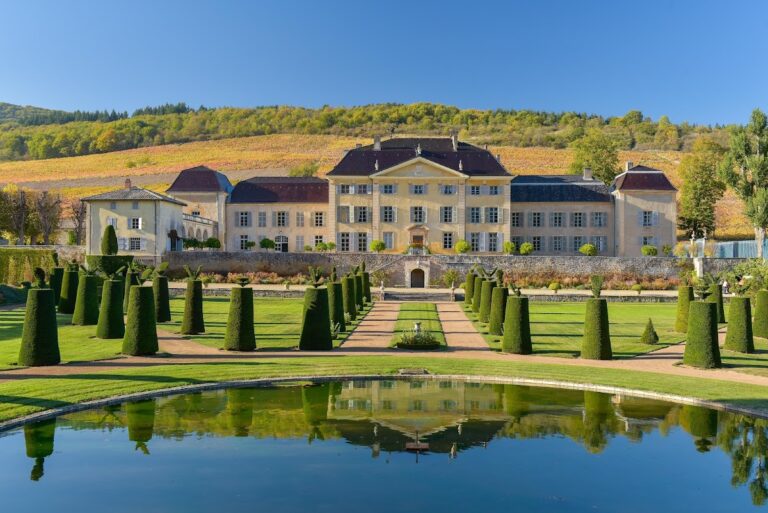
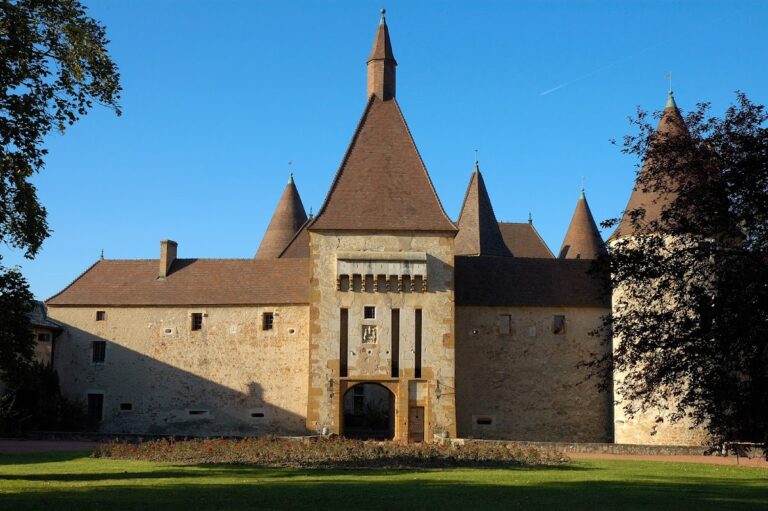
Château de Nervers stands in the Nerval valley of Odenas, in the Beaujolais region of the Rhône department. The estate lies between the hills of Netty and Garanche, a few kilometres from Mont Brouilly. Its surviving arrangement combines the château, a terrace facing the vineyards, and a park with basins and fountains.
The Château and Grounds
The central body is linked, with some uncertainty, to the hunting lodge constructed around 1780. Its later form incorporates wings on both sides and a second storey added during the nineteenth-century transformation. These additions give the building the formally composed appearance associated with Second Empire architecture. The same campaign created the terrace overlooking the vineyards and laid out a park containing water basins and fountains.
The Vineyard Estate
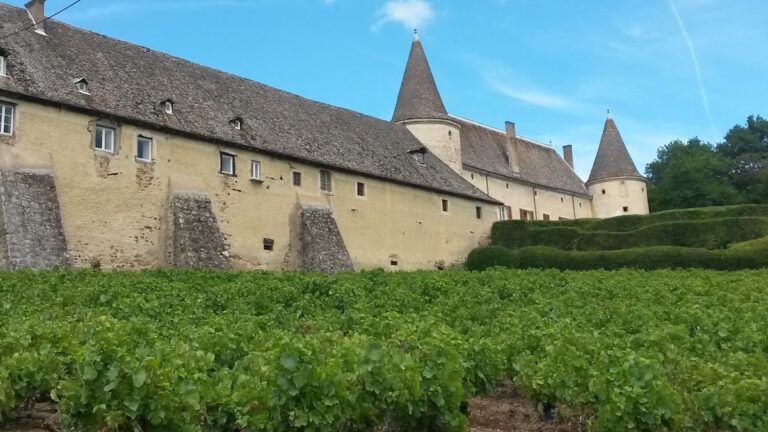
Château de Nervers is associated with a 50-hectare vineyard estate. More than 40 hectares fall within the Brouilly protected designation of origin, a legally defined geographical designation governing the production and identity of a wine. Every parcel is planted with Gamay, the grape variety used throughout the Nervers vineyard. The estate carries Terra Vitis certification for sustainable viticulture and HVE 3, the highest level of France’s High Environmental Value environmental standard.