Château de La Chaize: A Seventeenth-Century Wine Estate in France


Site at a Glance
- Rating
- 4.7
- Popularity
- Low
- Country
- France
- Primary era
- Early Modern
- External website
- Open
- Eras represented
- Early Modern, Modern
- Civilizations
- French
- Site type
- Domestic
- Remains
- Castle
On this page12 sections
History
Château de La Chaize is a seventeenth-century French château and wine estate in Odenas, France, built between 1674 and 1676 for François de La Chaize d’Aix. Its design by Jules Hardouin-Mansart and gardens by André Le Nôtre, together with its later role as a large Beaujolais wine estate, place it within the architectural and agricultural history of the region.
The earlier Château de la Douze
The estate occupies the site of the former Château de la Douze. Humbert de la Douze held the earlier castle in 1196, and it passed to the de Thy family during the fifteenth century. In 1573, the property was sold to Hugues Charetton, lord of La Terrière.
François de La Chaize d’Aix acquired the old castle in 1652. A seventeenth-century French nobleman and royal official, he came from the Loire region and became the king’s lieutenant at Beaujeu. Beaujolais lay close to Burgundy, giving the area a military importance that shaped his official role.
Construction of the new château
In 1673, the old castle partly collapsed, killing François de La Chaize d’Aix’s two sons and their tutor. After the disaster, he sought a larger, more imposing, and more secure residence. His brother, Father de La Chaize, helped him pursue the project through his influence at the court of Versailles. Father de La Chaize was a royal chaplain, and his position gave the family access to important royal architectural circles.
The replacement château was constructed from 1674 to 1676 and completed in the latter year. Jules Hardouin-Mansart, a leading architect under Louis XIV, designed the building, while André Le Nôtre, the period’s most influential French garden designer, created the gardens.
The County of La Chaize and later ownership
Letters patent issued in April 1677 united the lands and lordships of La Douze, Le Vierre, and Saint-Étienne-la-Varenne as the County of La Chaize in favor of François de La Chaize d’Aix. The property remained with the La Chaize d’Aix family for more than three centuries, passing through the Montaigu and Roussy de Sales branches.
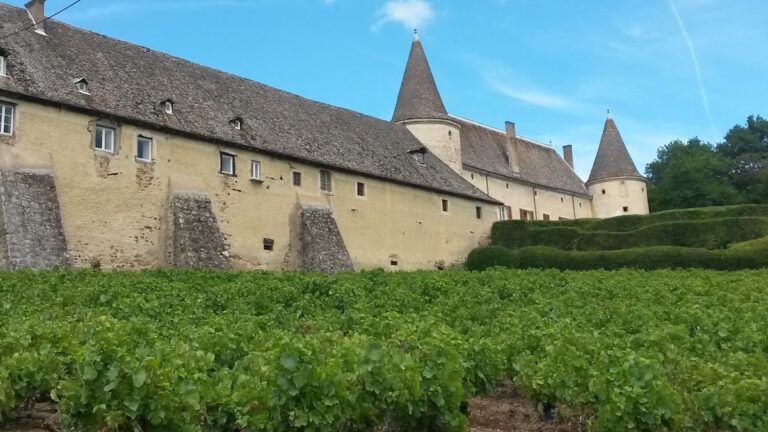
In 2017, the estate was acquired by the Lyonnais businessman Christophe Gruy. It is now held by the Maïa Group and the Gruy family. Château de La Chaize continues to operate as a wine estate covering approximately 450 hectares, including 350 hectares in one continuous tract. Its vineyard has 110 hectares of production potential across Brouilly, Côte-de-Brouilly, Fleurie, and Morgon. Each parcel is vinified separately, with the wine produced in the historic cuvage, a building for fermenting and processing wine, and matured in the estate’s long cellar.
Protection as a historic monument
The château, its garden and potager, a formal kitchen garden, and the cuvage were classified as historic monuments on 27 April 1972. Further elements received registration in 2019 and 2020, including the hydraulic system, the icehouse, the vineyard enclosure northwest of the château, and the hamlet of Château des Clous. The grand salon and dining room belong to the Restoration period, the era of the restored French monarchy after Napoleon, from 1814 to 1830.
Remains
Hillside setting and exterior
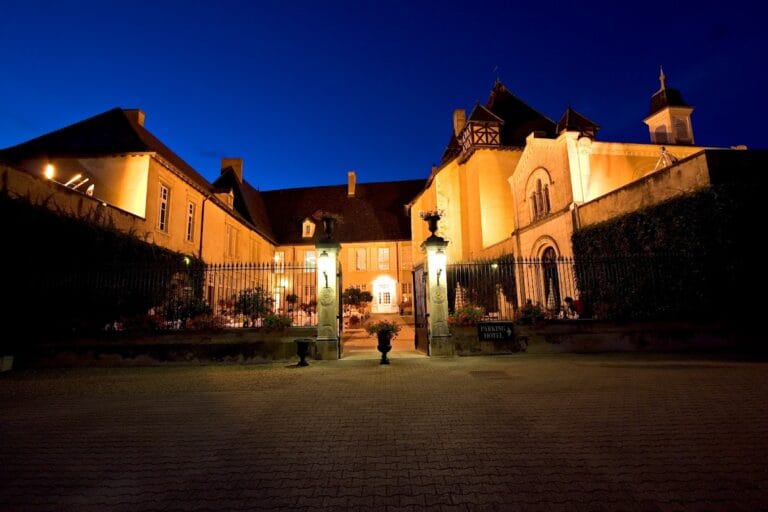
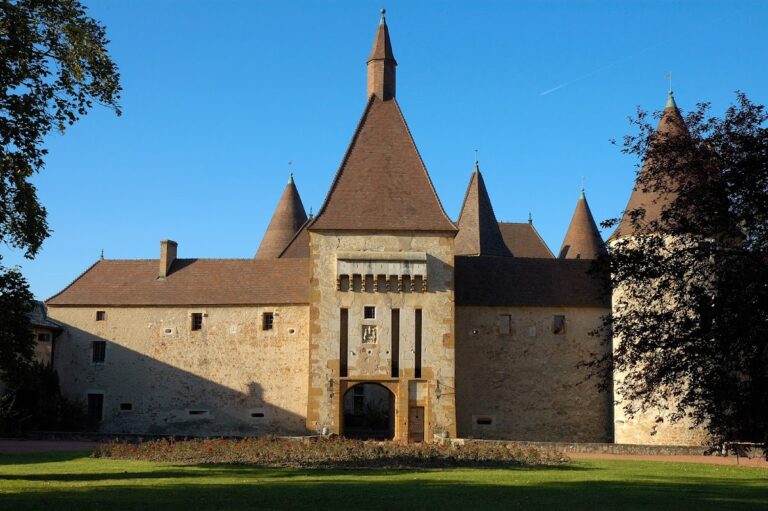
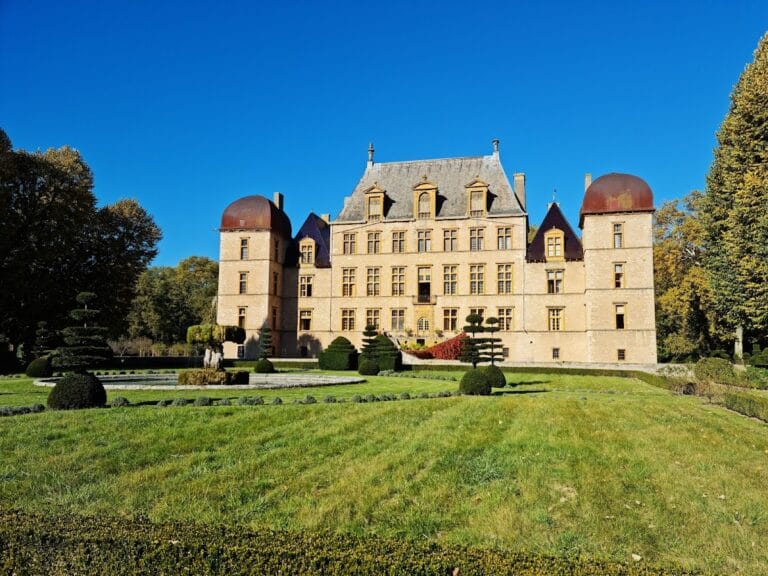
Château de La Chaize stands on the slopes of the Beaujolais mountains in the Brouilly area. Four retaining walls support the hillside and the building. Facing the garden, the main château is arranged in three symmetrical sections. Two wings end in pavilions, while the central section rises to a triangular pediment, a roof-front feature with sloping sides. Slate tiles cover the roof, and the ochre exterior reflects an Italianate influence.
The protected complex includes the main building’s façades and roofs, as well as its service buildings, terrace, orangery, cuvage, formal garden, and potager. Together, these elements preserve the relationship between the residence, its working estate, and its designed grounds.
Interior rooms
Italianate influence continues inside the château in the colonnade of the vestibule and in the King’s Chamber. The chamber is crowned by a fresco showing Cupid and Psyche. On the ground floor, the grand salon and dining room lie on opposite sides of the vestibule. Their Restoration-period interiors contain panels by Lacroix of Marseille.
The protected interiors also include the grand hall, grand staircase, Theatre, and Louis XIV bedroom, together with their decorative elements. These rooms form part of the architectural ensemble preserved within the main building.
Formal garden and perspective
Formal garden
The formal garden in front of the château covers approximately 1.5 hectares. Its layout includes flower beds and an avenue opposite the building. Because the château is proportionally larger than the garden, Le Nôtre used the avenue to create a perspective that appears longer than its actual length. In the seventeenth century, fountains and colored gravel formed flowing ornamental patterns across the lawns, which were maintained by 24 gardeners.
Potager
The present garden retains 32 yew trees and five beds clipped into cake-like shapes. The potager is organized as rays extending from a central basin, with beds containing flowers, vegetables, and fruit. Plantings include zinnias, marigolds, nasturtiums, dahlias, snapdragons, roses, carrots, beans, rhubarb, strawberries, raspberries, currants, apples, and potatoes. More than 200 varieties of roses grow in the radial beds, along the garden wall as climbers, and beside the formal garden.
Cuvage and cellar
The estate’s cuvage retains its original seventeenth-century roof framework. Beneath the wine-producing complex, the cellar extends for 108 metres. The building and cellar continue to support the estate’s separate treatment of vineyard parcels and the maturation of its wines.