Schloss Stubendorf: A Neo-Baroque Palace in Poland


Site at a Glance
- Rating
- 4.6
- Popularity
- Low
- Country
- Poland
- Primary era
- Modern
- External website
- Open
- Eras represented
- Early Modern, Modern
- Civilizations
- Holy Roman Empire
- Site type
- Domestic
- Remains
- Elite Residence
On this page6 sections
History
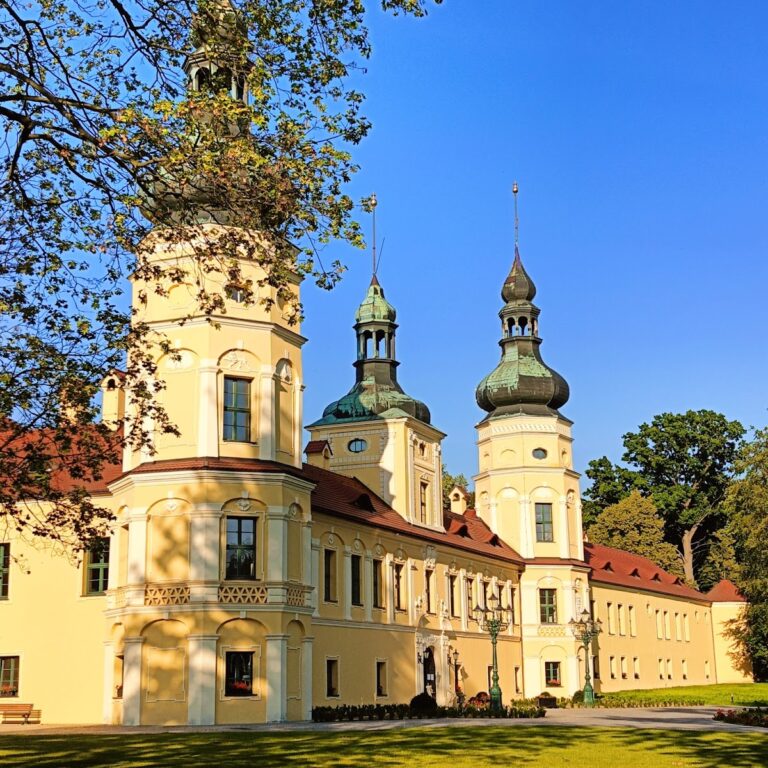
Schloss Stubendorf is a three-storey neo-Baroque palace in Izbicko, Poland, built in the sixteenth century. The neo-Baroque style revives the forms of Baroque architecture, and the earliest drawings of the palace and its grounds date from the mid-eighteenth century.
Fires and reconstruction
The palace was owned by the von Larisch family when a fire in 1748 destroyed it. Another fire in 1812 killed three people. The building was then reconstructed in the Classical style under Count von Strachwitz. Classical architecture is based on symmetry and restrained ornament associated with ancient Greek and Roman design.
During the Third Silesian Uprising in 1921, an armed conflict over the political status of Upper Silesia after the First World War, the palace was plundered and burned. It was rebuilt between 1923 and 1932, and the complex is classified as neo-Baroque.
State ownership and restoration
After the Second World War, the estate was nationalized. From 1952 to 1984, the palace housed a state agricultural school, known in the 1950s as an agricultural technical school. The building deteriorated during this period because necessary renovation work was not carried out, while many historic furnishings were lost. A renovation begun in 1984 led to the removal of further historic furnishings.
The palace was entered in the register of architectural monuments of the Opole Voivodeship in 1965 under number 1044/65. An additional palace registration followed in 1967, and the park was registered in 1984 under number 113/84. In 2003, a private investor purchased the palace from the authorities of Strzelce Opolskie County. Hubert Palm, identified as the owner, restored the building’s former appearance, with renovation work also recorded between 2005 and 2007. A hotel subsequently opened in the palace, which hosted deliberations of the Visegrad Group in May 2011. The Visegrad Group is a regional political and cultural cooperation forum formed by Poland, Hungary, the Czech Republic, and Slovakia.
Remains
Palace and park
The surviving complex centers on a three-storey palace in neo-Baroque form, surrounded by an eleven-hectare park. A portal with a cartouche, an ornamental framed panel, bears the initials “HP.” The oldest documented photograph of the palace dates from 1900.
Associated facilities
The grounds also include a business center identified as VIP-PALM, a sports field, and tennis courts.
Nearby sites