Château Pichon Longueville Baron: A Historic Pauillac Wine Estate
Site at a Glance
- Rating
- 4.7
- Popularity
- Low
- Country
- France
- Primary era
- Modern
- External website
- Open
- Eras represented
- Modern
- Civilizations
- French
- Site type
- Economic
- Remains
- Production Complex
On this page7 sections
History
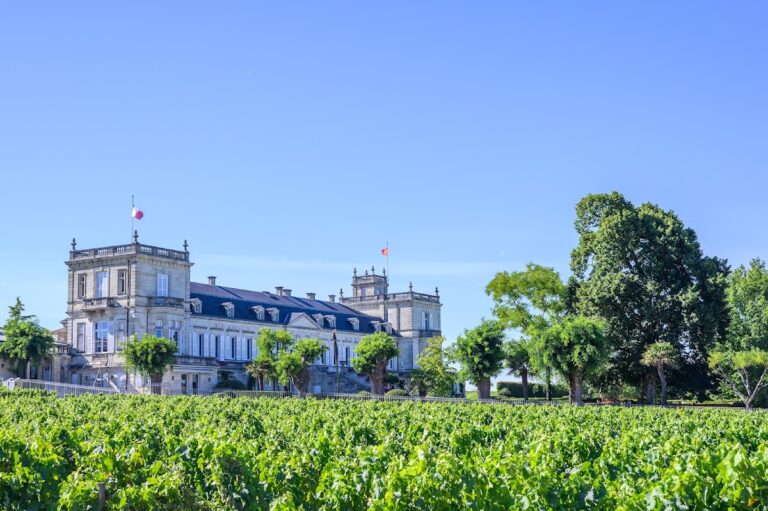
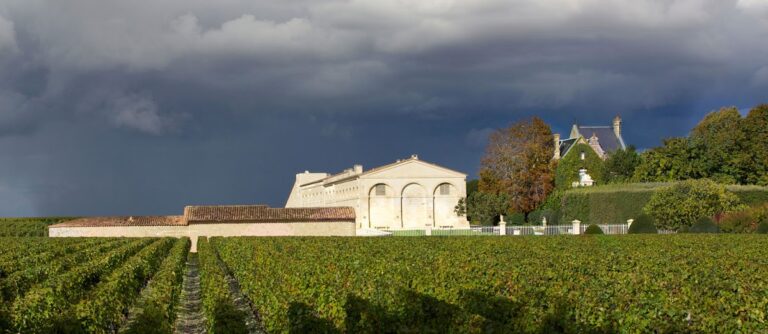
Château Pichon Longueville Baron is a historic 73-hectare wine estate in Pauillac, France, within the Bordeaux wine region and Pauillac appellation. Its château was constructed in 1851, and its wine has held the status of Deuxième Grand Cru Classé, or Second Growth, since the Bordeaux Wine Official Classification of 1855. This classification places selected Bordeaux estates according to the perceived quality and market standing of their wines, with Second Growth as the second-highest level for the red-wine estates included in it.
Origins of the Pichon estate
The property developed from a larger holding associated with Pierre de Rauzan, who also owned the later Château Rauzan in Margaux. Land acquisitions in the area began during the seventeenth century, including the purchase of vines at Pauillac in 1689. That acquisition is associated with the creation of the Enclos Rauzan.
In 1694, Rauzan’s daughter Thérèse married Jacques Pichon, Baron de Longueville, the first president of the Parliament of Bordeaux. The vines entered the marriage settlement, and the estate became known as Pichon-Longueville. The name reflects the transfer of the property into the Pichon family and its connection with the baronial title.
Division and construction of the château
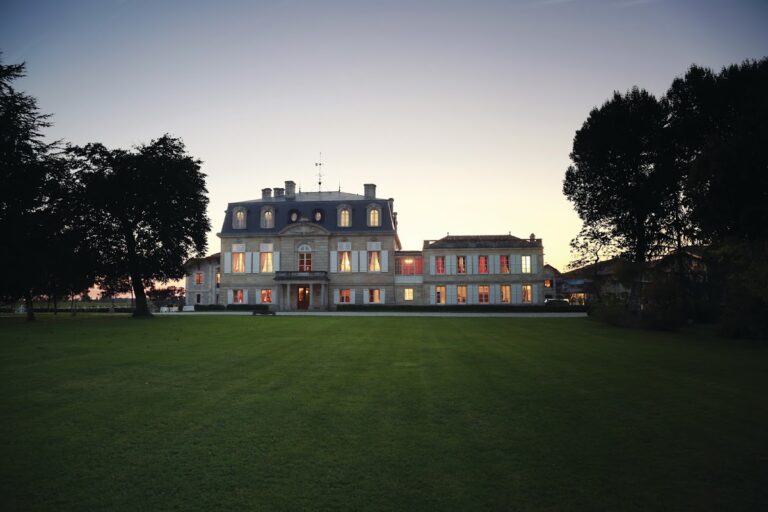
After Baron Joseph Pichon de Longueville died in 1849, the estate was divided in 1850. The portion associated with Baron Raoul Pichon became Pichon Baron, while the portions assigned to his three sisters formed the estate now known as Château Pichon Longueville Comtesse de Lalande.
Raoul Pichon commissioned the construction of the château in 1851. He later adopted Alexandre-Raoul de Pichon-Longueville, intending to pass the château to a male heir from the Pichon-Parempuyre branch, a branch of the Pichon family.
Modern ownership and production
The French insurance company AXA purchased the estate in 1987, and it became part of the AXA Millésimes group. Jean-Michel Cazes of Château Lynch-Bages was appointed administrator after the acquisition, and the property is currently managed by Christian Seely. The estate also produces the second wine Les Tourelles de Longueville, introduced in 1986, and Les Griffons de Pichon Baron, introduced in 2012.
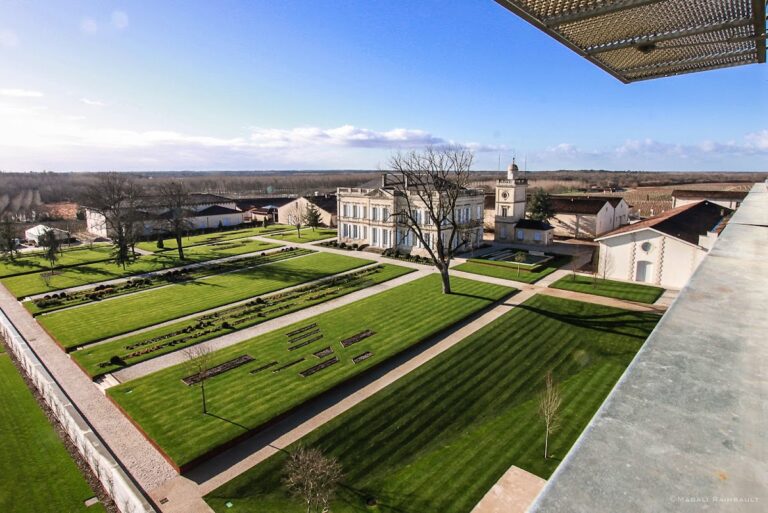
In 1988, the Centre Georges-Pompidou launched an architectural project to redevelop the estate’s wine-production facilities. The winning design was created by Jean de Gastines with Patrick Dillon and included the renovation and transformation of the wine cellar.
Remains
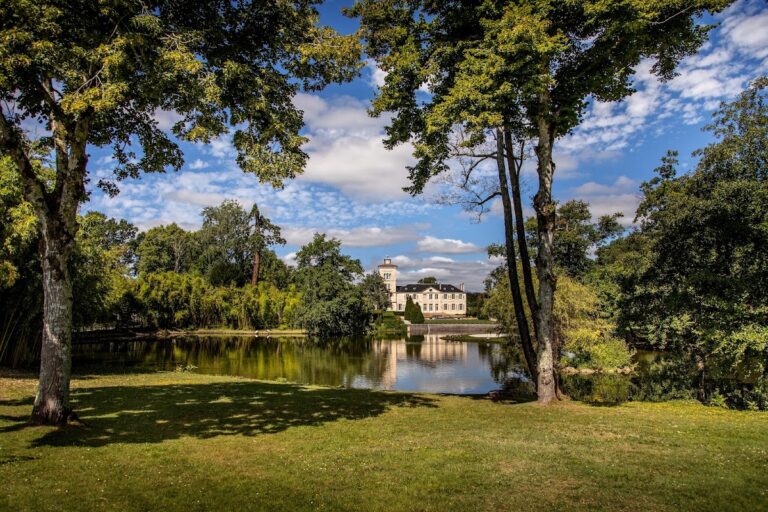
Estate setting and vineyards
Château Pichon Longueville Baron lies at the southern end of Pauillac, on the southern side of the suburb of Saint-Lambert, near the boundary with the Saint-Julien-Beychevelle appellation. Château Pichon Longueville Comtesse de Lalande stands opposite it across the Route du Vin, the departmental road D2, while Château Latour is nearby. The estate’s 73 hectares are planted with 60 percent Cabernet Sauvignon, 35 percent Merlot, 4 percent Cabernet Franc, and 1 percent Petit Verdot. The vines average 30 years of age and are planted at a density of 9,000 vines per hectare. They use double Guyot training, a pruning system that retains two fruiting canes, and the typical yield is below 40 hectolitres per hectare.
Château and wine-production complex
The château was built in 1851 on the Pichon Baron estate. The redeveloped wine-production complex contains a fermentation cellar equipped entirely with stainless-steel vats of varying sizes. Grapes are harvested and sorted by hand, then macerated for 20 to 30 days and fermented at 28 to 32 degrees Celsius in temperature-controlled vats. After malolactic fermentation, a secondary process that converts sharper malic acid into softer lactic acid, the wine is transferred to oak barrels. The cellar redevelopment also includes a light-dome tower formed as a suspended ring-foundation structure carried on inclined columns.
Nearby sites