Château de Carlux: A Historic Castle Ruin in France


Site at a Glance
- Rating
- 4.4
- Popularity
- Low
- Country
- France
- Primary era
- Medieval
- External website
- Open
- Eras represented
- Medieval
- Civilizations
- French
- Site type
- Military
- Remains
- Castle
On this page10 sections
History
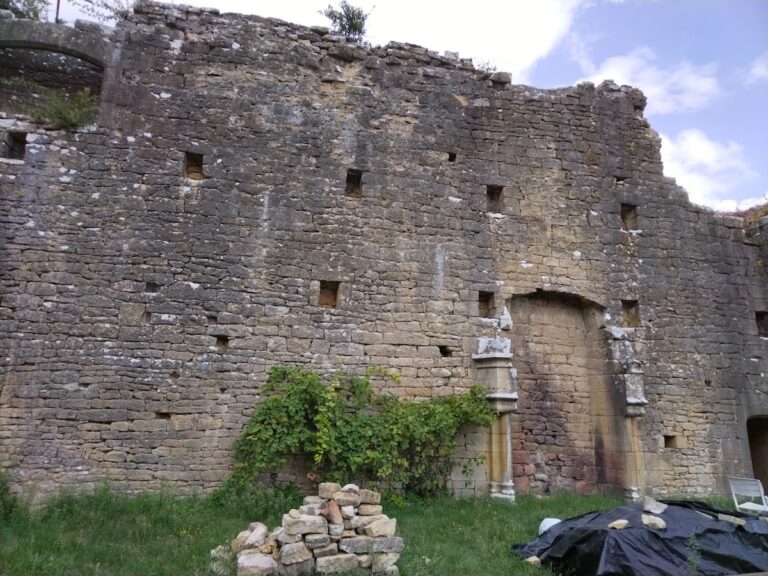
Château de Carlux is a ruined castle in France whose surviving remains reflect a history extending from the medieval period into the modern era. A castle probably occupied the site from the tenth century, while a watchtower was built over earlier foundations during the twelfth century. The complex continued to develop between the twelfth and fifteenth centuries.
Medieval origins and lordship
A papal bull issued by Alexander III in 1170, repeating an earlier document of Eugene III from 1153, placed Sarlat Abbey under papal protection and referred to the castle’s Sainte-Marie chapel. The chapel formed part of the site’s medieval religious setting. Carlux belonged to the Diocese of Cahors, an ecclesiastical district governed by a bishop, and to the Sarlat seneschalship, a territorial administrative and judicial district under a royal or delegated seneschal.
The castle was a fief of the Viscounts of Turenne, hereditary lords of a major feudal territory in south-central France. In 1251, Hélis or Alix of Turenne and her husband, Rudel Hélie d’Aillac III, received the castrum de Carlus during a division of the Viscounty of Turenne. Their only daughter, Marguerite of Turenne, married Renaud III, Lord of Pons, in the same year. The castellany of Carlux, a lordship and administrative territory organized around the castle, included about twenty parishes.
In letters issued at Béziers in 1304, Philip IV of France promised not to separate the castle from the domain of the French Crown. This undertaking placed Carlux within the wider political framework of the French monarchy while its feudal connections remained important.
War, destruction, and rebuilding
During the Hundred Years’ War, the prolonged conflict mainly between the English and French crowns, troops commanded by Archambaud d’Abzac captured the castle on 21 November 1405. It was burned in 1406 and then changed hands repeatedly between French and English forces. These events left the stronghold partly ruined. In 1481, Louis XI ordered its dismantling by the Seneschal of Périgord, the royal official responsible for the territory’s administration and justice.
A smaller castle was probably rebuilt before 1525. This later complex included a residential building framed by towers. During the Wars of Religion, the sixteenth-century conflicts between Catholics and Protestants in France, the surviving keep and entrance tower enabled Carlux to function as a Protestant stronghold. Royal French troops recaptured it in 1593 after a three-week siege.
Later history and protection
The Noailles family held the Viscounty of Carlux from 1723 until the French Revolution. Between 1840 and 1850, part of the castle was demolished to make way for a road, altering the surviving site. A tower overlooking the road was destroyed in 1940.
The castle was given to the commune in 1992, after which repair and improvement works were undertaken to emphasize the heritage site. It is identified as currently owned by the Dordogne Department. The remains entered the historic-monuments register on 6 January 1927, and protection was later extended to the entire castle complex through classification under an order of 7 December 2022.
Remains
Château de Carlux survives as a ruin developed from a twelfth-century watchtower built over earlier foundations. The later, smaller castle arranged a residential building between towers. The surviving defensive elements include the keep and the entrance tower, while the remains have undergone repair and improvement works after the site’s transfer to the commune.
Fortified structures
Keep
The keep, the principal fortified tower of a castle, is one of the main surviving elements at Carlux. Its continued presence reflects the stronghold’s medieval defensive core and its later role during the Wars of Religion, when the castle served as a Protestant position before its recapture by royal troops in 1593.
Entrance tower
The entrance tower defended and controlled access to the stronghold. Together with the keep, it formed part of the surviving fortified framework that allowed the castle to operate as a defensive site in the sixteenth century. Both structures now form part of the castle ruin.
Residential castle
Residential building and towers
The smaller castle rebuilt probably before 1525 included a residential building framed by towers. This arrangement represents the site’s later form after the medieval stronghold had suffered burning, repeated changes of control, and dismantling. Elements of this building group remain within the ruined complex and are understood alongside the surviving keep and entrance tower.
Nearby sites