Clausholm Castle: A Baroque Country Estate in Denmark


Site at a Glance
- Rating
- 4
- Popularity
- Low
- Country
- Denmark
- Primary era
- Early Modern
- External website
- Open
- Eras represented
- Early Modern
- Civilizations
- Danish
- Site type
- Domestic
- Remains
- Castle
On this page9 sections
History
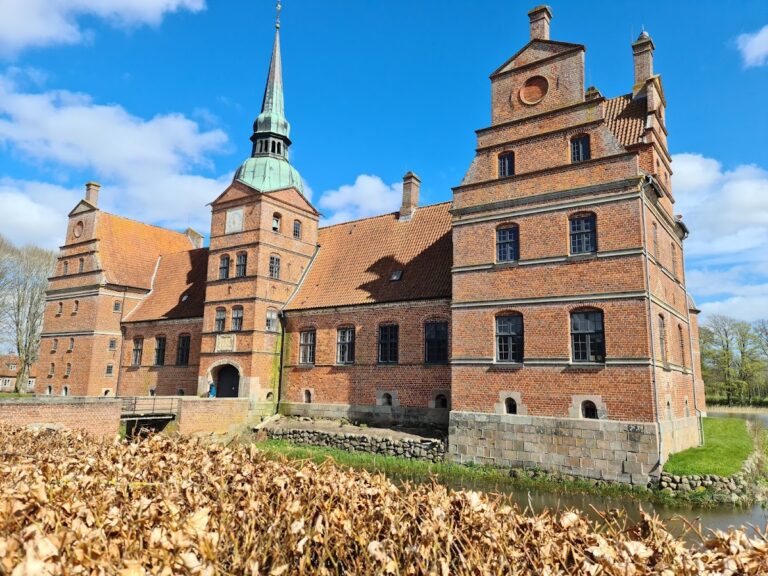
Clausholm Castle is a Danish country estate in Denmark, about 12 kilometres southeast of Randers in eastern Jutland, whose present Baroque form dates from the 1690s. The estate is recognized as a Danish historical-heritage monument, and its castle and park are regarded as among Denmark’s earliest and finest examples of Baroque architecture.
Medieval origins
The origins of Clausholm may reach back to the twelfth century, although the site first appears in written records in the fourteenth century. At that time, its owner Lage Ovesen was one of the leaders of the Jute uprising against Valdemar IV, the fourteenth-century king of Denmark. Clausholm then consisted of a four-winged building enclosed by a moat.
The Reventlow rebuilding
In the 1690s, Conrad von Reventlow, a Danish statesman and Grand Chancellor, acquired the estate in a severely neglected condition. He demolished the earlier building and commissioned a new castle from the Danish architect Ernst Brandenburger, assisted by the Swedish architect Nicodemus Tessin the Younger. The replacement was planned as a two-storey Baroque residence, with the Grand Chancellor’s rooms on the ground floor and a more elaborately decorated upper floor for high-ranking royal guests.
Clausholm later became closely associated with Reventlow’s daughter, Anna Sophie Reventlow. The enamoured King Frederick IV abducted her, and she became his queen in 1721. After Frederick’s death in 1730, Anna Sophie returned to Clausholm with her court, strengthening the estate’s connection with the Danish monarchy.
Modern use and preservation
For many years, Clausholm was occupied only in summer because it lacked running water and electricity. In 1964, its new owners, Henrik and Ruth Berner, modernized the facilities and brought the castle back into use. A prolonged restoration campaign subsequently concentrated on preserving the historic buildings, which had remained practically unchanged since the 1730s. In 1994, Queen Margrethe II awarded Clausholm the Europa Nostra Prize for outstanding heritage preservation. Europa Nostra is a European heritage organization that recognizes achievements in conserving cultural heritage.
Remains
Clausholm’s surviving complex is organized around a two-storey, three-winged castle that replaced the earlier four-winged building surrounded by a moat. Its Baroque design uses a monumental composition and contrasts between the simpler lower level and the more decorative upper storey. The estate also includes a large eighteenth-century park with fountains and avenues.
Castle buildings
Main castle
The present castle is a three-winged building in the Baroque style, designed by Ernst Brandenburger with assistance from Nicodemus Tessin the Younger. The second storey has higher and more decorative ceilings than the first, reflecting its original use for distinguished royal guests, while the ground floor contained the Grand Chancellor’s rooms.
Chapel
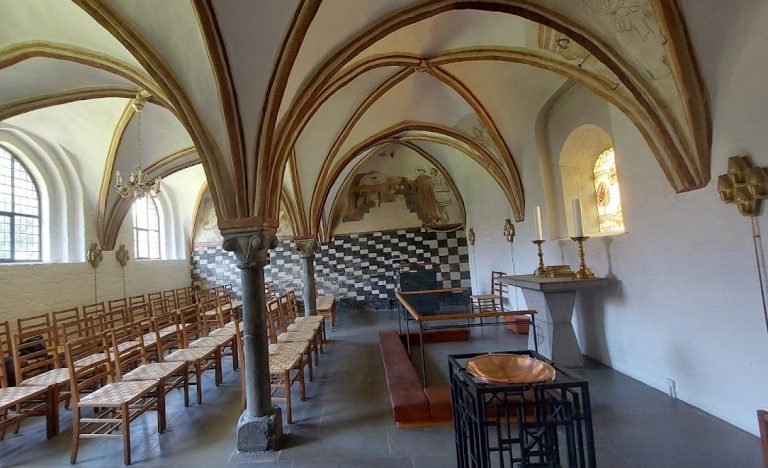
Anna Sophie Reventlow decorated the castle chapel. It contains an organ built around 1700 by the Botzen brothers of Copenhagen, regarded as one of Denmark’s oldest organs.
Park and wider estate
The large Baroque park was laid out in the eighteenth century and contains fountains and avenues. It underwent thorough renovation in 2009 with support from the Realdania Foundation. The 900-hectare estate also includes Schildenseje, Sophie-Amaliegård, Sophienlund, and Estrupgård.