Villa Maggi Corvini: A Late-Renaissance Villa in Parabiago


Site at a Glance
- Rating
- 4
- Popularity
- Low
- Country
- Italy
- Primary era
- Early Modern
- External website
- Open
- Eras represented
- Early Modern
- Civilizations
- Duchy of Milan, Spanish
- Site type
- Domestic
- Remains
- Elite Residence
On this page7 sections
History
Villa Maggi Corvini is a probable sixteenth-century late-Renaissance villa in Parabiago, Italy. It is regarded as a rare, possibly unique example of this type of building in the town. Its history reflects the changing fortunes of several landowning families, its use as a country residence, and its later transformation into a municipal cultural and service centre.
The Maggi family residence
In 1606, Giuseppe Maggi, a nobleman of Brescian Guelf origin, bought the villa and several adjoining estates from Lodovico Longone, including the land that forms the present park. The Guelfs were a political faction generally associated with support for the papacy, although their precise alignment varied across time and place. Giuseppe used the property as a secondary residence, dividing his time between Parabiago and the family home in Milan, in the parish of San Vittore al Teatro.
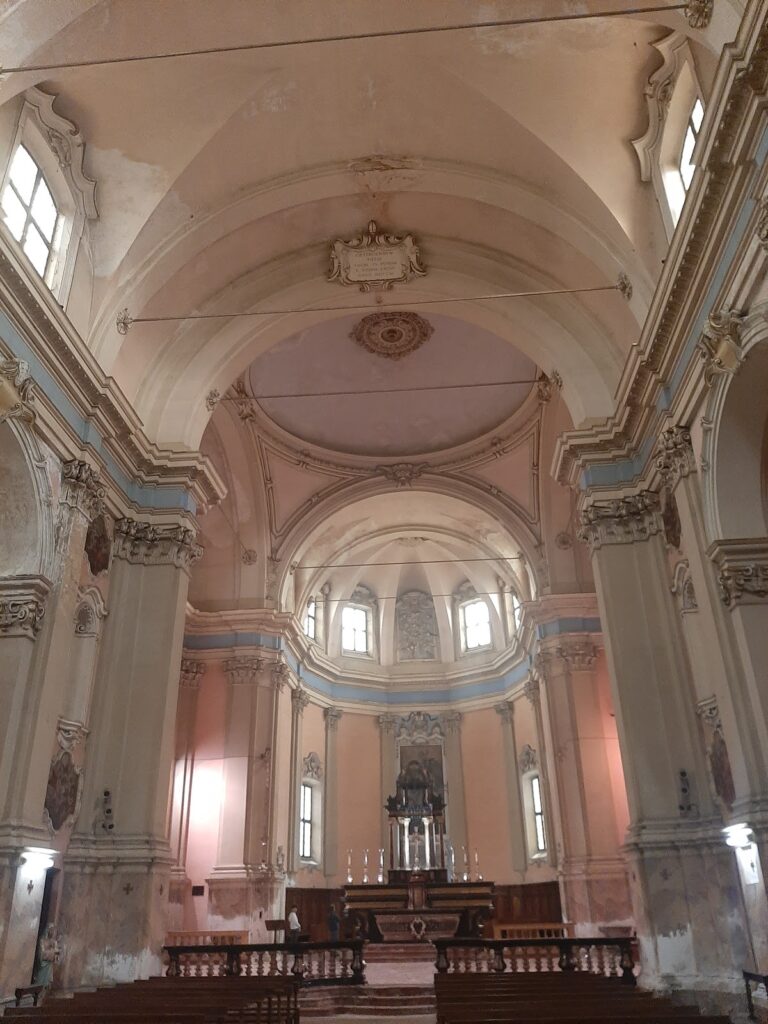
Giuseppe’s son Luigi Maggi, who died on 23 May 1680, expanded the family’s rural holdings. In 1727, Carlo Giuseppe Maggi secured permission to establish a private chapel inside the villa. Pope Benedict XIII granted this authorization through a papal brief dated 20 March 1727, a formal papal document used to communicate decisions or grant permissions. The chapel was assigned to the Hall of the Columns. Carlo Giuseppe later served as Deputy for the Land Assessment of the Municipality of Parabiago from 1766 to 1770.
Changes of ownership
At the beginning of the nineteenth century, Francesco Maria Maggi and his family owned approximately 500 pertiche of land in the Parabiago area. A pertica was a traditional Italian land-measurement unit whose value differed from one locality to another. Toward the end of the century, Domenico Maggi, the last member of the Parabiago branch and a former mayor of the town, sold the family properties because of financial difficulties. The villa passed first to the Prandoni family and later to the Lainati family.
On 30 November 1827, Cavalier Venanzio Corvini, a patrician of Camerino domiciled in Milan, acquired the property through a deed. A patrician belonged to a recognized hereditary urban elite, while Camerino is a historic city in central Italy. Venanzio and his wife, Maria of the Gardini comital family, made Parabiago their summer residence with their sons Lorenzo and Giovanni, both born in Milan.
After Venanzio and Maria died, their inheritance was divided. Lorenzo, a physician and teacher, received several properties. Giovanni inherited the family property in Milan and the villa among the Corvini holdings in Parabiago. He was a Romantic painter and Italian patriot and was buried in Parabiago cemetery.
Municipal use and restoration
The villa was later sold by its last private owner to the Lampugnani family. It subsequently entered municipal ownership and suffered gradual deterioration for approximately fifty years. In 1937, Cesare Berra, the political secretary of the National Fascist Party in Parabiago, tried to acquire the building and convert it into the town hall, but the project failed. During the 1950s and 1960s, the municipality also considered adapting it as a home for elderly people.
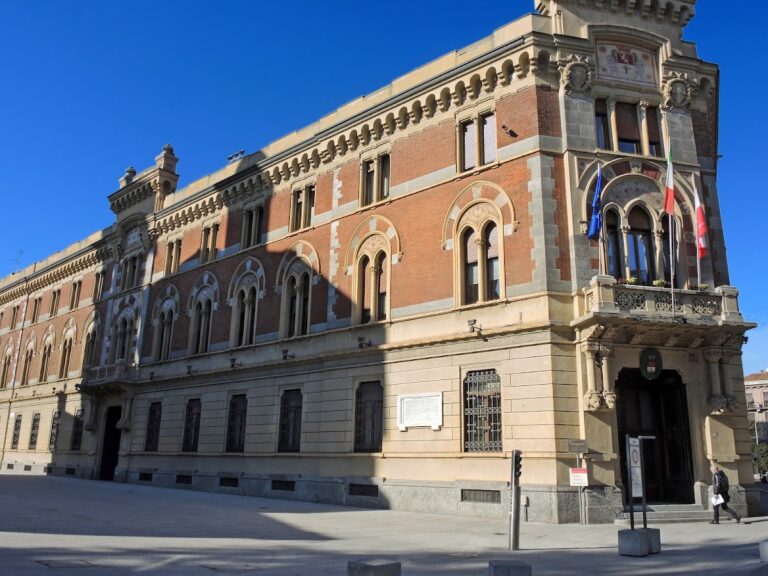
Restoration in the late 1990s returned the building to active public use. It became the seat of a municipal service centre and the Ecomuseum of the Parabiago Landscape. An ecomuseum is a community-oriented institution that interprets and preserves the cultural and environmental heritage of a local area. The villa also hosts temporary exhibitions. Two exhibitions focused on the cabinetmaker Giuseppe Maggiolini, known for refined furniture and marquetry. The first, held in 1965, marked 200 years since his first important commission from the painter Giuseppe Levati for Villa Litta in Lainate. The second, held in 2014, commemorated 200 years since Maggiolini’s death. The Municipality of Parabiago is the current owner.
Remains
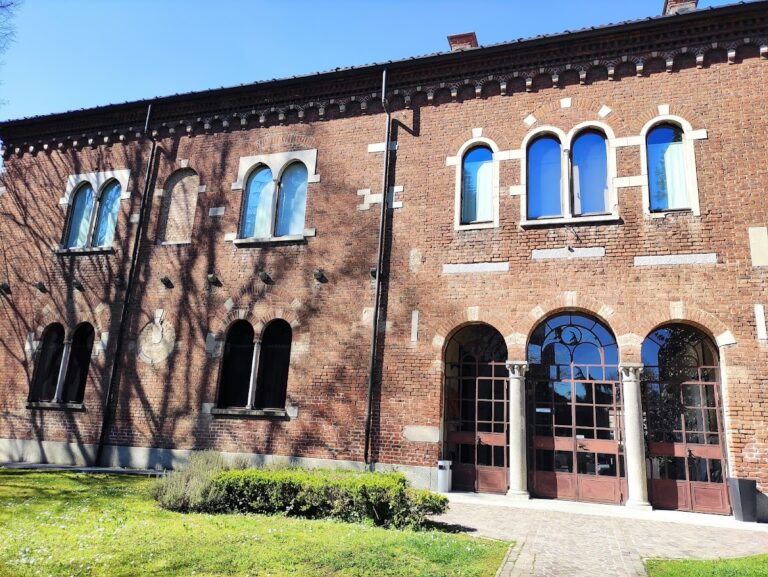
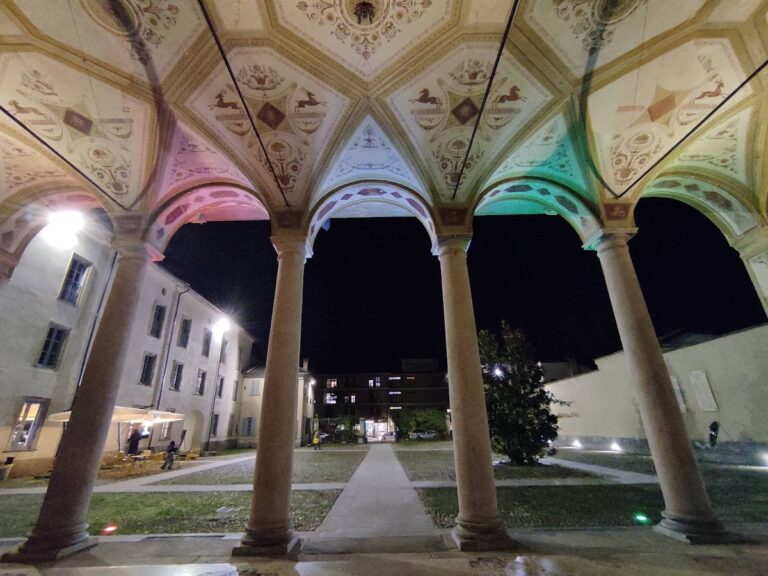
Villa Maggi Corvini stands at the beginning of Via Santa Maria, one of the four historic streets in Parabiago’s town centre. The late-Renaissance building is organized around an inner courtyard, with the Corvini Park extending behind it. The park is now a public municipal park. Restoration in the late 1990s preserved the principal entrance, its wrought-iron gate, the portico, and the courtyard.
The villa
The principal entrance retains the Maggi family coat of arms above the doorway. It shows a rampant lion surmounted by a count’s crown. Inside, the Hall of the Columns is the space assigned in 1727 for the Maggi family’s private chapel. The inner courtyard contained a small well, which disappeared in the early twenty-first century.
The rear park
The grounds behind the villa form the area now known as Corvini Park. In the past, the park was embellished with statuettes and provided a setting for hare-hunting parties and aristocratic banquets. Its survival as a municipal park preserves the connection between the residence and the rural estate acquired by Giuseppe Maggi in 1606.
Nearby sites