Château du Fey: A Seventeenth-Century Estate at Villecien, France


Site at a Glance
- Rating
- 4.8
- Popularity
- Low
- Country
- France
- Primary era
- Early Modern
- External website
- Open
- Eras represented
- Early Modern
- Civilizations
- French
- Site type
- Domestic
- Remains
- Castle
On this page8 sections
History
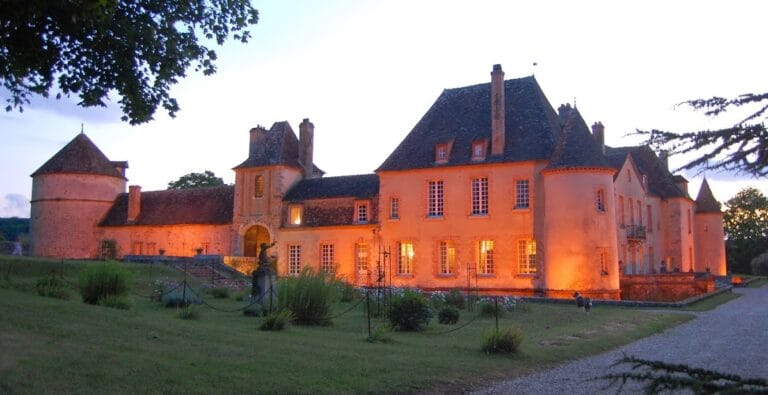
Château du Fey is a seventeenth-century château at Villecien in France, built during the reign of Louis XIII and incorporating part of an earlier sixteenth-century residence. Set above the Yonne valley, it developed from a private noble estate into a largely residential property with historic links to religious life, aristocratic families, culinary education, and heritage conservation.
From the First Château to the Louis XIII Building
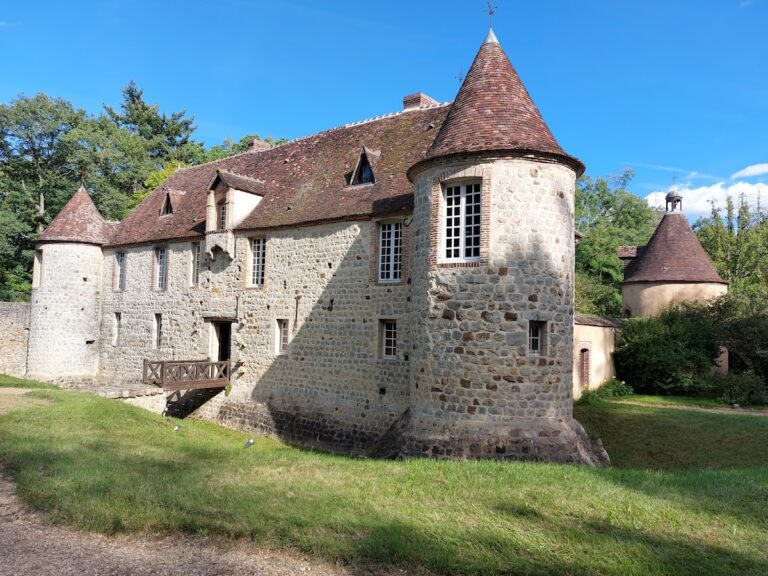
The first château was built in the sixteenth century by Nicolas Hennequin, regarded as the first lord of Feÿ. Its position on the plateau above the Yonne valley established the setting of the estate. In 1620, Nicolas de Baugy, a royal councillor, began a second château under Louis XIII, the French king from 1610 to 1643. The new building retained part of the earlier structure rather than replacing it entirely.
The buildings associated with Louis XIII were later considered austere and uncomfortable. Subsequent owners introduced more elaborate reception rooms with wood-panelled decoration, created long avenues through the forest, and added practical facilities for processing grapes and oil. These changes combined the formal expectations of an aristocratic residence with the agricultural functions of a country estate.
Owners and Social Connections
Ownership passed through several families and individuals. The Hennequin family held the property from 1578 to 1635, followed by Nicolas de Baugy and his successors until 1751. The Philibert de Chamousset family owned it from 1751 to 1806, the Meynard de la Farge family from 1806 to 1884, and the d’Indy family from 1884 to 1917. The Favier family then held the château until 1934, followed by Baron de Drouas from 1934 to 1984.
Baron Marie Jean-François Meynard de la Farge, a rear admiral in the naval forces, acquired the Feÿ estate in 1823. In 1884, Françoise de Meynard de la Farge married Pierre-Marie Dominique, Viscount d’Indy, who placed his coat of arms on the château façade. Michel Wallaert, owner of textile mills in northern France, and his sister, the Viscountess de Cambourg, later retained the property before its transfer to Baron Fernand de Drouas.
Château du Fey also has a religious association with Saint Vincent de Paul, a seventeenth-century French priest known for preaching and organizing charitable missions. He maintained close ties with the parish of Villecien, where he preached repeatedly, and visited the château through his friendship with Isabelle du Feÿ. She administered the estate and supported missions connected with his work.
A longstanding tradition states that Henri François d’Aguesseau, chancellor of France, and Ninon de Lenclos, a prominent seventeenth-century salon hostess and writer, were several times guests of the lords of Feÿ. Their portraits were set into the library woodwork to commemorate the alleged visits, although the tradition remains unverified.
Modern Uses and Conservation
During the twentieth century, Château du Fey became largely residential. Mark Cherniavsky and Anne Willan acquired it in 1982, and from 1988 an extension of Anne Willan’s La Varenne culinary school operated at the château. Culinary demonstrations, wine tastings, and dinners continued there until 2007.
Since 2017, architect Jessica Flore Angel has envisioned the château as a place joining heritage and innovation. This approach aims to preserve the estate’s legacy while reconsidering the role of a château in relation to ecology and regional reconstruction. The château and estate remain privately owned, with 41 hectares of centuries-old forest adjoining the Othe Forest. The property has been protected as a historic monument, a French legal designation for sites valued for their architectural or historical importance, since its listing in 1973.
Remains
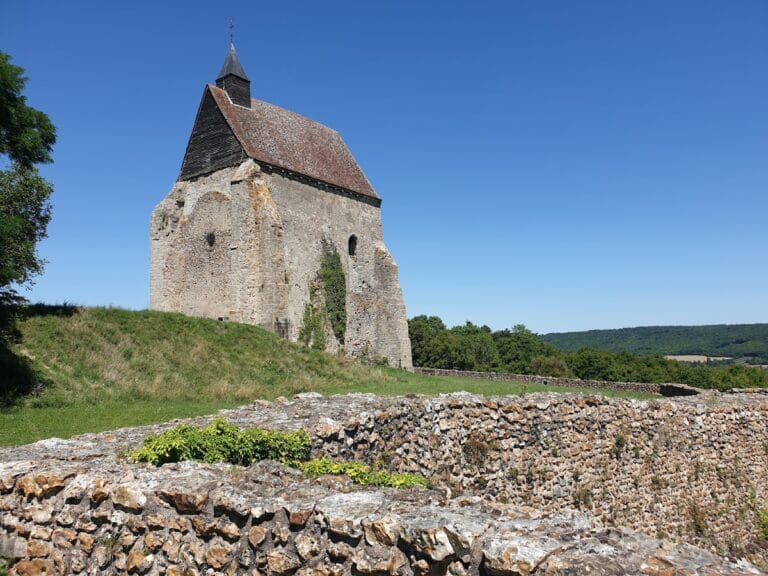
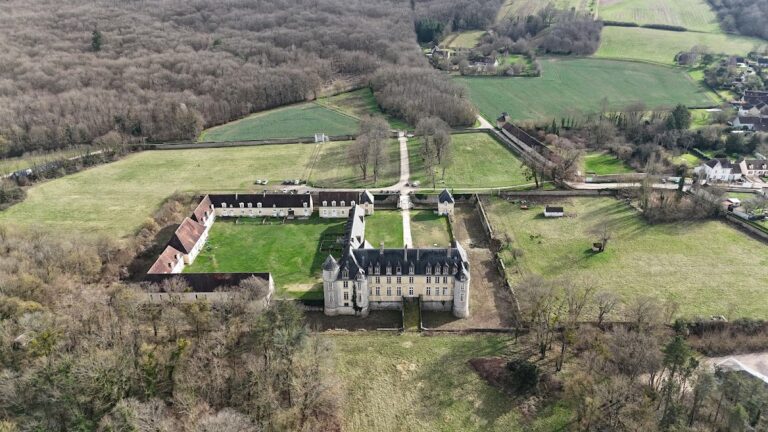
Château du Fey occupies the top of the Villecien hill, facing the Yonne valley. A long avenue through the surrounding forest leads to the château, while further avenues extend through the estate. The wider landscape includes oak and beech woodland and pasture, with the forest forming part of the property’s historic setting.
The Château and Estate Layout
The surviving seventeenth-century building incorporates part of the earlier sixteenth-century château. Its position at the head of the hilltop estate connects the main residence with the avenues, woodland, and agricultural structures around it. A plan from 1751 records the broader complex, including barns, grape presses, oil presses, kitchens, and other working areas associated with the residence.
Service Buildings and Agricultural Features
Former barns adjoining the château have been converted into residences. The estate’s historical working elements include presses for grapes and oil, kitchens, barns, and residential areas. Together, these features reflect the combination of domestic, agricultural, and representational functions that shaped the château complex.
Interiors and Façade
The reception rooms retain wood-panelled decoration introduced during later alterations to the Louis XIII building. The library includes portraits set into the woodwork, associated with the tradition concerning Chancellor d’Aguesseau and Ninon de Lenclos. On the façade, Pierre-Marie Dominique, Viscount d’Indy, placed his arms, showing a silver field with a black lion whose claws, tongue, and crown are gold.