Abbaye des Écharlis: A Former Cistercian Abbey in France
Site at a Glance
- Rating
- 4.4
- Popularity
- Very Low
- Country
- France
- Primary era
- Medieval
- Eras represented
- Medieval
- Civilizations
- French
- Site type
- Religious
- Remains
- Monastery
On this page20 sections
History
Foundation and Cistercian affiliation
Abbaye des Écharlis is a former Cistercian abbey in France, founded in the early twelfth century by the secular priest Étienne and his companions Théobald and Garnier. The first community settled on land donated by Vivien, a knight of La Ferté-Loupière. The exact date of this initial settlement is uncertain. Proposed dates include 1120 and 1125, while a charter concerning a donation to the church of Écharlis is dated 1108, although Edmond Régnier assigned that document to 1198. The monastery was established before it joined the Cistercian Order, a reform movement within Western monasticism that stressed strict observance of the Benedictine rule, communal worship, and disciplined agricultural work.
In 1131, Écharlis entered the Cistercian Order as the first daughter house of Fontenay Abbey and became part of the affiliation of Clairvaux. Fontenay was its immediate mother house, while Clairvaux stood higher in the Cistercian lineage. The abbey was associated with the Archdiocese of Sens-Auxerre and traditionally appeared under the Latin forms Scarleiæ and Eschaleium. It did not establish daughter houses. Archbishop Hugues de Toucy confirmed the abbey’s rights in 1151, and Pope Alexander III signed a definitive constitution for it on 20 November 1163. At that time, Alexander was taking refuge at nearby Sens while avoiding Frederick Barbarossa, the Holy Roman emperor and a major opponent of the pope.
Relocation and expansion
The first monastery stood at the place now called Vieux-Écharlis. The settlement soon proved too small for the growing community. It also lacked running water and was not situated in a valley, conditions considered unsuitable for a Cistercian monastery. The monks therefore moved about three kilometres to a new site beside a stream. Guillaume, the third abbot, directed the rebuilding.
The relocation caused a dispute with Séguin, the son of the original donor Vivien. Séguin wanted the monks to remain on his father’s land, and the case reached an ecclesiastical court in 1136. Archbishop Henri I Sanglier initially ruled in favour of the monks. Séguin then burned the monastery, prompting Hugues de Toucy to send the bishop of Auxerre to settle the conflict locally. A compromise followed, and Séguin later made amends.
At first the abbey possessed few resources. The surrounding country was only partly cleared and remained relatively wild, but gifts and legacies increased throughout the twelfth century. Nobles, kings, artisans, peasants, the archbishop, and local landholders gave farmland and woodland, generally in exchange for prayers for themselves or their families. In most cases, the monks also made payments connected with the transfers. Their agricultural estate included granges at Bornisois, now Villiers-sur-Tholon, and Chailleuse, now Senan. By the end of the twelfth century, cultivation of the land had become the community’s principal means of support.
Louis VI, king of France from 1108 to 1137, was associated with Écharlis because he was believed to have been cured by the ferruginous water of the courtyard fountain. He returned to the abbey periodically. Louis VII, who ruled from 1137 to 1180, also made donations to the monastery.
Religious life and medieval decline
Écharlis maintained close religious and literary connections with Alpais, a hermit of nearby Cudot. After a reported cure from a skin disease, Alpais spent the final thirty years of her life in absolute fasting, receiving only the daily Eucharistic host. Her reputation drew pilgrims, and the monks produced numerous manuscripts about her life. Seven of these survived into the twentieth century, and a life of Alpais was written around 1180 by a monk named Peter.
A royal charter of 1271 lists ten religious at Écharlis. The small community helps explain why the abbey never founded a daughter house, although the total may have been higher if monks serving the outlying granges are included. The monastery also became a burial place for local families seeking the prayers of the monks and the prestige of burial at the abbey. Recorded burials include Hugues and Alexandra de Précy in 1301, Pierre de Dicy and his successors from 1319, several lords of Joigny and Prunoy, and possibly Ferry de Seignelay in 1231.
War and repeated destruction
During the Hundred Years’ War, advancing English forces threatened Écharlis from 1356. The monks took refuge in their “red house” near the Porte de Sens at Villeneuve-le-Roi, now Villeneuve-sur-Yonne. Soldiers destroyed the abbey church down to its walls, and the monastery remained unoccupied at least until after 1373.
When the monks gradually returned, they had to worship in the small entrance chapel. They also leased some of their granges because their numbers had fallen sharply. During the fifteenth century they fled again, and the abbey remained unoccupied and open to pillage from 1440 to 1455. War, the Black Death, and declining interest in monastic life weakened the community’s ability to cultivate its own land. The monks increasingly granted their properties through emphyteutic leases, long-term arrangements in which tenants cultivated or improved land while the abbey retained the underlying property rights.
Further violence came in 1524, when armed bands led by Michel de Castres, Laurent des Poissons, and Jean de Rives forced the monks to take refuge at Villeneuve-le-Roi. The bands were reportedly sponsored by François d’Allègre, lord of Précy.
Commendatory abbots and the Wars of Religion
During the sixteenth century, Écharlis adopted the system of commendatory abbots. A commendatory abbot held the revenues and formal authority of an abbey without necessarily living there or following the community’s regular discipline. The first was Jean de Langeac, successively bishop of Avranches and Limoges. He undertook major works and maintained unusually good relations with the monks. His successor, Guillaume Pellissier, was so unpopular that the community brought him before the courts.
The French Wars of Religion brought another catastrophe. On 24 October 1562, Protestant troops led by Gaspard de Coligny, a leading Huguenot commander, massacred the monks and burned the abbey church. The Huguenots were French Protestants associated chiefly with the Reformed tradition. When Huguenot forces captured Auxerre, the monks again sought refuge elsewhere, while the abbey residence and other buildings were destroyed.
After the Edict of Nantes restored peace in the region, the monks returned and elected Denis de Buffevant as a regular abbot. He held office for only two years, after which commendatory appointments resumed. The community had fallen from about twelve monks in 1544 to four after the Wars of Religion. It briefly rose to eight or ten before the Fronde, a series of rebellions in France chiefly between 1648 and 1653 during the minority of Louis XIV, but numbered four in 1669.
The Fronde, restoration, and dissolution
The house of Courtenay controlled the commendatory abbacy from 1615 to 1731. Its abbots received the abbey’s revenues but did not carry out the repairs needed to maintain the buildings. In 1652, during the Fronde, six to seven hundred soldiers serving the Grand Condé pillaged and burned the monastery. Eight villagers who had taken refuge there died in the fire despite the monks’ efforts to save them. The damage was estimated at 100,000 livres.
By the end of the seventeenth century, only four or five monks lived in the sole building to have survived the successive destructions. Edmond Martène and Ursin Durand later found only three. In the eighteenth century, commendatory abbot Gaspard de Coriolis d’Espinouse began a major restoration financed by extensive timber cutting on the abbey’s lands. Work carried out from 1767 to 1774 reroofed Jean de Langeac’s church and completely restored the conventual buildings, including the monks’ lodgings, chapter house, and refectory.
The community remained very small, with only three or four monks permanently present throughout the eighteenth century. Four monks were resident in 1791: Marie-Joseph Mésange, Dom Jean-Antoine Choppin, Claude Viennot, and François Guériot. The monks retained a favourable local reputation for hospitality and charity. On 18 November 1790, administrators from the district of Joigny came to seal the abbey but refrained from doing so because the monks were known to shelter travellers and give substantial alms.
The monks were forced to leave on 23 January 1791. The abbey was sold as national property in 1792 to an artisan, who dismantled it piece by piece. The medieval monastery was largely destroyed during the nineteenth century.
Remains
Monastic layout and construction
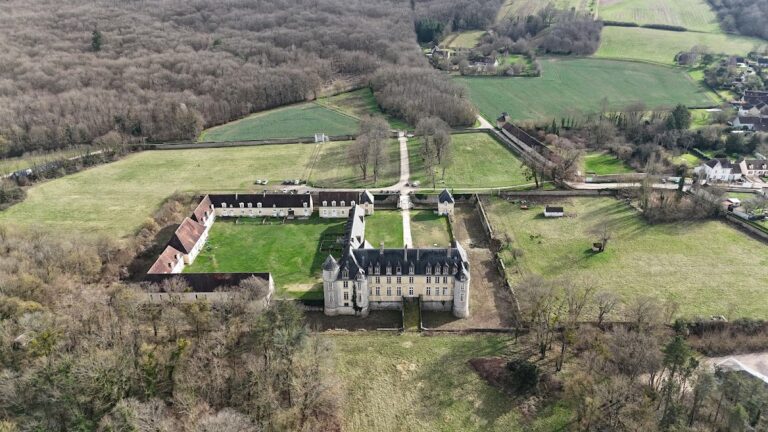
The permanent monastery occupied a site about three kilometres from Vieux-Écharlis, beside a stream chosen to provide a more suitable setting for the Cistercian community. Local materials shaped the buildings. Cut stone formed the load-bearing parts, while flint rubble filled the intervening sections. The abbey church and cloister used barrel vaults, continuous curved ceilings formed like extended half-cylinders.
Churches and cloister
Medieval abbey church
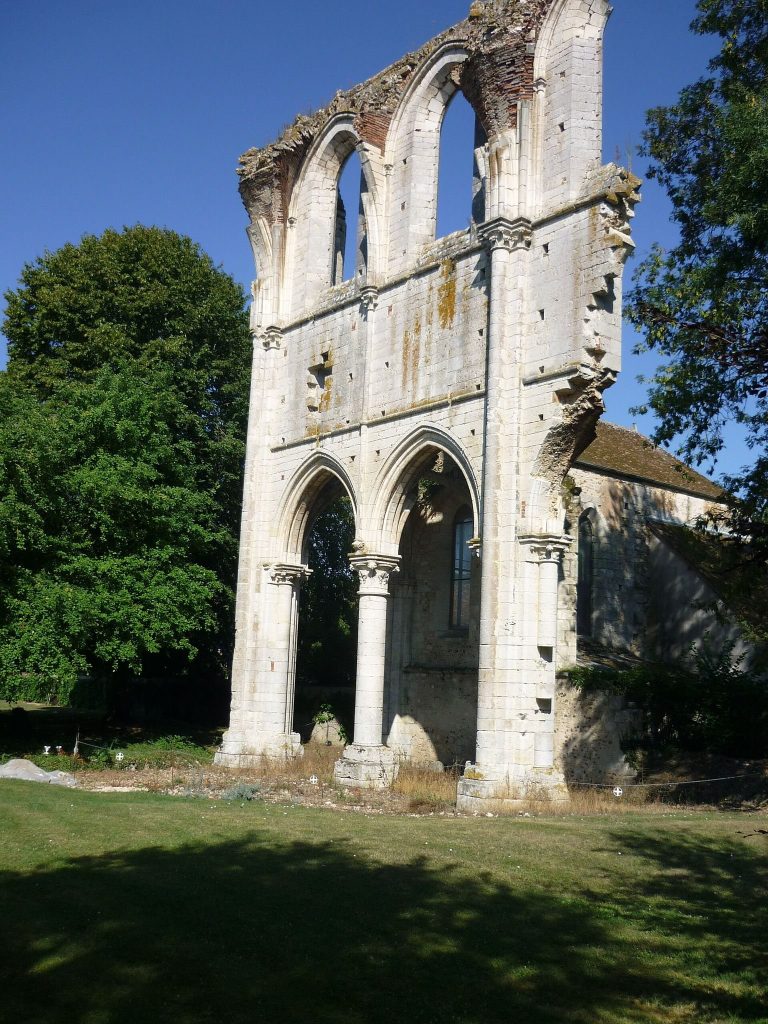
The medieval abbey church measured approximately 75 metres in length and 20 metres in width. During the Hundred Years’ War, soldiers destroyed it down to its walls. After the sixteenth-century disturbances, the former refectory was converted into an abbey church, reflecting the reduced condition of the monastery after repeated destruction.
Later church
Jean de Langeac may have constructed a much smaller church on the opposite side of the cloister. It measured approximately 32 by 10 metres. The building received a new roof during the eighteenth-century restoration, but it was not completely rebuilt.
Cloister remains
Some twelfth-century cloister arcades survive. The cloister formed part of the main monastic complex, whose vaulted construction used the same local combination of cut stone and flint rubble.
Entrance buildings and conventual remains
Entrance portal and chapels
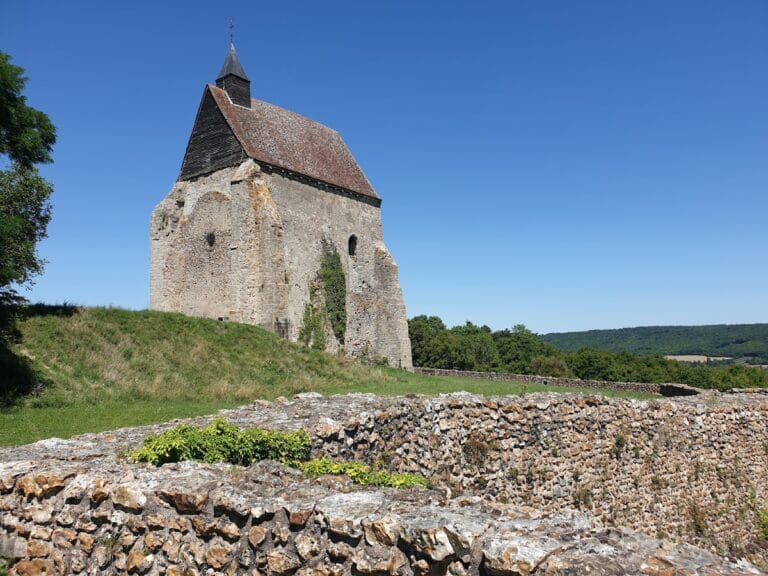
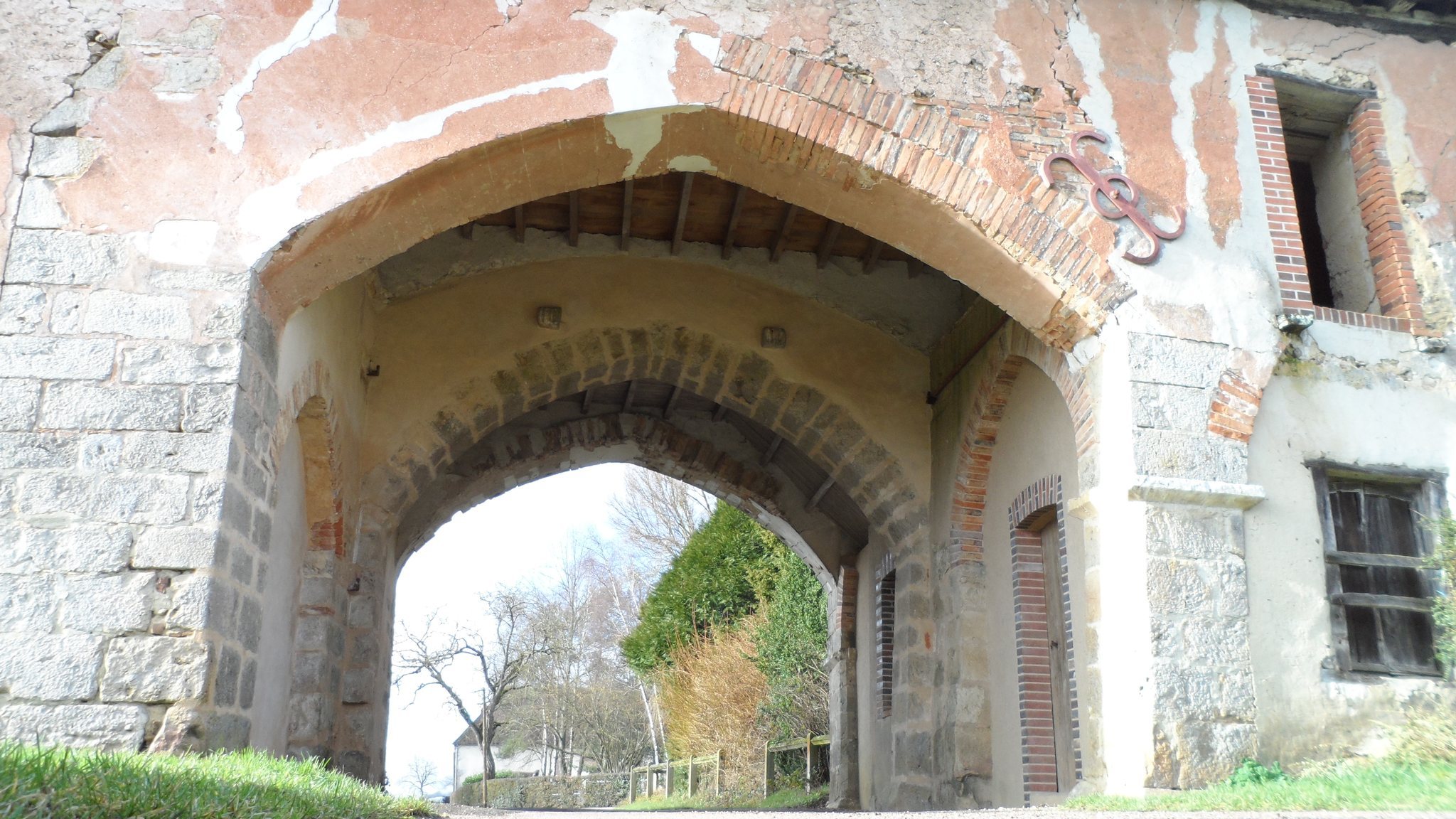
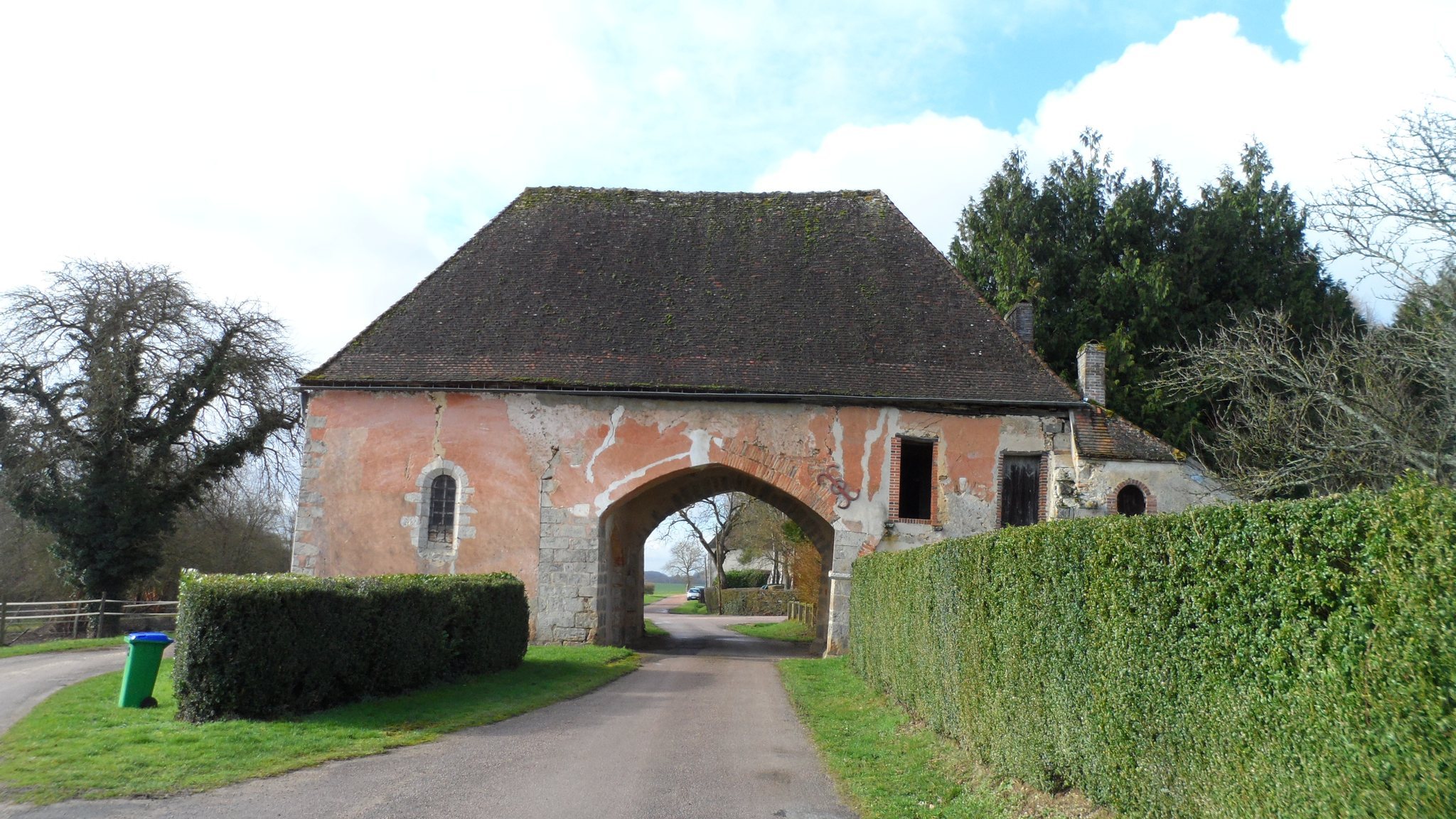
The entrance portal of the former abbey domain dates from the twelfth century. It incorporates a small chapel dedicated to Notre-Dame-de-Pitié, built in the thirteenth century and used as a place of local pilgrimage. The former gatehouse was restored in the seventeenth century and was flanked by a thirteenth-century guest chapel.
Chapter house and armarium
The surviving conventual remains include the chapter house, where the monastic community met for official business and discipline, and the armarium, a room or cupboard used for storing books and manuscripts. These features preserve elements of the abbey’s communal and literary life.
Monks’ building
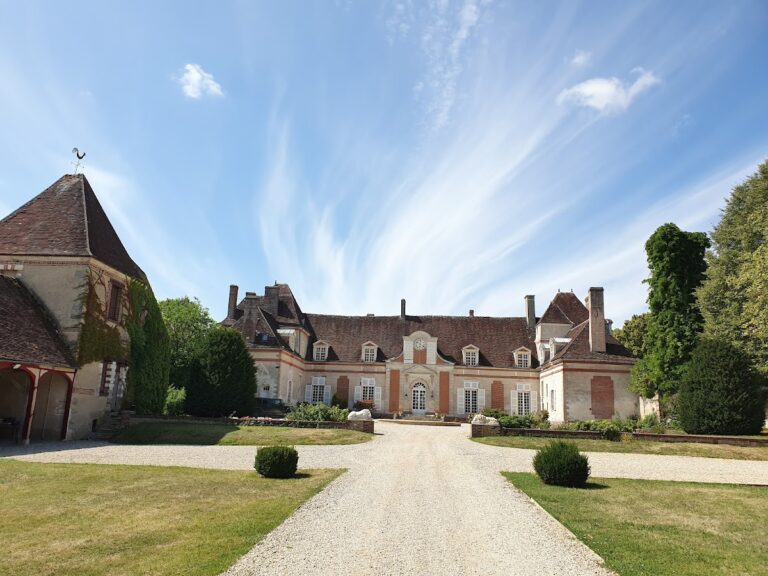
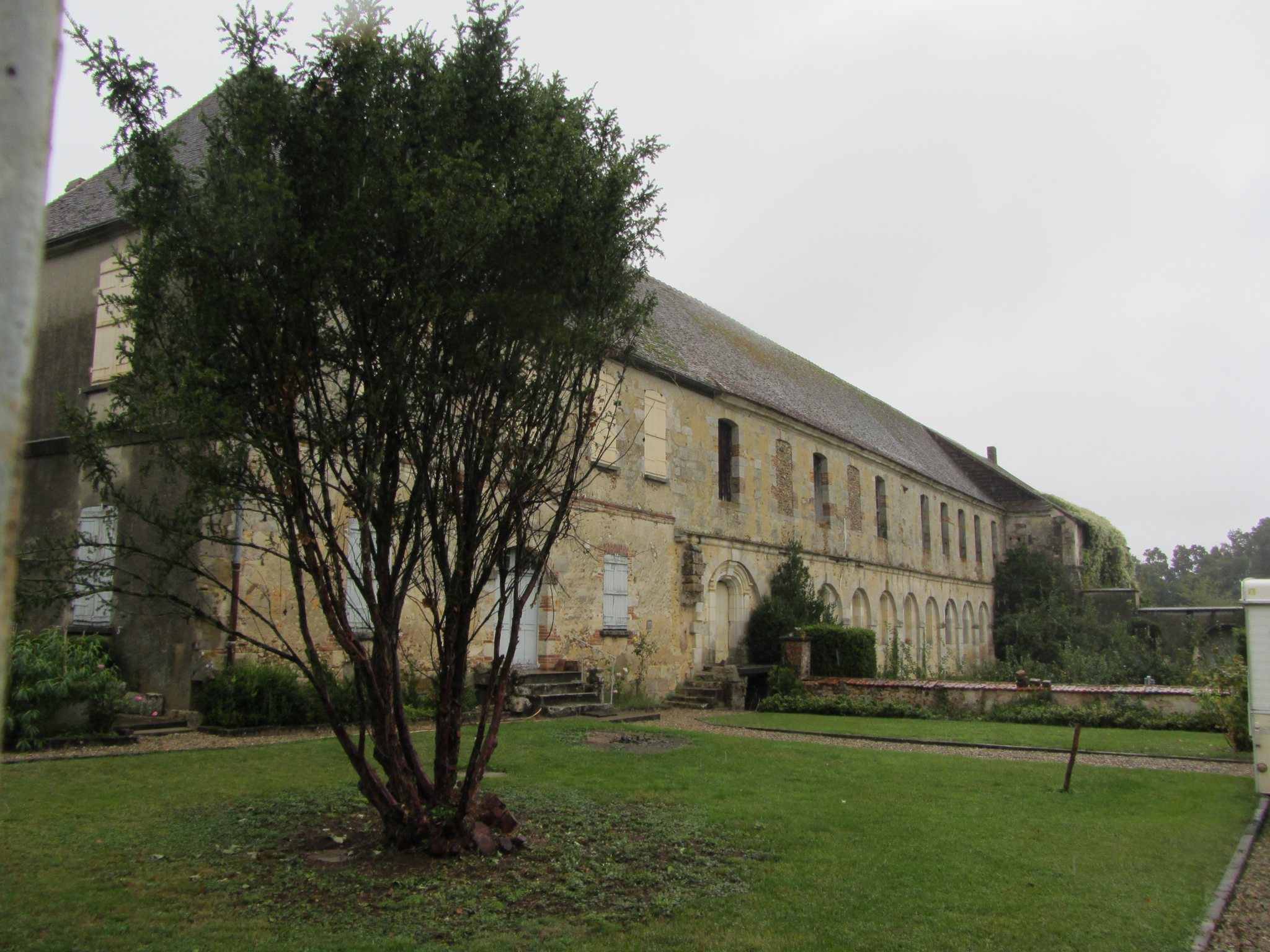
By 1868, the principal surviving element of the eighteenth-century monastery was the monks’ building, which measured approximately 130 metres in length. It formed the largest remaining part of the restored conventual complex after the medieval buildings had been repeatedly damaged and dismantled.
Water and agricultural estate
Courtyard fountain
A fountain in the abbey courtyard supplied ferruginous water. Its water was associated with the reported cure of Louis VI, the royal visitor whose connection with Écharlis helped preserve the fountain’s place in the abbey’s history.
Granges and cultivated lands
The abbey’s agricultural estate included granges at Bornisois, now Villiers-sur-Tholon, and Chailleuse, now Senan. These properties supported the community through cultivation. Later, when the monks could no longer farm the land themselves, some of the granges were leased to others.