National Museum of Natural History: Malta’s Natural-History Collections in Mdina


Site at a Glance
- Rating
- 3.6
- Popularity
- Low
- Country
- Malta
- Primary era
- Early Modern
- External website
- Open
- Eras represented
- Early Modern
- Civilizations
- Knights Hospitaller
- Site type
- Domestic
- Remains
- Palace
On this page6 sections
History
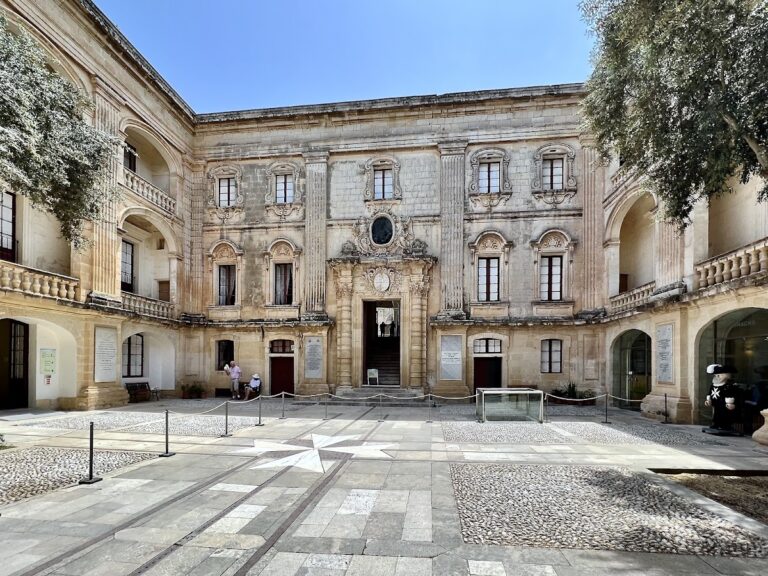
The National Museum of Natural History is a natural-history museum in Malta, located in Mdina, and housed in Palazzo Vilhena, a French Baroque palace rebuilt in 1726 under António Manoel de Vilhena, the 66th Grand Master of the Order of St John. The museum opened to the public on 22 June 1973 after renovation work on the palace had begun in the 1960s.
Palazzo Vilhena before the museum
Palazzo Vilhena was commissioned by Vilhena and designed by the French architect Charles François de Mondion. Before its conversion into a museum, the building served several medical purposes. It was used as a temporary hospital during the cholera epidemic of 1837, became a sanatorium for British troops in 1860, and later housed patients with tuberculosis in the early twentieth century.
A centre for natural-history research
Managed by Heritage Malta, Malta’s government heritage agency, the museum acquires, collects, conserves, and researches natural-history material, with particular attention to the Maltese natural environment. Its work encompasses geology, palaeontology, entomology, zoology, botany, marine and terrestrial ecosystems, endemic species, and the development of Maltese flora and fauna.
The museum’s bird collection began accumulating in the second half of the nineteenth century and contained approximately 10,000 specimens in 2019. The institution formerly held Malta’s Apollo 17 goodwill Moon rock, a lunar basalt sample presented to the Republic of Malta in 1973 by United States President Richard Nixon. The approximately one-gram specimen, cut from lunar basalt fragment 70017, was stolen with its plastic globe on 18 May 2004 and had not been recovered by September 2016. The globe also contained a small Maltese flag carried to the Moon by the Apollo 17 crew. The flag, commemorative plaque, and wooden support remained at the museum, while the missing specimen was valued at approximately US$5 million.
Remains
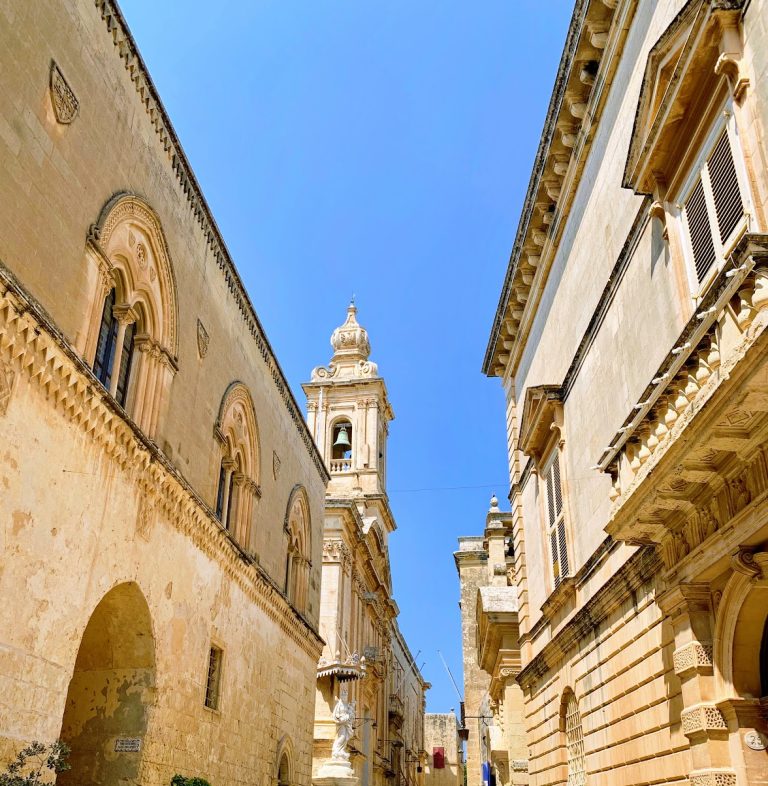
The museum occupies Palazzo Vilhena in Pjazza Publju, within Mdina’s medieval walled city. The palace is a French Baroque building dating from 1726 and includes a courtyard. Its rooms now organize displays around the geology, palaeontology, wildlife, and ecosystems of the Maltese islands.
Natural-history collections
The exhibitions include fossils, insects, shells, reptiles, birds, mammals, fish, marine fauna, and material concerning human evolution. A gallery focuses on vertebrate skeletons and skeletal anatomy, while other displays include entomological collections, butterfly cases, fossil cases, shell displays, and minerals. Among the notable specimens are the largest squid caught off the Maltese coast in 1989, the skull of a saber-toothed whale-eating shark, a 4,000-year-old mummy of a Nile crocodile, and a fossilized head of Tomistoma gaudense.
Minerals and island ecosystems
The Lewis Mizzi Hall presents minerals from Lewis Mizzi’s collection of more than 850 rocks and minerals, only a small portion of which is displayed. The Joe Sultana Hall examines the ecosystems of the Maltese islands, while the Giuseppe Despotta Hall presents typical Maltese habitats.
Dioramas, three-dimensional exhibition scenes using models, specimens, and constructed backgrounds, represent bird habitats on Malta’s cliffs and environments associated with dry-stone walls. Other displays emphasize the ecological importance of Filfla, Fungus Rock, the St Paul’s Islands, and Comino. Endemic species of the Maltese archipelago include the Maltese centaury, Malta’s national plant, and the Blue Rock Thrush. Birds form a substantial part of the exhibition, alongside displays relating to terrestrial and aquatic ecosystems.