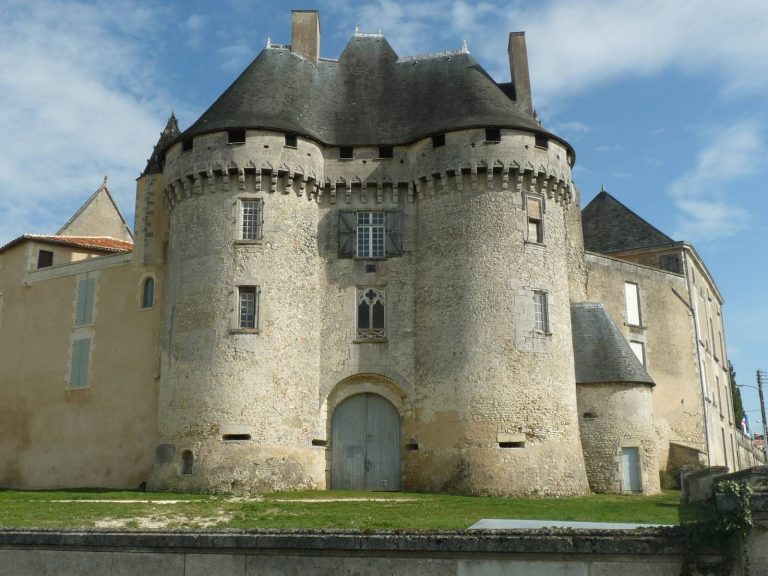
Château de Chalais: A Historic Fortress and Noble Residence in France


Site at a Glance
- Rating
- 4.6
- Popularity
- Low
- Country
- France
- Primary era
- Early Modern
- External website
- Open
- Eras represented
- Medieval, Early Modern, Modern
- Civilizations
- French
- Site type
- Military
- Remains
- Castle
On this page12 sections
History
Château de Chalais is a fortified residence in France whose initial construction dates from the eleventh century, with major rebuilding during the sixteenth century. The château is recorded in the eleventh century through Hélie, lord of Chalais, who attended the consecration of the Abbaye aux Dames of Saintes. Its later history reflects the fortunes of the Talleyrand family, military conflict, political disgrace, charitable use, and conservation.
Medieval lordship and war
Agnès of Chalais, the only descendant of her line, married Hélie de Talleyrand. During the thirteenth century, the Talleyrands adopted the hereditary title of princes of Chalais, linking the château to a noble lineage that retained the lordship for centuries.
During the Hundred Years’ War, the prolonged conflict between the English and French crowns, English forces occupied the château. Jacques de Chabannes, serving as a lieutenant of Charles VII, recaptured it on 17 June 1453. The action took place shortly before the Battle of Castillon, which effectively ended English rule in Guyenne, a historic region of southwestern France. After retaking the château, Jacques de Chabannes dismantled it.
Renaissance rebuilding and seventeenth-century upheaval
François de Talleyrand rebuilt the château at the beginning of the sixteenth century. Only a fourteenth-century square tower remained from the earlier structure, while the entrance châtelet and main building became the principal surviving elements of the reconstruction.
In 1587, the Duke of Joyeuse camped at the château before the Battle of Coutras, a conflict of the French Wars of Religion between Catholic and Protestant forces. He was killed in the battle.
Françoise de Montluc, daughter of the French military leader Blaise de Montluc, withdrew to the château after her family’s disgrace in the Affair of Chalais. Henri de Talleyrand, Count of Chalais, was convicted of lèse-majesté, a crime against the sovereign or the dignity of the state, and executed in 1626 at the age of 27 by an inexperienced executioner. Françoise then began a major building program at the château, including the private chapel that survives within the complex.
The roofs were changed to mansard roofs during the seventeenth century. A mansard roof has two slopes on each side, with the lower slope steeper than the upper one.
From noble residence to charitable institution
Charles-Maurice de Talleyrand-Périgord, the statesman and diplomat later known simply as Talleyrand, spent part of his youth at the château from 1758 to 1761. He stayed there as a guest of his great-grandmother, Marie-Françoise de Rochechouart-Mortemart, Princess of Chalais.
During the French Revolution, the Prince of Chalais did not emigrate. He was imprisoned only as a suspect and retained his estates.
After Hélie-Louis-Roger de Talleyrand died in 1883, he left the château to the hospices of Chalais. These charitable institutions established an old-age asylum there. The proceeds from the sale of the château’s tapestries in 1896 were given to the hospice. The north wing was rebuilt around 1880, adding a later phase to the complex.
Modern ownership and protection
The hospices placed the château on the market in 2011 because they lacked the funds needed for essential works. Yves Lecoq, a television performer and imitator, purchased it at the end of that year. Restoration after the purchase renewed much of the roofing and repaired the upper parts of the keep, including the reconstruction of its wall-walk, a passage along the top of a defensive wall.
In November 2022, Yves Lecoq announced that the château was for sale. The Thery family acquired it in September 2025. France’s historic-monuments system provides dual protection: the buildings as a whole were registered on 4 September 2002, and the entrance châtelet was classified on 1 April 2003.
Remains
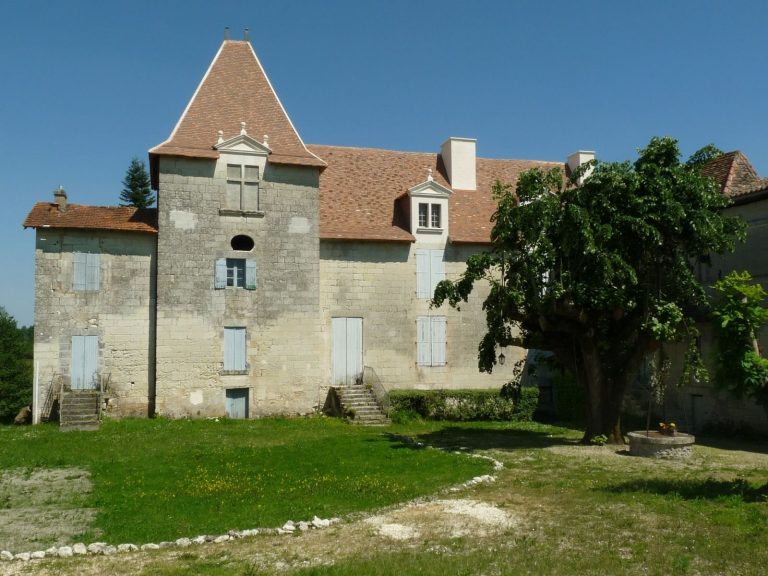
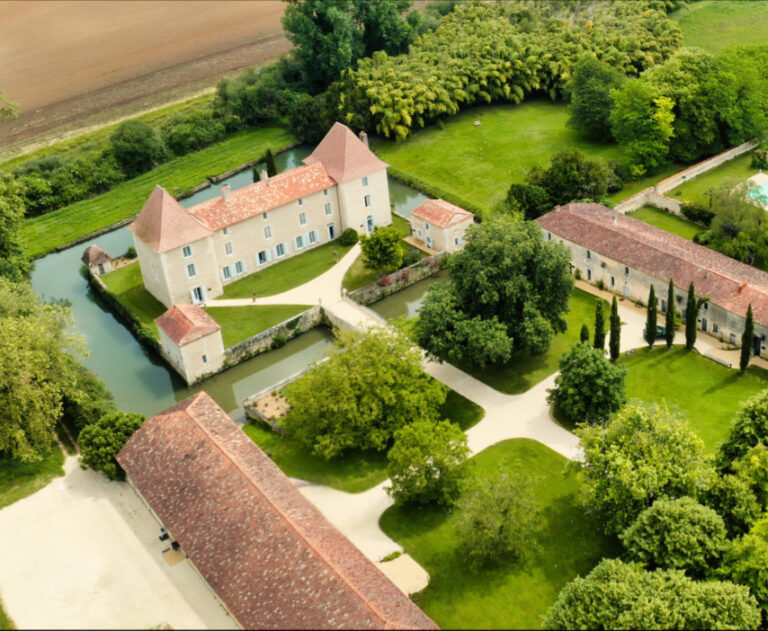
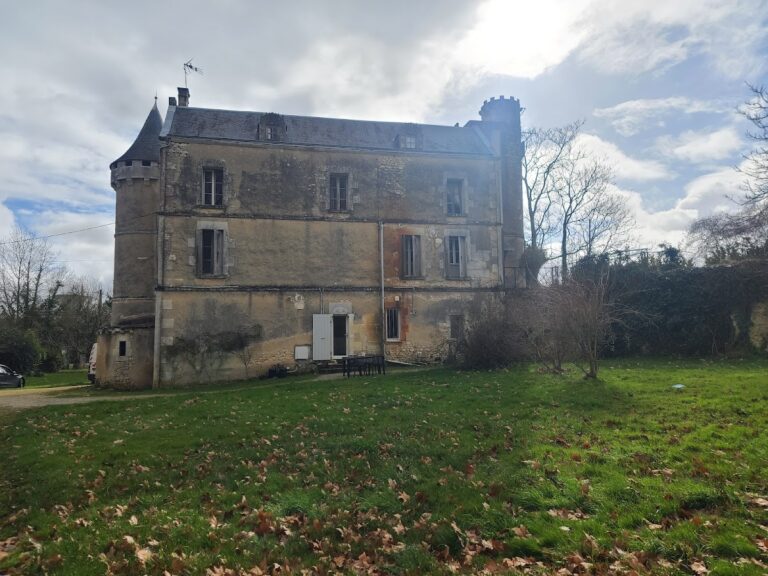
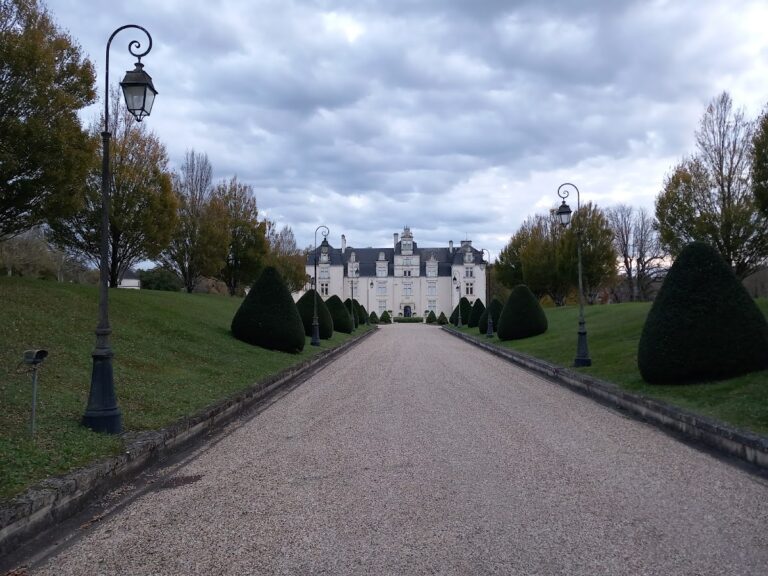
Château de Chalais occupies a rocky spur between the Tude and Viveronne rivers, overlooking the town of Chalais. Its buildings form a quadrilateral. The surviving complex combines the sixteenth-century rebuilding with later changes, including the north wing reconstructed around 1880 and the seventeenth-century mansard roofs.
Entrance and defensive structures
Entrance châtelet
The entrance is formed by a châtelet, a fortified entrance structure, housed in a pavilion with separate gates for pedestrians and carriages. The pavilion retains its drawbridge. Together with the main building, it represents one of the principal surviving parts of François de Talleyrand’s sixteenth-century rebuilding.
Square tower and wall-walk
A large square tower stands within the complex. It was rebuilt during the same period as the sixteenth-century facade, while the earlier structure had retained a fourteenth-century square tower after the medieval château was dismantled. Modern restoration repaired the upper parts of the keep and reconstructed the wall-walk along the top of the defensive wall.
Residential and religious buildings
Main building and north wing
The main building and the sixteenth-century facade form the principal residential remains of the Renaissance rebuilding. The north wing, reconstructed around 1880, represents a later alteration to the quadrilateral arrangement. Extensive modern work renewed a large part of the roofs across the château.
Private chapel
The château contains the private chapel associated with Françoise de Montluc’s building program. A private chapel is a place of Christian worship reserved for a household or private community, and this surviving interior work belongs to the period following her withdrawal to Chalais.