Palazzo Attems Petzenstein: Historic Palace and Art Gallery in Gorizia



Site at a Glance
- Rating
- 4.5
- Popularity
- Low
- Country
- Italy
- Primary era
- Early Modern
- External website
- Open
- Eras represented
- Early Modern
- Civilizations
- Habsburg, Holy Roman Empire
- Site type
- Domestic
- Remains
- Elite Residence
On this page7 sections
History
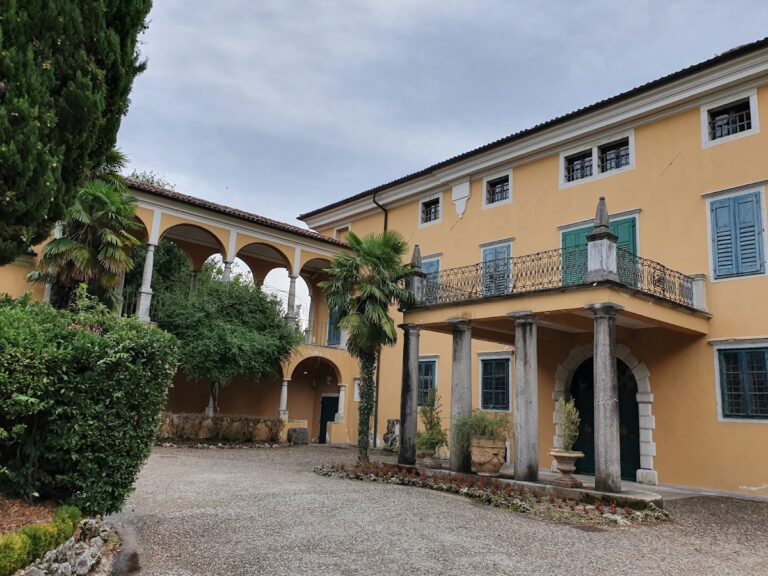
Palazzo Attems Petzenstein is a historic palace in Gorizia, Italy, built by the Attems family during the first half of the eighteenth century on the site of a seventeenth-century building. Construction began in 1714 under Giovanni Francesco Attems Petzenstein and continued until 1745, the year engraved on the façade. Completion took place under Count Sigismondo d’Attems Petzenstein, who brought the architect Niccolò Pacassi into the project.
The Attems family and eighteenth-century development
Sigismondo d’Attems Petzenstein also commissioned the Attems Altarpiece in 1758 from Giambettino Cignaroli. The painting was made for the Attems family chapel, formerly located in the church of the Conventual Franciscans of San Francesco in Piazza Sant’Antonio, Gorizia. Pacassi, who later became a court architect to Empress Maria Theresa of Austria, was also responsible for the design of the Fountain of Hercules, made in 1769.
Ownership later passed from Sigismondo’s son, Giovanni Lodovico. Between 1892 and 1908, the palace belonged successively to the Culot, Birsa, and Strukl families. In 1900, it became the seat of the provincial museums, beginning its continuing association with the preservation and display of art in Gorizia.
War damage and museum use
The palace suffered substantial damage during the First World War. The historian Giovanni Cossar directed its restoration, and the building reopened in 1924 under the name Museo della Redenzione. Further damage occurred during the Second World War, followed by restoration in 1946. Additional restoration and modernization were carried out between 2009 and 2010.
Palazzo Attems Petzenstein now contains temporary-exhibition spaces and the art gallery of the Provincial Museums of Gorizia. Its collections are associated with artistic production from the mid-eighteenth to the mid-twentieth century, including works by artists connected with Gorizia and with the Viennese Secession, a modern-art movement founded by artists seeking greater freedom from established academic institutions, and Futurism, an early twentieth-century movement focused on modernity, speed, technology, and dynamic forms.
Remains
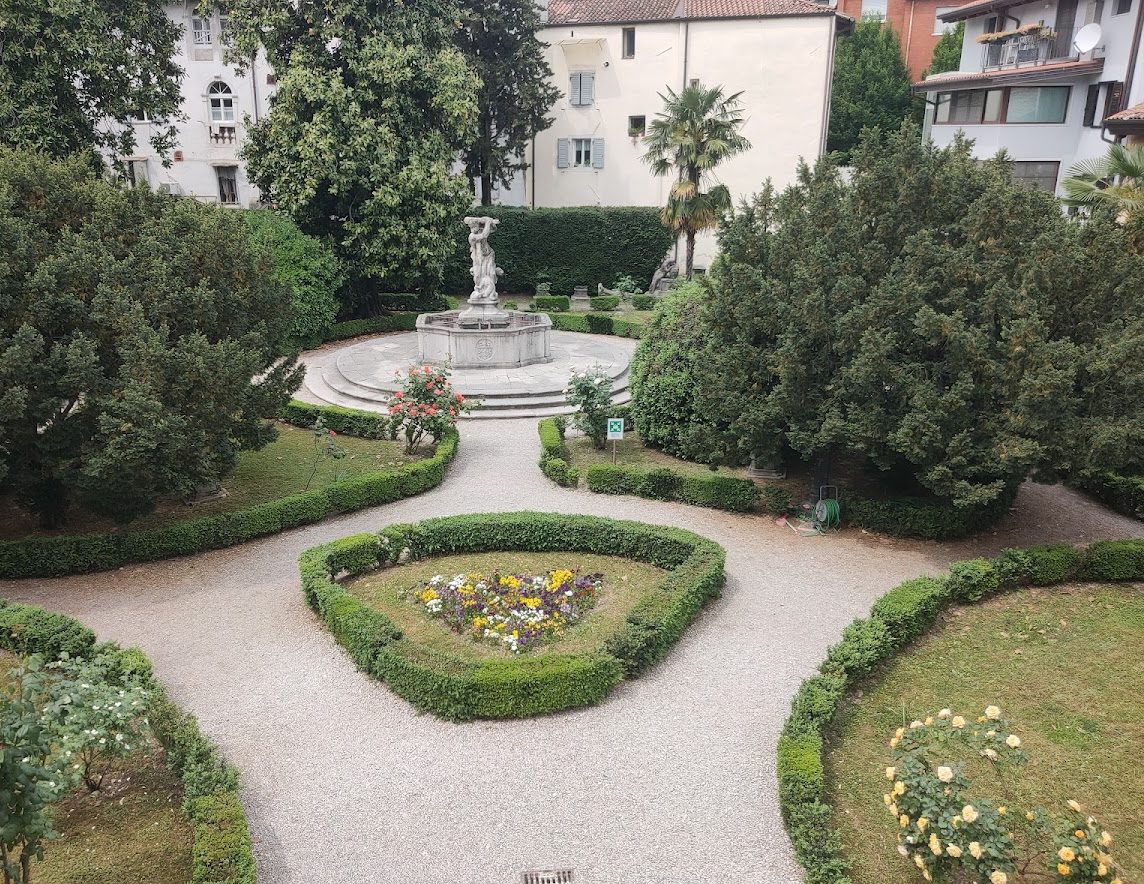
The palace has a horseshoe-shaped plan, with two lateral wings of unequal size. An Italian-style garden occupies the space between them, while the central part of the three-storey façade organizes the principal entrance and ceremonial rooms. Surviving interiors, sculpture, frescoes, and the museum collections preserve both the building’s eighteenth-century character and its later cultural function.
Palace plan and façade
The entrance portal lies in the middle of the central façade and opens onto an atrium with two staircases leading to the upper floor. On the piano nobile, the principal ceremonial or residential floor of a historic palace, the reception hall has a large window opening onto a balcony with a projecting stone balustrade. The Attems family coat of arms is placed above the window, and a stone balustrade crowns the central section. Statues decorate the upper part of the building; Giovanni Battista Mazzoleni made them.
Garden and decorated interiors
The garden now contains the gallery’s lapidarium, a display of stone artifacts such as architectural fragments, inscriptions, or sculptures. At its centre stands the Fountain of Hercules, made in 1769 to a design by Niccolò Pacassi. The fountain originally stood in the square in front of the palace. Two rooms contain slightly later frescoes by Francesco Chiarottini of Cividale.
Gallery rooms and collections
The art gallery occupies the piano nobile and displays paintings, prints, drawings, and sculptures dating from the mid-eighteenth to the mid-twentieth century. The ceiling of the salone d’onore, the palace’s principal reception hall, bears Antonio Paroli’s fresco of the Gods of Olympus. The same room contains Cignaroli’s Attems Altarpiece, painted in 1758.
The gallery holds a substantial group of works by Giuseppe Tominz, the Gorizian portrait painter, including his self-portrait with his brother Francesco. Other paintings represent Josef Maria Auchentaller, associated with the Viennese Secession and described as close to Gustav Klimt, along with Italico Brass, Gino de Finetti, Edoardo Del Neri, Luigi Spazzapan, Veno Pilon, Ivan Čargo, Augusto Černigoj, Vittorio Bolaffio, Giannino Marchig, and the Futurists Sofronio Pocarini, Tullio Crali, Raoul Cenisi, and Rudolf Saksida. The sculpture collection includes works by Marcello Mascherini, Ferruccio Patuna, Mario Sartori, Ugo Carrà, France Gorše, Giorgio Carmelich, Arturo Nathan, and the Gorizian artist Anton Zoran Music.
Nearby sites