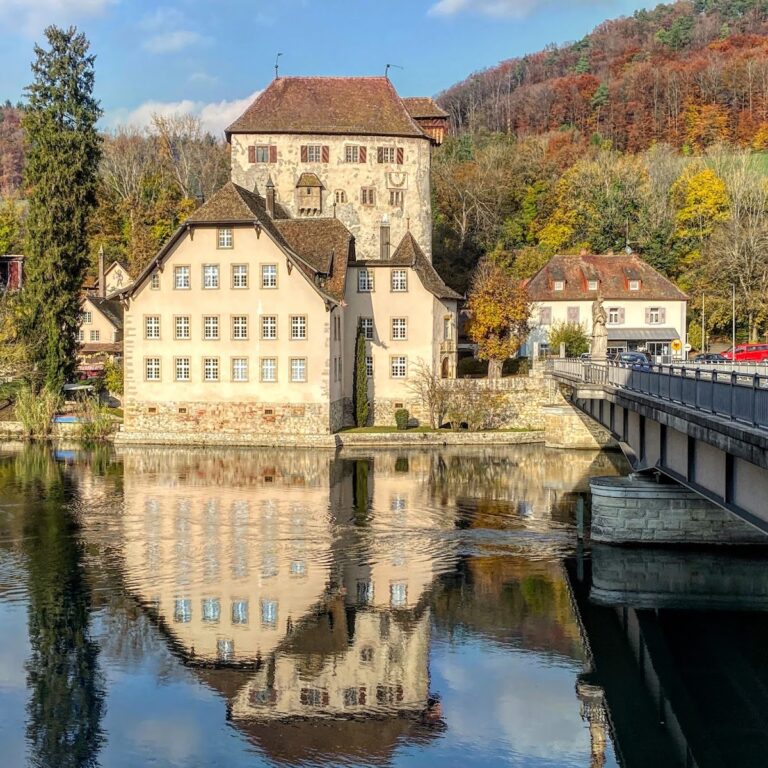
Regensberg Castle: A Medieval Hill Castle and Administrative Seat in Switzerland


Site at a Glance
- Rating
- 4.6
- Popularity
- Low
- Country
- Switzerland
- Primary era
- Medieval
- External website
- Open
- Eras represented
- Medieval, Early Modern, Modern
- Civilizations
- Swiss
- Site type
- Military
- Remains
- Castle
On this page9 sections
History
Regensberg Castle is a medieval hill castle in Regensberg, Switzerland, founded by the House of Regensberg around the mid-thirteenth century. Construction began around 1245 and was completed around 1250, creating a fortified castle town on the Lägern ridge above the lower Glatt Valley. The foundation may have been initiated by Lütold V von Regensberg or his son Ulrich around 1240–45. The site strengthened the family’s regional position and became known as Neu-Regensberg.
The House of Regensberg
The House of Regensberg had already established a stronghold called Alt-Regensberg near present-day Regensdorf around 1040–50. The family expanded its influence through castle building, town foundations, marriage alliances, and support for Fahr Abbey and Rüti Abbey. After Lütold V died around 1250, his sons Lütold VI and Ulrich divided the inheritance. Ulrich received Neu-Regensberg and its associated possessions, while Lütold VI retained the ancestral castle and other holdings after another division in 1255.
The Regensberg Feud and Habsburg Rule
Disputes between the House of Regensberg and Zürich, along with conflicts over former Kyburg territories, led to the Regensberg Feud of 1267–68. The Regensbergs fought in alliance against Zürich and Rudolf von Habsburg, who later became King of the Romans in 1273. Their defeat weakened the family’s regional power. Ulrich died around 1280, and his son Lütold VIII sold Neu-Regensberg to Habsburg-Austria in 1302.
The Habsburgs repeatedly mortgaged the castle and town. Zürich acquired the lordship of Regensberg around 1407–09, and from 1417 the castle became the seat of Zürich’s bailiff for the Regensberg bailiwick. A bailiff was an official administering a territory for a higher lord or government. The district was later known as the Outer Bailiwick.
War, Fire, and Defensive Modernization
During the Old Zürich War, a conflict between Zürich and the Swiss Confederates from 1436 to 1450, Regensberg was conquered by Zürich’s opponents in 1443. The town and castle were not destroyed, and Zürich reoccupied and remanned the site in 1444.
On 9 September 1540, a major fire destroyed the town. The castle was largely spared because a ditch separated it from the upper town, which was rebuilt the following year. From 1689, the castle and upper town were strengthened according to contemporary military standards. The lower town, outside the town wall, was not included in this modernization.
From Bailiwick to School
French revolutionary troops entered the Old Swiss Confederacy in 1798, and Zürich’s council abdicated on 13 March. The bailiwicks were dissolved, the last bailiff left the castle, and Regensberg became part of the Bülach district under the Helvetic Republic, the centralized Swiss state established under French influence from 1798 to 1803.
After the Helvetic Republic ended, Regensberg became a district capital in 1803. The castle continued as an administrative seat until the nineteenth century, while its main building housed the district prison until about 1863–65. Regensberg lost its district-capital status to Dielsdorf in 1871.
In 1883, a charitable foundation was established to create a special-needs school for children and young people. The former palace and later school buildings subsequently served this institution, now associated with Stiftung Schloss Regensberg. From 1935, the site also formed part of a defensive system in the Zurich Unterland. A machine-gun position was installed within the preserved historic fortification, and the nearby Stadel blocking position included heavy guns and anti-tank obstacles. The castle, round tower, and well are listed in the Swiss inventory of cultural property of national and regional significance as Class B objects of regional importance.
Remains
Regensberg was planned as a fortified castle town on the Lägern ridge, at roughly 600 metres above sea level, overlooking the lower Glatt Valley and the Dielsdorf area. The upper castle, or Oberburg, contained the castle and inner town within a town wall. Two rows of houses surrounded a rectangular main square. The lower town, or Unterburg, developed outside the walls in the western depression below the castle hill, probably during the fourteenth century.
Round Tower and Well
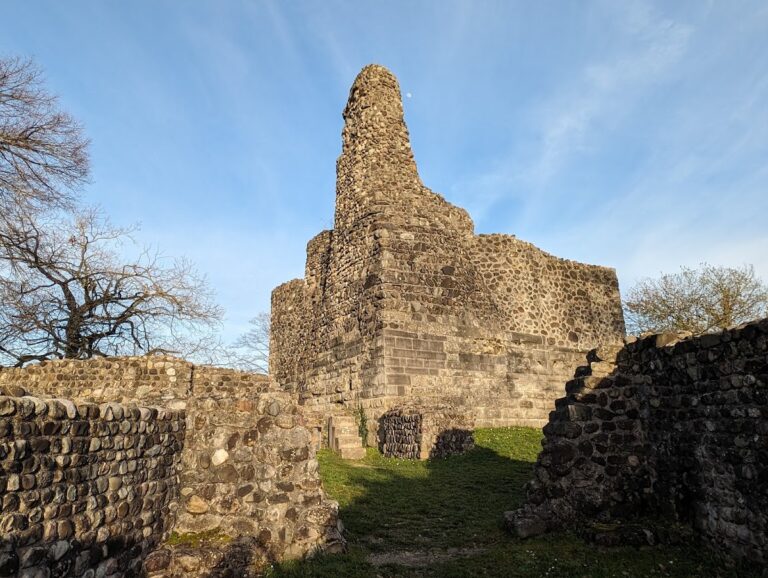
The Rundturm, or round tower, is the only surviving remnant of the mid-thirteenth-century castle and retains much of its original construction. It is a five-storey keep, the castle’s main fortified tower, built from local limestone. Its walls are about 3 metres thick, and its basement measures about 9 metres in diameter. The tower originally had an elevated entrance and an approximately 11-metre-high pointed roof. Lightning destroyed the roof in 1766, after which the tower received its present battlements and a bridge connecting it to the palace. A single-storey entrance was added in 1894. Thorough renovation followed in 2009, when a small exhibition on the history of the castle and town was installed inside.
A 57-metre-deep well was cut into the limestone of the upper town. It is described as the deepest shaft well in Switzerland and remains one of the defining physical features of the fortified settlement.
Palace and Enclosure
A palas, the principal residential and administrative building of a medieval castle, stood immediately north of the round tower. Although it largely survived the fire of 1540, it was demolished to its foundations in 1583 and 1585. A three-storey building then replaced it, substantially forming the present northern palace wing.
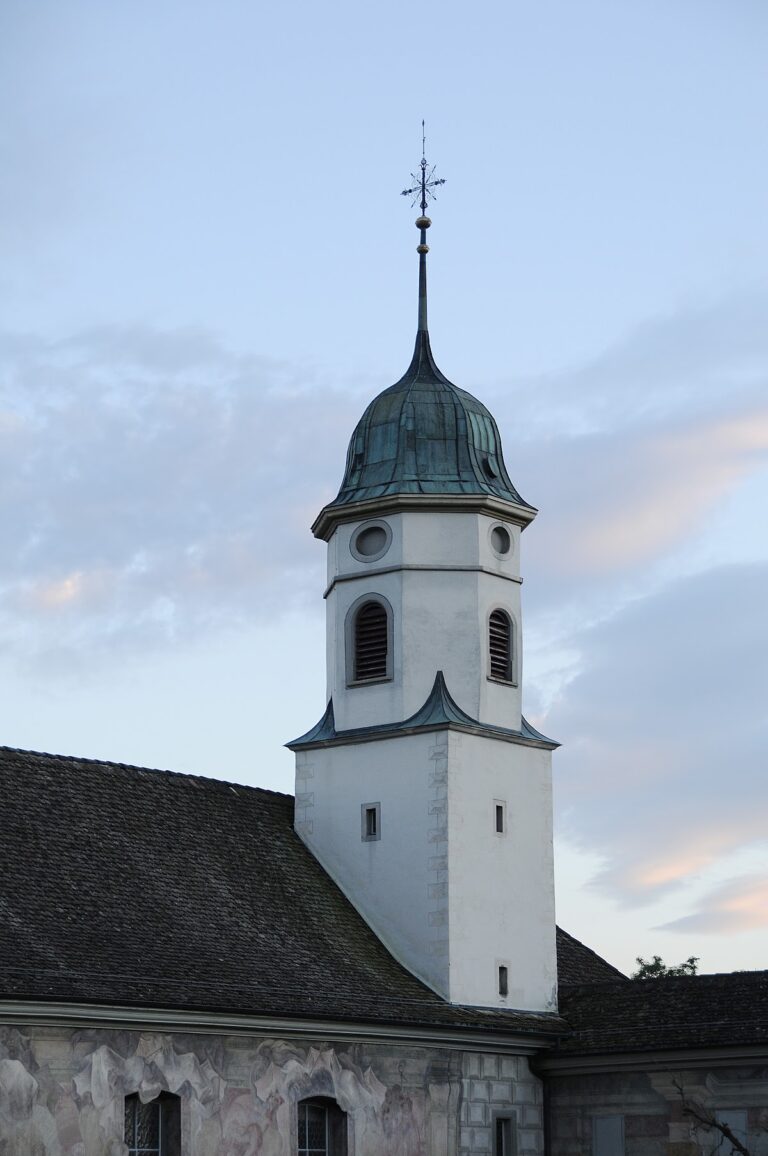
The castle complex was enclosed by a ring wall and contained economic buildings and facilities including a wash house, stables, gardens, and a chapel. A gate linked the complex with the upper town. The former gate and stable barn were later demolished. The main building was widened in 1890 and converted into a school. New buildings were added to the west, while the Unteres Haus became residential space and a sheltered basket-making workshop. The complex is now used by Stiftung Schloss Regensberg.
Later Fortifications
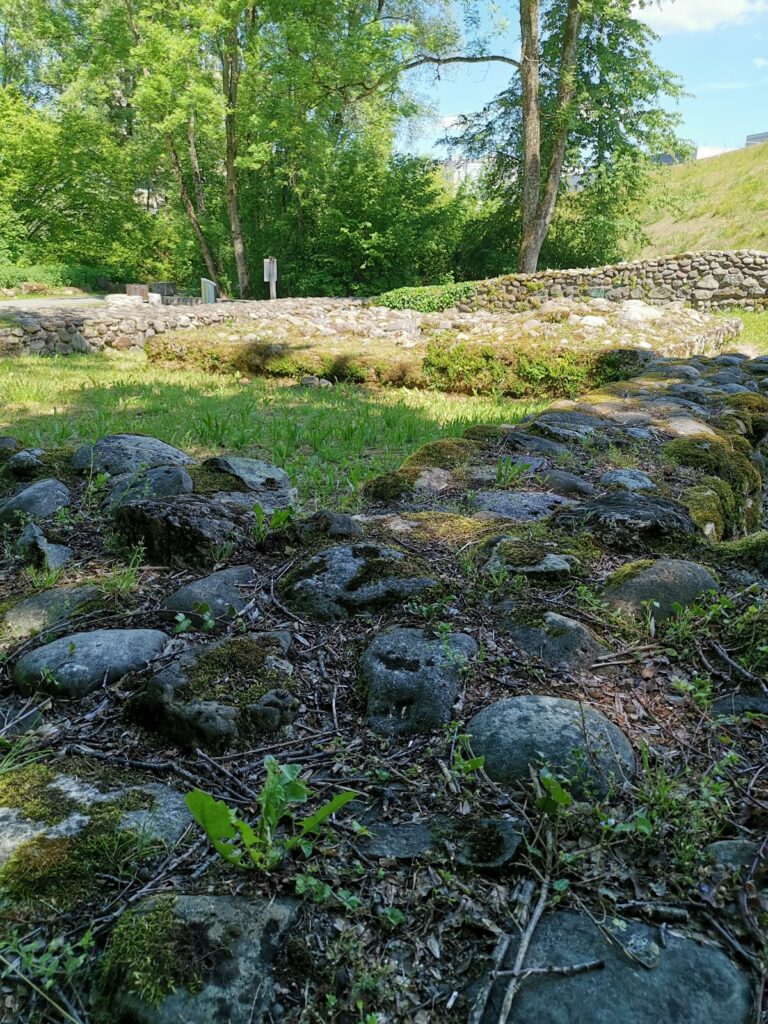
The upper town and castle retain defensive works added in later periods, including the fortifications constructed from 1689 and the southeastern section of the former Dielsdorf Gate’s hornwork, a projecting defensive earthwork. A machine-gun bunker was incorporated into the historic defensive earthworks, joining the medieval and early modern structures with the twentieth-century military system.