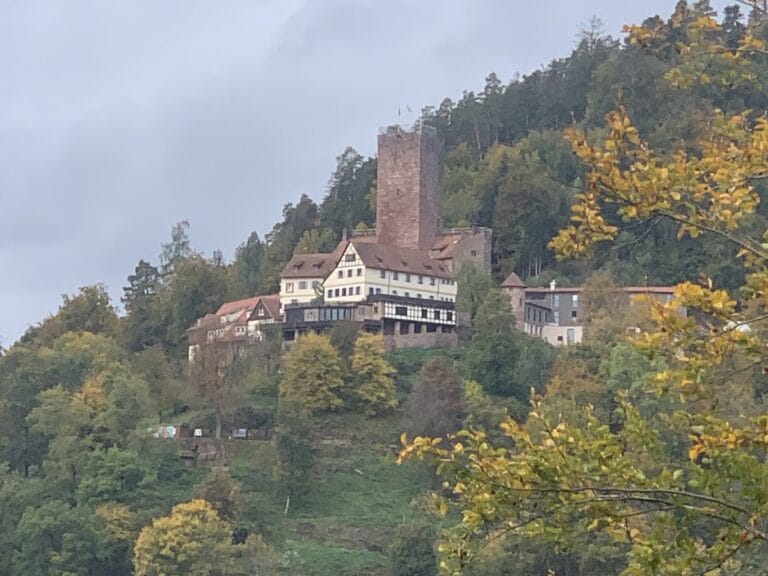
Schloss Neuenbürg: A Medieval Castle and Renaissance Palace in Germany


Site at a Glance
- Rating
- 4.5
- Popularity
- Low
- Country
- Germany
- Primary era
- Early Modern
- External website
- Open
- Eras represented
- Medieval, Early Modern
- Civilizations
- Duchy of Württemberg, Holy Roman Empire
- Site type
- Domestic
- Remains
- Palace
On this page12 sections
History
Medieval Origins
Schloss Neuenbürg is a medieval castle and Renaissance palace complex in Germany, built on a strategic height above the town on a loop of the Enz River in the northern Black Forest. The original castle, known as Novum Castrum, or “new castle,” was founded by the Counts of Vaihingen in the thirteenth century with a ring wall and moat. The castle was probably already comparable in extent to the present complex during the medieval period.
King Rudolf of Habsburg, the thirteenth-century German ruler whose reign helped establish the Habsburg dynasty’s wider political importance, acquired the castle in 1285. It briefly became an imperial possession before passing in 1320 to Count Eberhard I of Württemberg. Eberhard intended the stronghold to help protect Württemberg’s western frontier against Baden.
Renaissance Residence
Duke Christoph of Württemberg began constructing the palace around 1550. Hans Hertz and Jochen Maier were among the named builders, followed from 1557 by Aberlin Tretsch. The new palace was planned as a residence for members of the ducal family. Two short-lived collateral lines of Württemberg-Neuenbürg emerged during the seventeenth century, although Neuenbürg never became a ducal residence.
In 1617, the summit on the southern side was levelled. Heinrich Schickhardt then created a pleasure garden and a water supply, forming part of repeated efforts to develop the site as a residence. These works expanded the setting without changing Neuenbürg’s more limited role within the Württemberg territories.
War, Reconstruction, and Administration
The Thirty Years’ War, the major European conflict of 1618 to 1648 that brought warfare, requisitioning, and population displacement to many towns and castles in the German states, severely affected Neuenbürg. Schloss Neuenbürg and the town were plundered in 1638. The population was expelled, and agricultural land was destroyed.
A fire around 1650 led to the rebuilding of the north wing between 1652 and 1659, while the remaining buildings were renovated. The palace was later occupied by ducal officials and became the seat of administrative offices. The forestry office, previously based in Bad Wildbad, moved into the palace in 1726. From 1940, rooms also served as apartments and as a painter’s studio. The painter and sculptor Hans Ludwig Pfeiffer maintained his working spaces there from 1967.
The State Forestry Office remained in the palace until 2004, when administrative reform transferred its responsibilities to the Enzkreis district forestry office. This ended the building’s long period as a forestry administration center and helped make possible its continuing cultural use.
Modern Cultural Use
After extensive renovation lasting several years, a branch museum of the Baden State Museum and a restaurant opened in the palace in 2001. The museum combines a multimedia presentation of Wilhelm Hauff’s fairy tale The Cold Heart with regional history. Hauff was a nineteenth-century German writer, and the tale is set in the Black Forest around the charcoal burner Peter Munk.
The regional displays include the northern Black Forest timber rafting industry and archaeological finds from the La Tène period, an Iron Age cultural period associated with Celtic communities, as well as material from the Middle Ages. Annual temporary exhibitions on cultural and historical subjects have been presented since 2003. Since 2004, the Forum for Contemporary Art has also organized annual exhibitions, giving the restored palace an ongoing museum and exhibition function.
Remains
Fortifications and Palace Layout
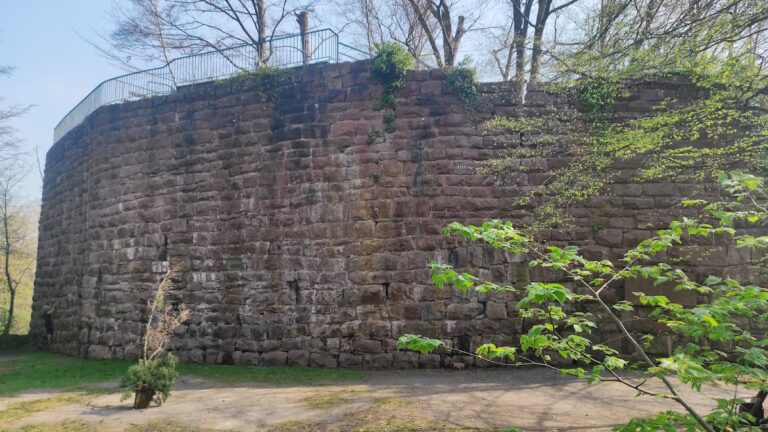
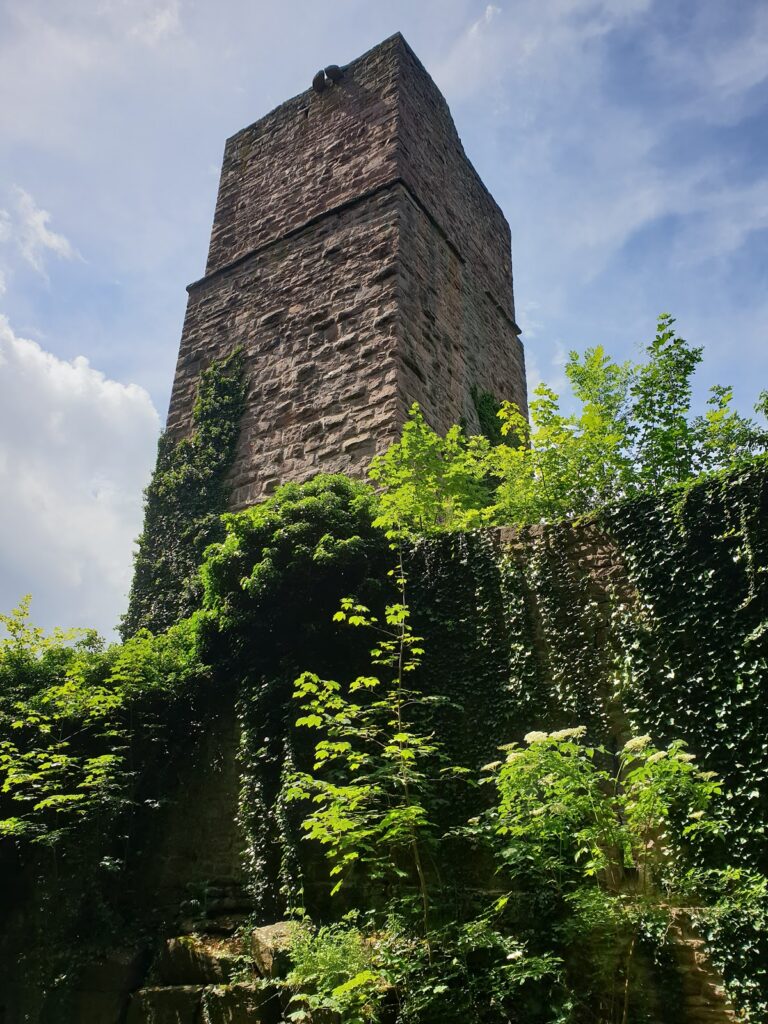
Substantial remains of the medieval fortification survive within the present complex. The castle’s early defensive character is represented by the surviving medieval fabric, including the ring wall and moat associated with its foundation. The site’s elevated position above the Enz River helped define its strategic setting and continued to shape the arrangement of the later palace.
Palace Complex and Grounds
Wings and Courtyard
The palace is formed by two main wings that converge obliquely toward one another. A bridge joins them on the west, while a wall closes the complex on the east, producing a quadrilateral plan. The south wing retains its original plain, three-storey form. It is a functional Renaissance building, meaning that it was designed primarily for practical use while employing forms and construction traditions associated with the Renaissance.
The north wing was rebuilt after the fire between 1652 and 1659. A portal in the west wing, now serving as the entrance to the palace courtyard, carries the clearly visible date 1658. Together, the surviving Renaissance south wing, the reconstructed north wing, the western bridge, and the eastern enclosing wall express the successive phases of the palace’s development.
Pleasure Garden and Park
The palace grounds include a park of approximately 7,000 square metres. The historic pleasure garden was created in 1617 during the same works as the site’s water supply. Its surviving association with the palace reflects the seventeenth-century attempts to make Neuenbürg more suitable as a residence.
Church of St. George
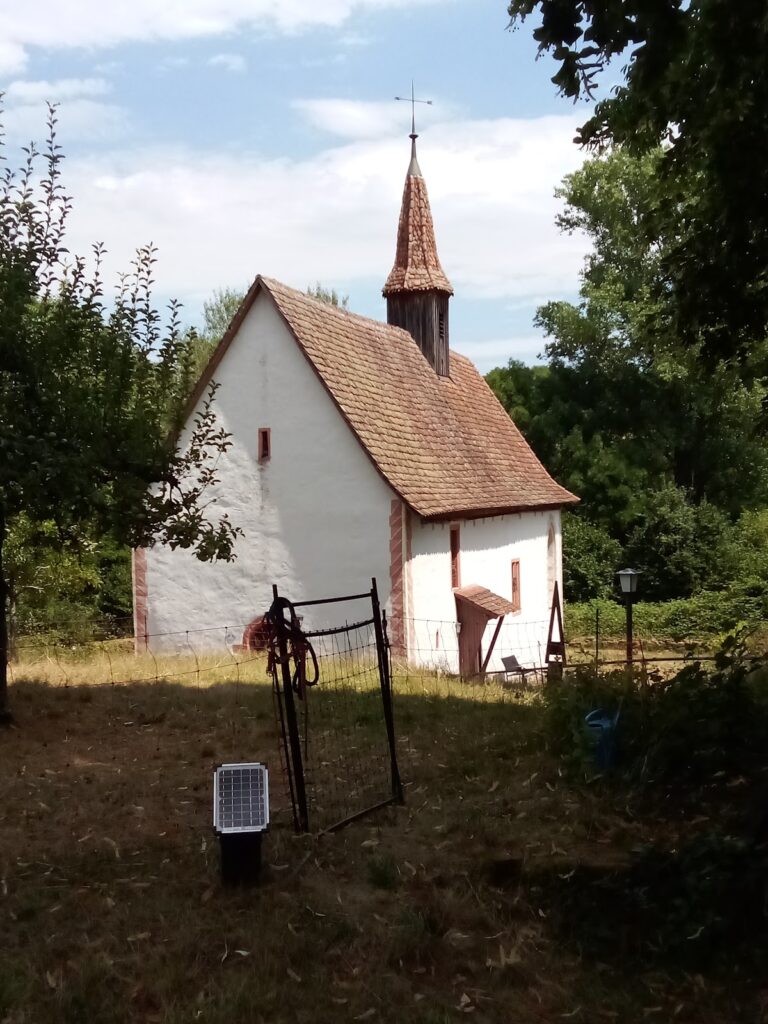
The Church of St. George stands on the Schlossberg and was formerly the palace chapel. Built in the thirteenth century, it was fitted with wall paintings around 1340. The painting cycles include scenes from the life of Christ, episodes from the life of the Virgin Mary, and the Last Judgment. These paintings are regarded as among the most valuable works of their kind in Baden-Württemberg.
The church tower contains a timber-framed storey whose construction preserves recognizable elements of medieval building technique. Gravestones that were formerly set into the floor were moved to the choir wall during renovation. One is the tomb slab of a member of the von Gültlingen family, dated either 1412 or 1415.
Museum Displays and Archaeological Material
The museum’s presentation of The Cold Heart uses six walk-through multimedia scenes to depict the fate of Peter Munk, the tale’s charcoal burner. The regional-history displays connect the palace with northern Black Forest timber rafting and include notable archaeological finds from the La Tène period and the Middle Ages. These exhibits extend the site’s interpretation beyond its buildings to the wider history of the surrounding region.
Nearby sites