Château du Puy-du-Fou: A Renaissance Castle in Vendée


Site at a Glance
- Rating
- 4.5
- Popularity
- Low
- Country
- France
- Primary era
- Early Modern
- External website
- Open
- Eras represented
- Early Modern
- Civilizations
- French
- Site type
- Domestic
- Remains
- Castle
On this page6 sections
History
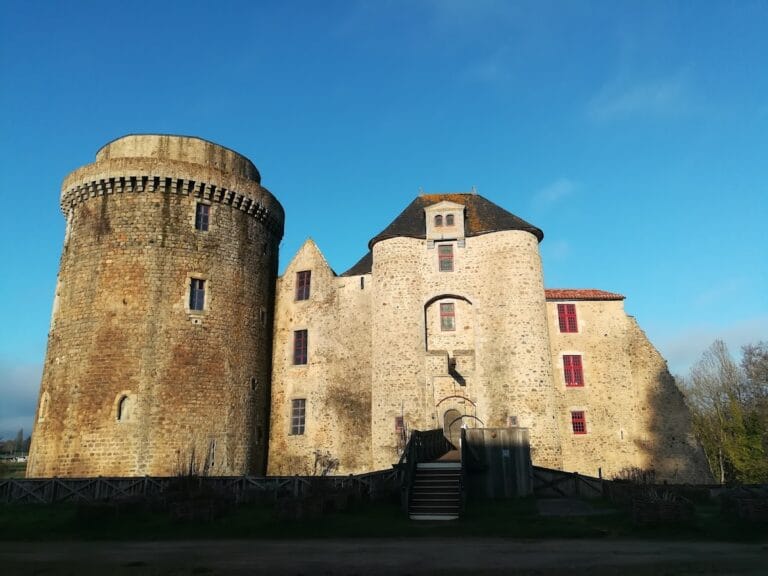
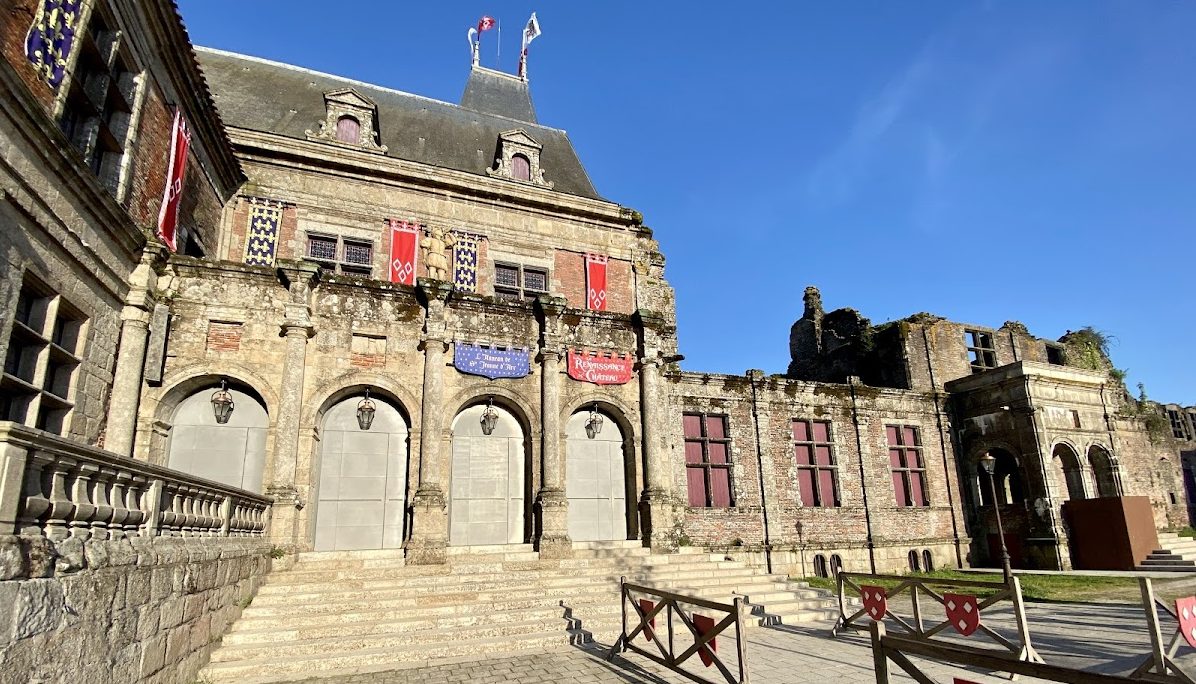
Château du Puy-du-Fou is a castle in Les Epesses, France, in the Vendée, whose latest surviving phase is Renaissance in style and replaced or remodelled an earlier fifteenth-century fortified castle. Attributed to François II du Puy du Fou, a sixteenth-century French nobleman, the present building reflects the transition from medieval fortification to Renaissance architecture, with its renewed interest in classical forms and regular proportions.
Renaissance rebuilding
The Renaissance castle was attributed to François II du Puy du Fou, who lived from 1496 to 1548. Construction was undertaken by Jean Masneret and René Guitton of Le Mans, but the project remained unfinished. The incomplete castle was sold in 1659.
Destruction during the Vendée War
On 21 January 1794, during the Vendée War, a civil and counter-revolutionary conflict in western France during the French Revolution, a Republican “infernal column” commanded by General Boucret burned the castle and the surrounding villages. Infernal columns were Republican military formations sent into the Vendée during that year.
Heritage, museum, and staged history
The castle was classified as a French historic monument in 1974 and again in 1986. In 1977, the Vendée departmental council acquired it and established an ecomuseum and a research and documentation centre with state assistance. The ecomuseum followed the modern, research-based museum approach associated with Georges-Henri Rivière, whose ecomuseums presented the heritage and social history of a particular territory through local collections, research, and interpretation. The ecomuseum later closed, and its collections were transferred in 2006 to the Historial de la Vendée, a new museum established by the departmental council at Les Lucs-sur-Boulogne.
From 1977, the castle also served as the setting for La Cinéscénie, a historical spectacle created by Philippe de Villiers. The production presents a deliberately romanticized history of the Vendée since the Middle Ages. Between October 2013 and April 2014, the castle was redesigned for La Renaissance du Château, a later spectacle developed after the success of La Cinéscénie. It presents the castle’s interior and history through an interpretation of the Puy-du-Fou motto, C’est à jamais, meaning “It is forever.”
Remains
The castle’s physical identity is defined by the Renaissance rebuilding of a fifteenth-century fortified structure. The later design was intended to replace older buildings, but the work was left incomplete. The building was subsequently burned during the 1794 attack in the Vendée War, while its interior has also been adapted for later historical presentation.
Renaissance fabric and interior presentation
The latest surviving fabric is Renaissance in style, representing the remodelling of the earlier fortified castle rather than an entirely separate foundation. The castle’s interior was redesigned from October 2013 to April 2014 for La Renaissance du Château. Numerous hangings and pieces of furniture were introduced to evoke the period of Francis I, king of France from 1515 to 1547 and a major patron of Renaissance culture and architecture. These furnishings belong to the spectacle’s interior presentation and help frame its interpretation of the castle’s history.
Nearby sites