Museo Civico di Storia Naturale di Milano: Milan’s Natural-History Museum


Site at a Glance
- Rating
- 4.5
- Popularity
- High
- Country
- Italy
- Primary era
- Unclassified
- External website
- Open
- Eras represented
- Unclassified
- Civilizations
- Unclassified
- Site type
- Museum
On this page14 sections
History
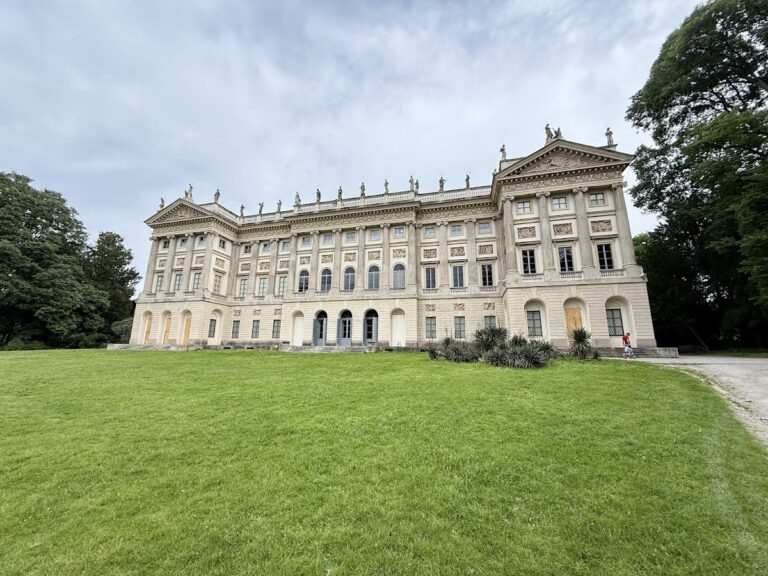
The Museo Civico di Storia Naturale di Milano in Italy is a civic natural-history museum founded in 1838 and housed since 1893 in a Neo-Gothic building in the Gardens of Porta Venezia. Its origins lie in the collections of the Milanese collector Giuseppe De Cristoforis and the Hungarian-born botanist and zoologist Giorgio Jan, whose jointly owned private holdings were formed in 1832. When the Municipality of Milan accepted the collection, Jan became the museum’s first director and received an annual life pension.
Foundation and public opening
The museum opened to the public in 1844 during the Sixth Congress of Italian Scientists, held in Milan under the presidency of the botanist Count Vitaliano Borromeo. Public teaching had already been included in the institution’s regulations of 1843, establishing education as part of its original purpose alongside the care and presentation of natural-history collections.
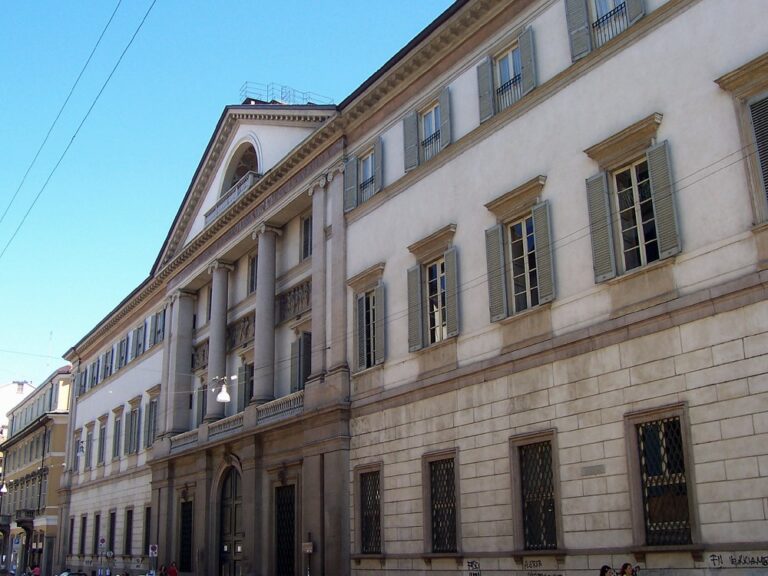
Before reaching its present home, the museum occupied the former convent of Via Santa Marta. From 1863 it was based in the eighteenth-century Palazzo Dugnani. Its educational role expanded in the same year through courses for the Higher Technical Institute, later the Polytechnic University of Milan. In 1875, the museum joined the Consortium of Higher Education Institutions, an educational structure that contributed to the foundation of the University of Milan in 1924.
Teaching, research, and the new building
From 1924 to 1938, the University of Milan’s Faculty of Natural, Mathematical and Physical Sciences was housed in the museum. The faculty used its laboratories, collections, library, and scientific staff for teaching and research, linking the civic institution directly with the university’s early academic development.
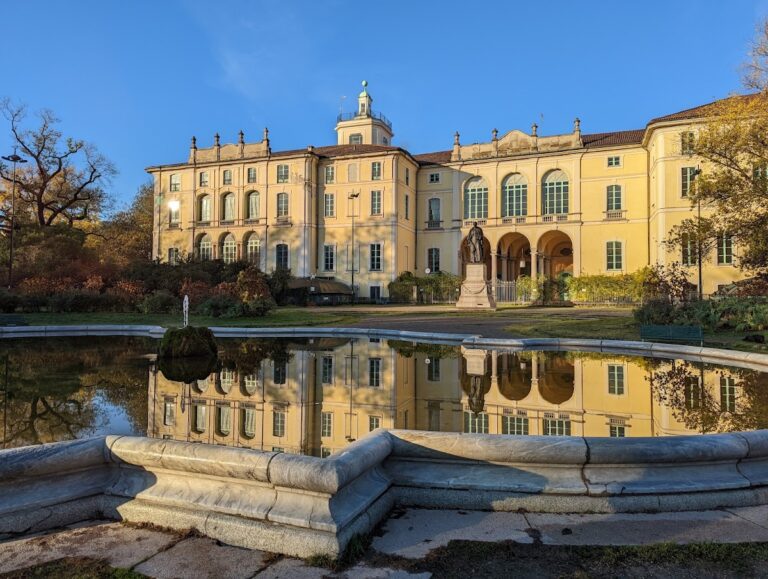
The present building was constructed between 1888 and 1893 in the Public Gardens of Porta Venezia, following the redevelopment of the gardens after the 1881 Milan National Exhibition. Giovanni Ceruti, who had designed the exhibition, also designed the museum. The purpose-built palace drew inspiration from the Natural History Museum in London and reproduced the ring-shaped plan, interrupted by a central body, used for Vienna’s Natural History Museum.
War damage and reconstruction
An Allied aerial bombardment in 1943 destroyed the roofs and floors, damaged approximately half of the structure on the Planetarium side, and caused a fire that lasted three days. Much of the museum’s scientific heritage was destroyed in the attack.
Reconstruction was made possible by a bequest from the Milanese physician Vittorio Ronchetti. The first galleries reopened in 1952 with temporary displays and a programme of new acquisitions intended to rebuild the collections, and the museum was formally inaugurated the following year. The architect Egizio Nichelli directed the structural work. Decorative elements, statues, and roof pinnacles were completed in 1956. A complete conservation restoration of the façades followed in 2013.
Scientific associations and civic role
Since 1866, the museum has hosted the Italian Society of Natural Sciences, founded in 1857 as the Geological Society based in Milan. From 1893, the society’s scientific journals were published jointly with the museum and continue to be issued in collaboration with it. The Lombard Mineralogical Group, the Milan Botanical Group, and the Centre for African Archaeology Studies also have their headquarters there.
The museum belongs to the Municipality of Milan’s network of scientific museums. Its library absorbed the Civic Aquarium Library in 2015 and remains open to the public. The museum’s continuing work combines collection care, scientific study, education, and exhibitions within the building reconstructed after the Second World War.
Remains
The museum occupies a purpose-built Neo-Gothic palace within the Gardens of Porta Venezia, now called the Indro Montanelli Garden. Neo-Gothic architecture is a nineteenth-century revival style based on medieval Gothic forms, including pointed details, vertical emphasis, decorative masonry, and pinnacles. The exterior has terracotta decoration made by the Milanese firm Carlo Candiani & C., together with statues and pinnacles reconstructed after the wartime destruction.
Building and exhibition layout
The building contains 23 exhibition halls arranged across approximately 5,500 square metres on two principal floors and an attic. Its collections include nearly three million specimens and objects, displayed in roughly 700 cases. The raised ground floor begins with an introductory hall devoted to the museum’s history, then proceeds through the Earth sciences, mineralogy, paleontology, and the origins and evolution of plants, invertebrates, vertebrates, and humans.
Dinosaur and fossil displays
A dinosaur hall contains dinosaur skeletons, a life-size reconstruction of a Triceratops, a cast of a Tyrannosaurus, and original skeletons of an Allosaurus and a Gryposaurus. Other paleontological displays include fossils of fish, plants, and prehistoric animals, as well as a Spinosaurus snout, an Eryops megacephalus fossil, a Glyptodon specimen, and a Plateosaurus skeleton.
The museum also presents Scipionyx samniticus, the juvenile dinosaur fossil known as “Ciro.” Museum scholars described the specimen, while the exhibition uses a cast of the fossil. Its presence forms part of the museum’s presentation of prehistoric life and paleontological research.
Mineralogy and invertebrates
Further ground-floor rooms present living invertebrates, mollusks, arthropods, and insects. These displays include a giant clam, two Japanese spider crabs, a giant centipede, and spiders and scorpions from around the world.
The mineralogy section contains specimens from around the world, including the world’s largest sulfur crystal, from the Province of Pesaro and Urbino, and an 8,000-carat Brazilian topaz. Examples of londonite, quartz, phosgenite, fluorite, and malachite are also displayed.
Human evolution
The Natural History of Man section follows human origins and evolution from early primates to Homo sapiens through phylogenetic, morphological, and ecological perspectives. Its contents include archaeological objects, realistic plastic models, and a cast of an Australopithecus afarensis skeleton.
Zoology and reconstructed environments
Animal collections and ecosystems
The upper floor is largely devoted to zoology and to dioramas, three-dimensional scenes that place specimens or models within reconstructed natural settings. The environments represented include marine ecosystems; tropical forests and wetlands; temperate forests, taiga, and mountains; Arctic and Antarctic regions with marine mammals; and savannas, grasslands, and deserts.
The displays contain taxidermied European and non-European animals, meaning animals preserved and mounted as lifelike specimens, together with animal skeletons. Among them is a sperm whale approximately 12 metres long. The museum has approximately 100 full-scale ecosystem dioramas, described as Italy’s largest collection of this type. The first was produced in 1965 and contains a taxidermied anaconda. Smaller dioramas in the attic reproduce details of natural environments.
Italian landscapes and protected areas
Three halls present the environments, parks, and nature reserves of Italy. The renewal of the museum’s exhibitions was influenced in part by major natural-history museums, including the American Museum of Natural History in New York.
Library
The public library contains more than 120,000 volumes and approximately 4,000 periodicals. Its holdings support the museum’s scientific and educational functions and incorporate the collections of the Civic Aquarium Library, absorbed in 2015.
Nearby sites