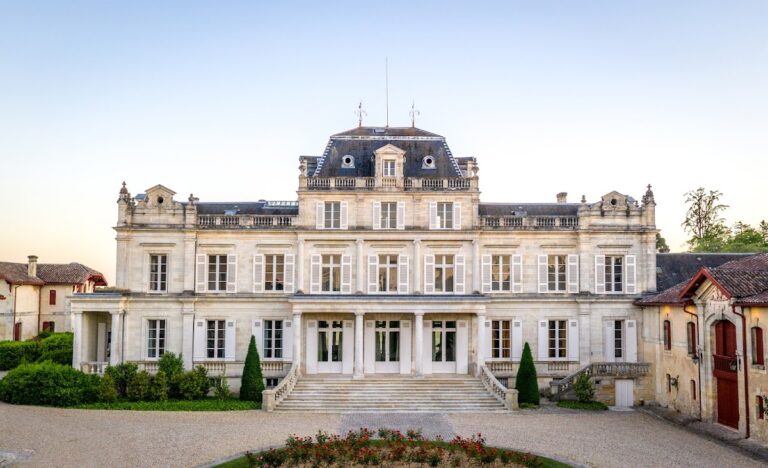
Château Marquis de Terme: A Classified Fourth Growth Wine Estate in Margaux


Site at a Glance
- Rating
- 4.6
- Popularity
- Low
- Country
- France
- Primary era
- Unclassified
- External website
- Open
- Eras represented
- Unclassified
- Civilizations
- Unclassified
- Site type
- Economic
- Remains
- Production Complex
On this page8 sections
History
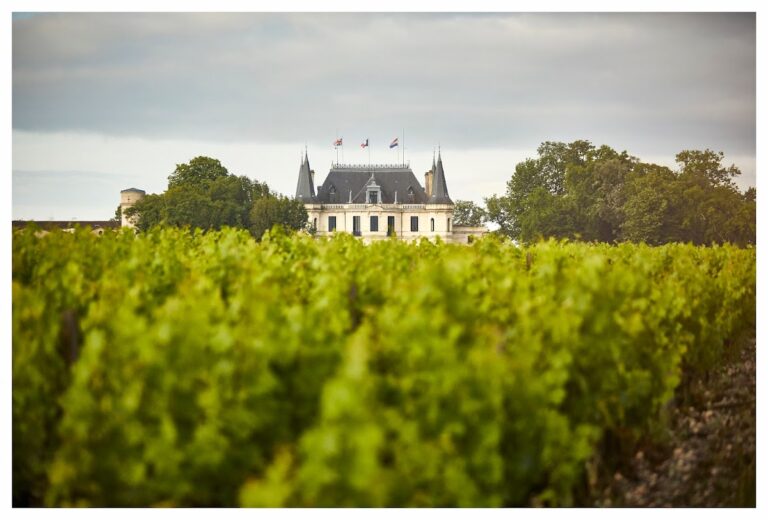
Château Marquis de Terme is a wine estate in France, in Margaux-Cantenac, whose origins reach back to land acquired in 1661 and whose wines belong to the Margaux appellation of the Médoc and Bordeaux regions. The property developed from holdings purchased by the wine merchant Pierre des Mesures de Rausan and later became one of the estates associated with the classified wines of Bordeaux.
Origins and the Marquis de Terme name
On 7 September 1661, Pierre des Mesures de Rausan acquired land from the de Gassies family, who were close to the feudal lords of the Lordship of Margaux. The original estate was later divided into the properties now known as Château Rauzan-Gassies, Château Rauzan-Ségla, Château Desmirail, and Château Marquis de Terme.
The name Château Marquis de Terme dates from 1762. In that year, the estate passed by dowry to François de Peguilhan, Marquis de Terme, through his marriage to Elisabeth de Ledoulx d’Emplet, a relative of the Rauzan wine-producing family. The couple held 30 hectares, and the wine already had a strong reputation.
Thomas Jefferson visited the estate during his stay in Bordeaux from 24 to 28 May 1787. At the time, he was the American ambassador in France, a post he held from 1785 to 1789. He included the wine among the sixteen best wines he had tasted, providing an early record of the estate’s standing in Bordeaux.
Revolutionary upheaval and nineteenth-century ownership
Financial difficulties during the turmoil of the French Revolution forced François de Peguilhan and his wife to give up the Margaux estate. After François’s death, the wine merchant Halvarous Sollberg acquired it in 1809. Sollberg enlarged the property by purchasing additional parcels, but mounting debts forced him to leave France in 1834. He regained the estate in 1845.
The Bordeaux Wine Official Classification of 1855 placed Château Marquis de Terme among the Fourth Growths. This classification ranked selected Gironde wines according to their established reputation and market value. It was prepared for the Paris Universal Exhibition organized under Napoleon III, emperor of the French from 1852 to 1870. Halvarous Sollberg’s son Oscar was managing the property when the classification was made.
Phylloxera, a destructive vine pest, and powdery mildew, a fungal disease, later weakened the estate financially. The property was offered for sale in 1886 and acquired by the Bordeaux wine merchant Frédéric Eschenhauer, while Thomas Feuillerat directed its technical operations. When Eschenhauer was forced to sell in 1898, Feuillerat’s son Jean purchased the estate. Jean later left it to his son Armand, and the Feuillerat family managed the property for more than a century, promoting the reputation of its wines until Armand’s death in the mid-1930s.
The Sénéclauze family and recent development
In 1935, the Marseille wine merchant Pierre Sénéclauze purchased the property, its buildings, and its land. Ownership subsequently passed to his sons Pierre-Louis, Philippe, and Jean Sénéclauze. The Sénéclauze family remains the owner.
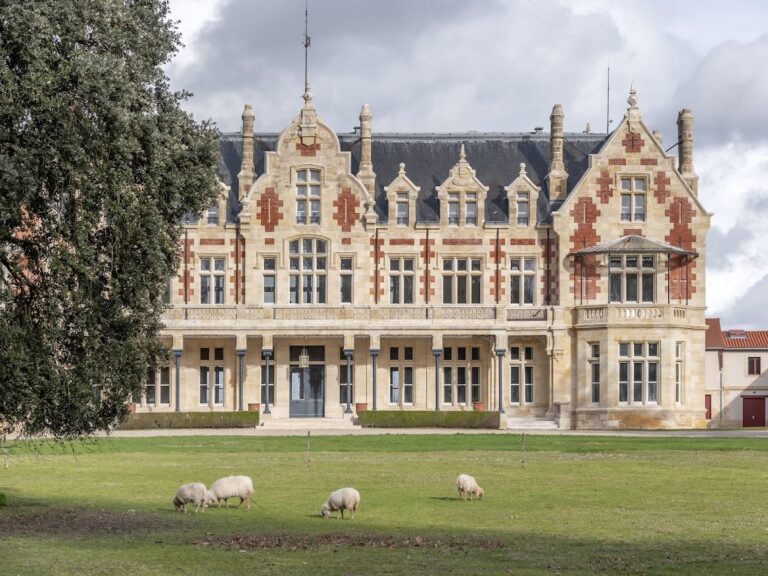
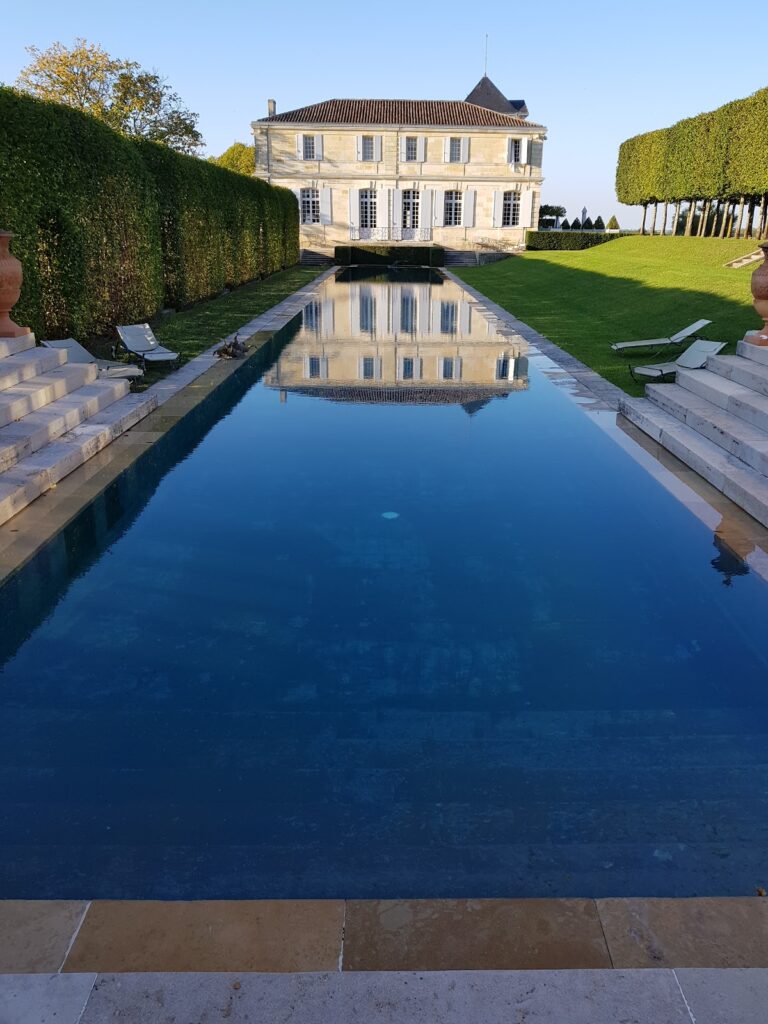
Major works began in 2013 in the winery and later extended to the château, improving its facilities and reception areas. In July 2021, the estate opened the restaurant [AU] Marquis de Terme with chef Grégory Coutanceau. In March 2023, it acquired the Porcheron properties, including Château Marojallia and the hotel-restaurant Le Pavillon de Margaux. Paloma Sénéclauze became managing director in July 2024.
Château Marquis de Terme remains a classified Fourth Growth. Its vineyard is certified under HVE4, the highest level of France’s High Environmental Value scheme, and Terra Vitis, a French framework for environmentally responsible and sustainable winegrowing.
Remains
Vineyard landscape and parcels
Château Marquis de Terme is a 46-hectare wine estate with vineyards distributed across the communes of Cantenac and Margaux. Its principal parcel covers 19.5 hectares near Château Lascombes on the Margaux plateau, where gravel is mixed with pockets of clay. Another 9 hectares lie on the Cantenac plateau, on gravel rich in clay. A further 5.5 hectares surround the château on sandy gravel, while 4 hectares at a place called Aux Gondats in Margaux occupy former marshland near the plains of Château Margaux, on gravel and black sand.
The vineyard soils include luvisols, thick layers of sand and gravel containing clay particles; peyrosols, formed from gravel and stones; and podzols, leached soils that contribute to the complexity of the wines. Across the estate, gravelly rises carry deep soils that are either clayey or sandy. The vines have an average age of 35 years, and hedges have been planted to encourage biodiversity.
Vines and winery processes
The plantings consist of 60 percent Cabernet Sauvignon, 35 percent Merlot, and 5 percent Petit Verdot. The estate divides the vineyard precisely by parcel and within individual parcels so that grapes can be harvested at optimum maturity. Harvesting is done by hand, with strict sorting in both the vineyard and the winery.
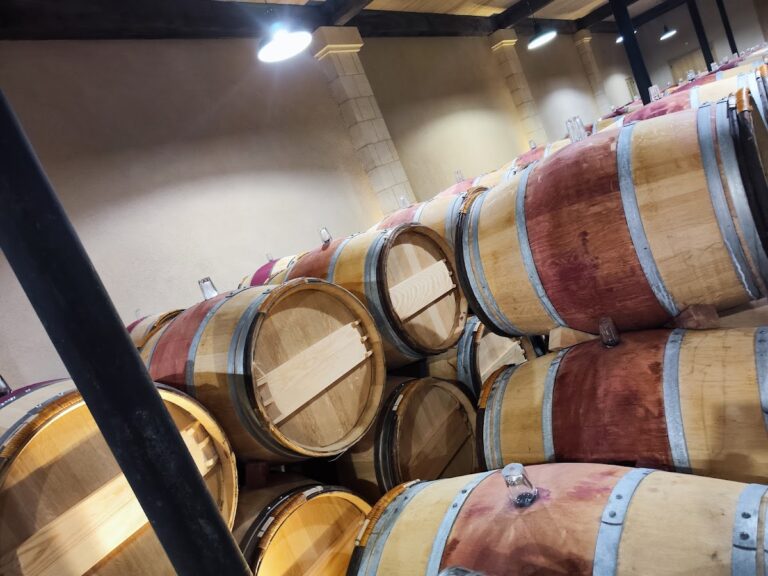
Vinification, the conversion of grape juice into wine, takes place separately for each parcel. The grapes enter temperature-controlled concrete, wood, and stainless-steel vats by gravity, without pumping. The wines then mature for 16 to 18 months in French-oak barrels, with 40 to 50 percent of the barrels renewed each year.
Wines and production
The estate produces its Grand Cru, described as combining power and elegance, alongside Cuvée 1762, which has a more approachable contemporary profile. Les Gondats de Marquis de Terme is the estate’s second wine. It was formerly marketed as Château des Gondats under the Bordeaux Supérieur appellation because some parcels did not qualify for the Margaux appellation, a legally defined geographical and production designation.
Annual production is approximately 150,000 bottles. The wines therefore bring together grapes from several distinct vineyard settings, separate parcel vinification, and extended maturation in French oak within the estate’s long-established Margaux production tradition.