Mathrafal: Capital of Medieval Powys and Castle Site


Site at a Glance
- Rating
- 5
- Popularity
- Very Low
- Country
- United Kingdom
- Primary era
- Medieval
- External website
- Open
- Eras represented
- Medieval
- Civilizations
- English
- Site type
- Military
- Remains
- Castle
On this page6 sections
History
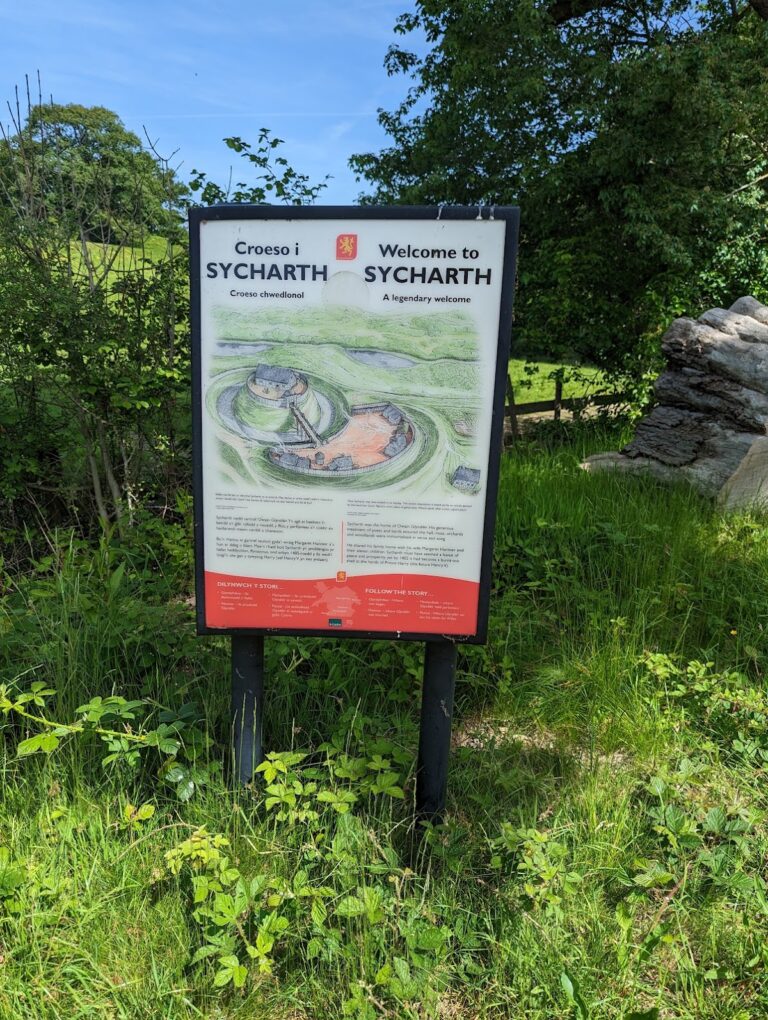
Mathrafal is a medieval royal and castle site in the United Kingdom, near Welshpool in Powys, associated with the Welsh kingdom of Powys from probably the ninth century and later marked by a late twelfth-century motte-and-bailey castle. A motte-and-bailey castle combined a raised mound supporting a stronghold with an enclosed lower court for buildings and activities. Mathrafal stood in the cantref of Caereinion, a traditional Welsh territorial division, on the banks of the River Banwy above its meeting with the River Vyrnwy.
Royal centre of Powys
Mathrafal was probably the seat of the kings and princes of Powys from the ninth century. It served as the capital of the kingdom until Powys was divided in 1160. The southern successor territory, known as Powys Wenwynwyn, continued to use Mathrafal as its capital for a time.
The castle and its destruction
The motte was probably raised near the end of the twelfth century. It may have been built by Owain Cyfeiliog, a ruler of southern Powys, around 1170, or by Robert de Vieuxpont for King John in 1212. Prince Gwenwynwyn ab Owain moved the capital from Mathrafal to Welshpool in 1212. Later that year, Robert de Vieuxpont was besieged at Mathrafal by the combined forces of Gwenwynwyn and Llywelyn the Great, the dominant ruler of Gwynedd, and was rescued by King John, who ruled England from 1199 to 1216.
The castle was destroyed shortly after the siege, with the destruction dated to 1213, and it was never rebuilt. Mathrafal had already ceased to function as a political centre by 1212. Excavations by the University of York around 1991 investigated the medieval site and recovered a small figurine associated with Saint Gwynllyw, or possibly Woolos the Warrior.
Remains
Earthwork castle
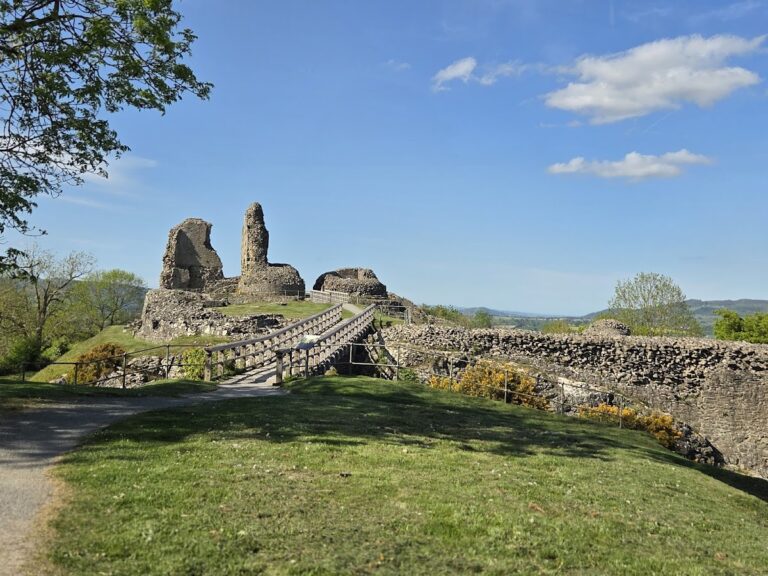
Mathrafal Castle occupies a compound measuring approximately 90 by 80 metres. A defensive bank and an outer ditch protected three sides, while the River Banwy defended the fourth. The motte, the raised mound at the centre of the castle, measures about 35 by 25 metres and rises approximately 5 metres high. Dating from around the end of the twelfth century, it formed the principal earthwork of the castle. Little survives of the original masonry walls, so the site is now chiefly an earthwork ruin.
Figurine
Archaeological excavation recovered an iron-and-bronze figurine from a cavity within a window base. It represents Saint Gwynllyw, or it may depict Woolos the Warrior. The find provides a surviving material association with the medieval occupation of the castle.