Burg Lantershofen: A Castle and Seminary in Germany


Site at a Glance
- Rating
- 4.3
- Popularity
- Very Low
- Country
- Germany
- Primary era
- Early Modern
- External website
- Open
- Eras represented
- Early Modern
- Civilizations
- Holy Roman Empire
- Site type
- Military
- Remains
- Castle
On this page5 sections
History
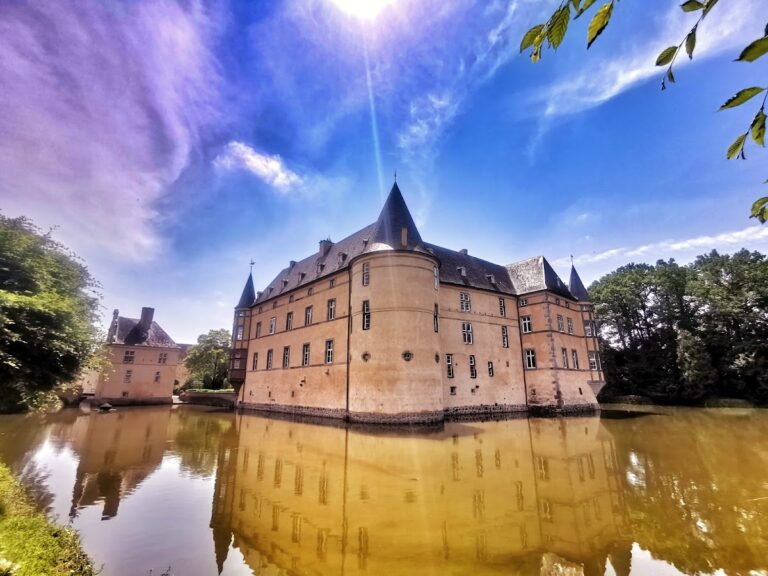
Burg Lantershofen is a historic castle in Lantershofen, Germany, whose recorded history reaches back to an estate donated in 1019 and whose present building dates from 1708. Its development was shaped by the Blankart family, warfare, inheritance disputes, and its eventual use as a seminary for priests.
Estate and medieval castles
On 1 July 1019, Emperor Henry II, who ruled the Holy Roman Empire from 1002 to 1024, donated the estate of Lantherishoffe to Michelsberg Abbey near Bamberg. He had inherited it from the deceased Giselinus. The donation included fields, meadows, forests, pastures, vineyards, watercourses, and dependent people. Lantershofen lay in the lower Ahr Valley and was regarded as one of the oldest Frankish settlements on the left bank of the Ahr in the Ahrweiler district.
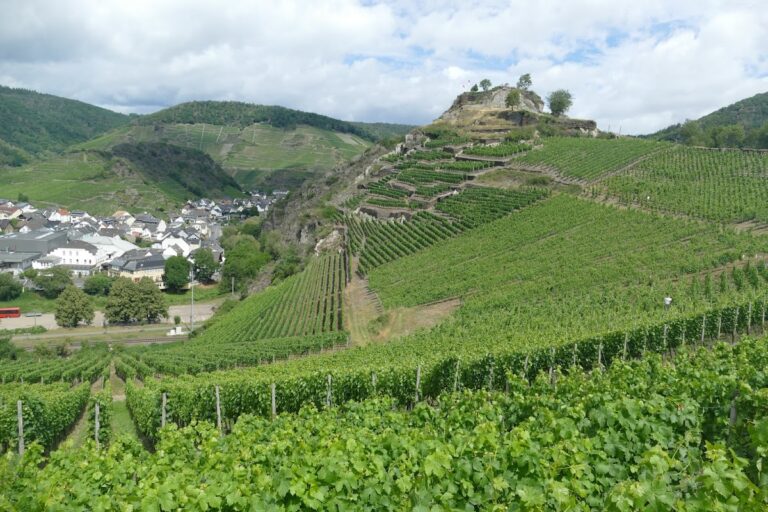
A castle was probably later established on the Schauer, over remains of Roman walls. Friedrich III of Saarwerden, Archbishop of Cologne, conquered and destroyed it in 1372. A replacement castle was built at the Blankart site in 1376 and belonged to Gerhard von Blankart. Lantershofen then came under the authority of the Blankart counts, to whom the settlement owed rents and tithes. The place beside the church called the Frumech preserves the memory of these feudal obligations, with its name referring to compulsory labor owed to a lord.
War, rebuilding, and the Blankart inheritance
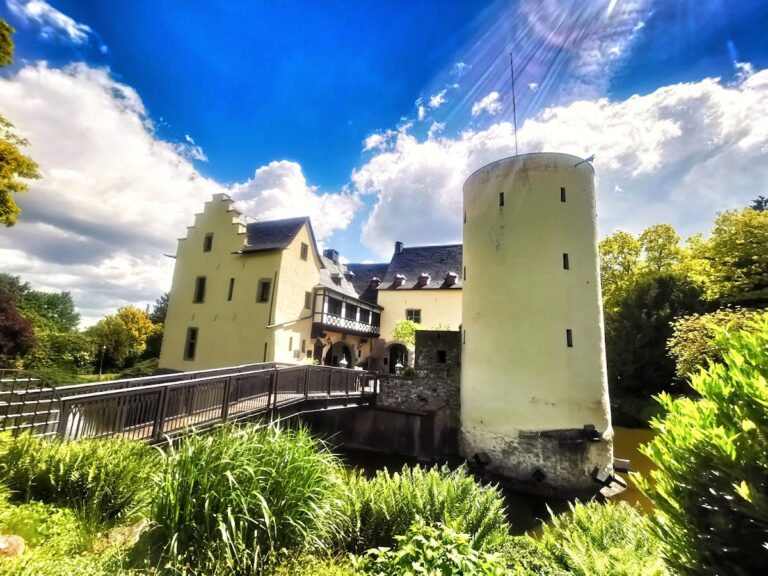
Swedish forces partially destroyed the castle in 1632 during the Thirty Years’ War, a major European conflict fought mainly between 1618 and 1648. The building was rebuilt, but marauders completely destroyed it in 1672. The present castle was erected in 1708, apparently under the last member of the Blankart family.
Ownership of the estate was disputed among Blankart heirs. The claimants included Johann Franz Capellini von Wickenburg, known as Stechinelli, and the families of Vlatten zu Drove and Dalwigk. Johann Otto Friedrich Blankart von Ahrweiler, who had no children, died in 1712 at the Battle of Denain, a conflict of the War of the Spanish Succession. His sisters Maria Anna and Marie Sophie inherited, while the children of their deceased sister Maria Ottilia, including the children of Johann Franz Capellini von Wickenburg, also held inheritance rights.
Maria Anna was married to Johann Heinrich Vlatten zu Drove, while Marie Sophie was married to Ferdinand Ernst von Dalwigk zu Lichtenfels. After the two surviving sisters divided the family estates unilaterally in 1714, Johann Franz Capellini von Wickenburg brought a legal action on behalf of his children’s rights. The dispute lasted until 1790, when a judgment confirmed equal rights for the descendants of all three sisters.
Later ownership and religious use
Descendants of Johann Franz Capellini von Wickenburg, the Austrian counts of Wickenburg, were recorded as owners in 1820. Friedrich Langen, an insurance director from Cologne, acquired the estate in 1915. His heirs sold Burg Lantershofen in 1939 to the Apostolate of Priests and Religious Vocations, an organization concerned with promoting priestly and religious service.
By this time, parts of the castle had fallen into decay. Under the organization’s director, Pastor August Dörner, the building was renovated and adapted for use as the St. Lambert Study House, a seminary where clergy are educated and formed. This transformation gave the castle a new religious and educational function while preserving its role as the principal historic building of Lantershofen.
Remains
Burg Lantershofen comprises the present castle built in 1708, together with the locations and surviving historical associations of earlier structures. The first known castle stood on the Schauer over Roman wall remains and was destroyed in 1372. A second castle was constructed at the Blankart site in 1376, while the building that now stands on the estate followed the destruction of the earlier structure in the seventeenth century.
The present castle was partly in a state of decay before its twentieth-century renovation. That work adapted the building for the St. Lambert Study House and seminary for priests. The surviving structure therefore incorporates the physical result of the 1708 rebuilding and the later conversion that gave it an educational and religious purpose.
Nearby sites