Burg Neuenahr: Medieval Administrative Castle in Germany
Site at a Glance
- Rating
- 4.8
- Popularity
- Very Low
- Country
- Germany
- Primary era
- Medieval
- Eras represented
- Medieval, Modern
- Civilizations
- Holy Roman Empire
- Site type
- Military
- Remains
- Castle
On this page11 sections
History
Burg Neuenahr is a medieval hilltop castle in Germany, located in Bad Neuenahr-Ahrweiler in the lower Ahr Valley. Count Otto of Neuenahr built it around 1225 as the administrative seat of the County of Neuenahr. Otto initially styled himself Ottonis Comitas de Landahr, but by 1231 he was described as Count Otto of Neuenahr and became the first member of his family to use the castle’s name.
The County of Neuenahr
Otto left two sons, Gerhard and Ludwig. Gerhard married Elisabeth of Sponheim, and their son Theodorich succeeded him. After Theodorich died in 1276, his widow Hedwig and their children, Wilhelm I, Johann I, Ludwig and Sophie, pledged most of the county to Archbishop Siegfried of Cologne. Burg Neuenahr, Wadenheim, Ramersbach and the Grevel estate in Scheidt were excluded from that pledge.
Wilhelm I could not redeem the county and instead accepted it from the archbishop as a fief, meaning land held under a feudal agreement with a superior lord, and as an open house, a fortified place that the feudal lord could use for military purposes. Wilhelm fought on the archbishop’s side at the Battle of Worringen. To secure his release from captivity, he granted his vineyards at Wadenheim as a fief to Count Adolf of Berg.
Wilhelm I was followed by his sons Krafto and Wilhelm II. Around 1327, Wilhelm II’s wife Bonizetta administered the county for their underage son, Wilhelm III. In 1343 Archbishop Walram of Jülich granted Wilhelm III Burg Neuenahr as a fief. Wilhelm and his wife, Johanna of Elslo, had one daughter, Katharina. After Wilhelm’s death, his uncle Krafto, a canon of Cologne, succeeded him in the county.
Inheritance Conflict and Destruction
In 1353 Krafto arranged Katharina’s marriage to Johann III of Saffenburg, son of Johann II of Saffenburg. The agreement made Johann III the sole heir of Saffenburg and Katharina the sole heir of the County of Neuenahr. Krafto’s death then triggered a major inheritance dispute involving the Saffenburg couple and several members of the Neuenahr family. The claimants included Johann III of Neuenahr of Rodensberg, Gottfried of Neuenahr of Hackenbroich, Johann and Diedrich, sons of Johann III of Neuenahr, and Gerlach of Isenburg, who claimed rights through his wife, Demudis of Neuenahr.
Archbishop Wilhelm of Gennep tried to settle the dispute in 1360 and 1362, but the conflict continued. During the renewed feud, Johann and Diedrich expelled the rightful heirs from Burg Neuenahr and demanded 20,000 gold gulden for their withdrawal. Their occupation was accompanied by robbery on the roads, arson, killings and other violence affecting lords, knights, servants, townspeople and merchants.
Johann III of Saffenburg and Katharina appealed to Archbishop Friedrich III of Saarwerden for help in taking possession of their inheritance. In 1372, Friedrich III, supported by the citizen riflemen of Ahrweiler, besieged Burg Neuenahr. Salentin, Count of Wied and Lord of Isenburg, and others occupied the castle at the time. The attackers captured it in ten days, and the castle was destroyed to end the violent activity based there.
The Saffenburgers paid a high price for the intervention. Friedrich III demanded 50,000 gold gulden for the military assistance and the castle hill, on the condition that no new castle would ever be built there. The County of Neuenahr was to be divided equally between the parties. Several generations later, descendants of the former robber-knights regained high social standing, including Hermann of Neuenahr the Elder.
Later Demolition and Reuse
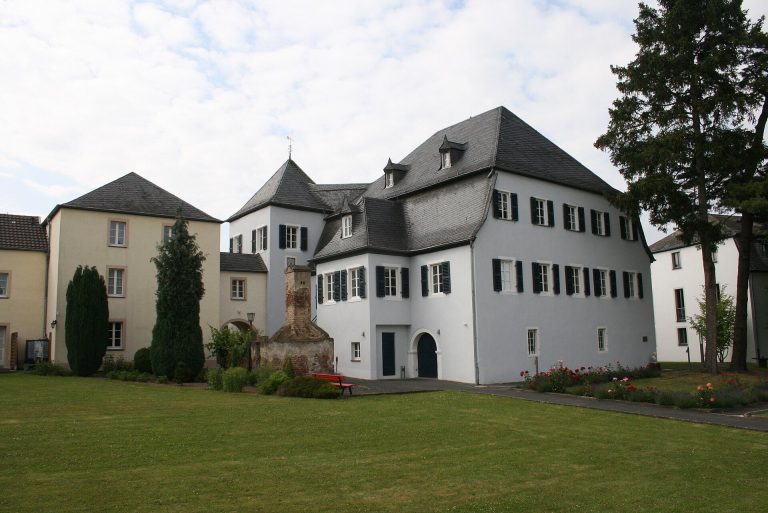
At the end of the seventeenth century, the remaining ruins were demolished. Much of the stone and other building material was removed and reused. This included material incorporated into the Rentmeister’s building at the foot of the castle hill, now known as the Beethoven House.
Remains
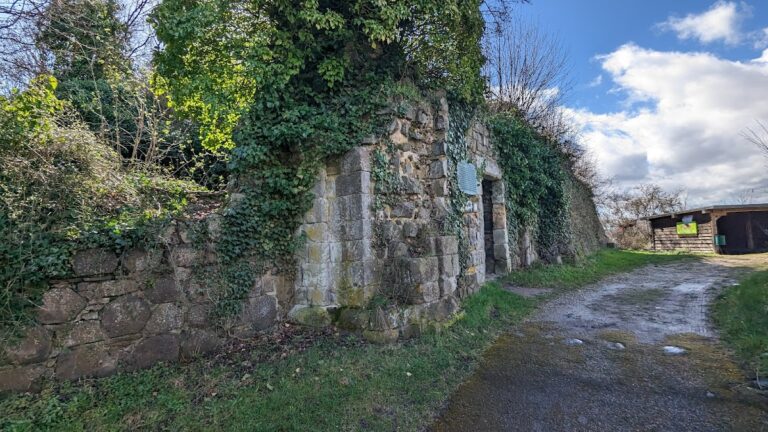
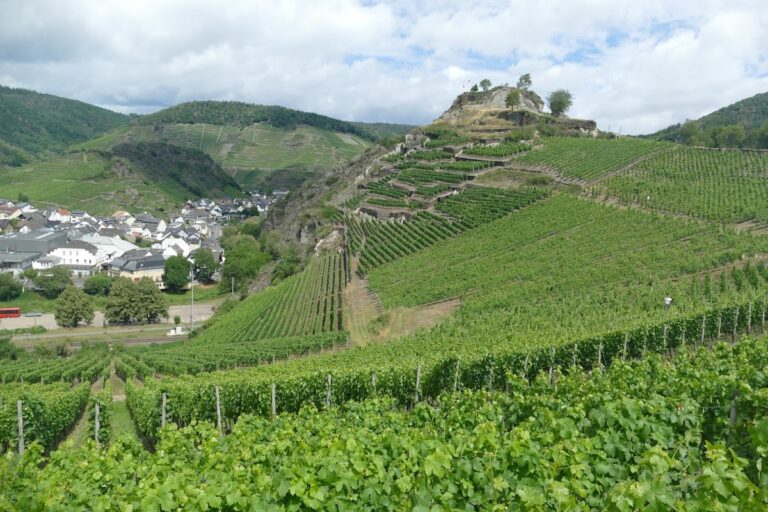
Burg Neuenahr occupies the summit of Neuenahrer Berg at 337 metres above sea level in the northern part of Rhineland-Palatinate. The castle hill is formed from basalt covered by a mantle-like layer of greywacke. A quartz outcrop remains visible on the eastern side and probably also provided building material. The surviving ground plan includes the foundations of a triangular perimeter wall, a rectangular central tower structure and additional building remains.
Hilltop Defenses
Neck Ditch
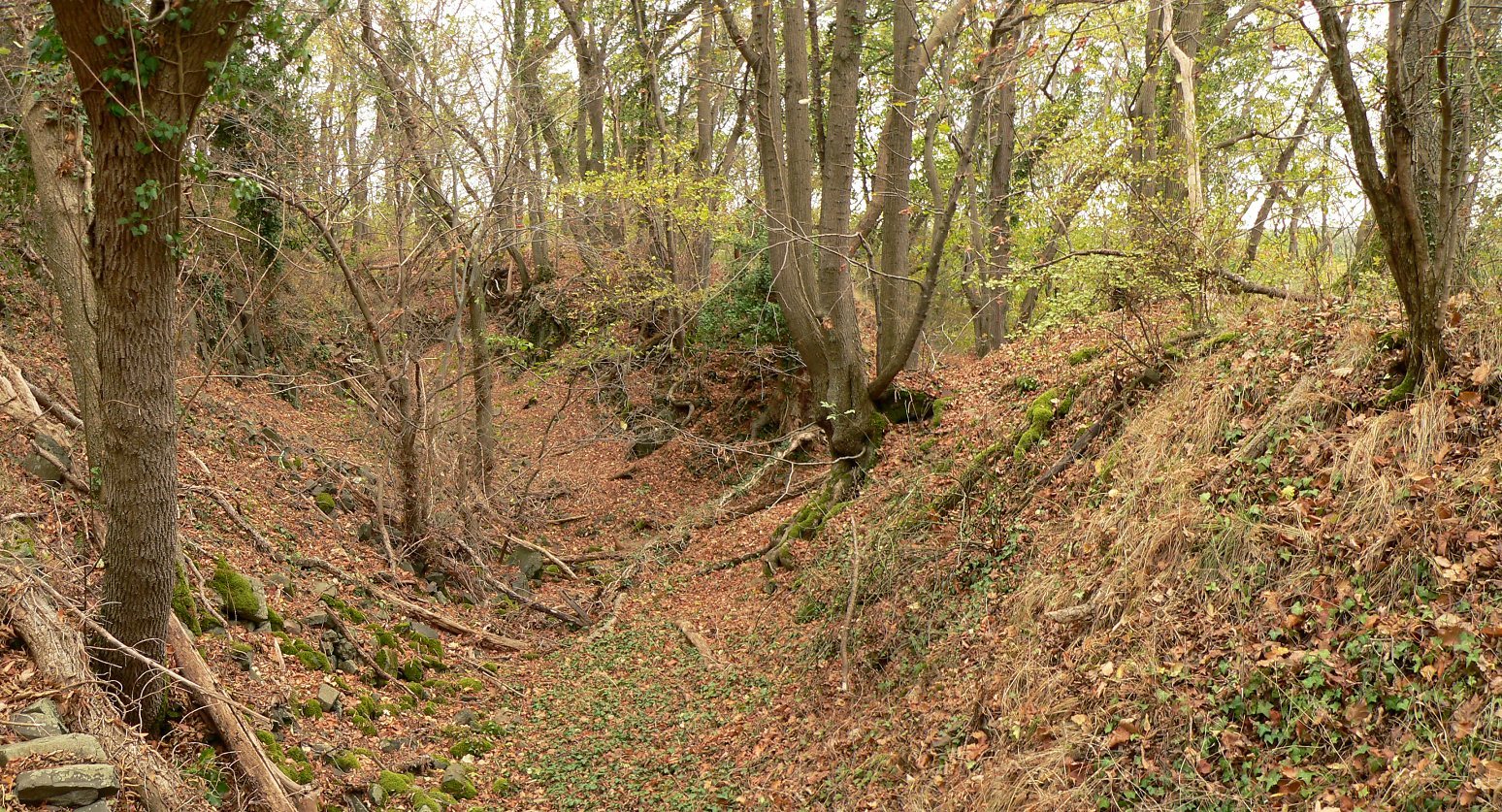
A deep artificial neck ditch, a defensive trench cut across the narrower approach to a hill, surrounds the castle on three sides. Demolition debris has accumulated in it, yet parts of the ditch remain approximately 10 metres deep. Two very large spoil heaps, formed from material removed during excavation or demolition, stand beside the ditch and contain smaller fragments of the demolished masonry.
Natural Approach
The slope descending steeply towards the Ahr provided natural protection. The old approach to the castle was also located on this side of the hill, where the terrain formed part of the site’s defensive setting.
Surviving Structures and Modern Additions
Castle Foundations
The visible ground plan preserves the foundations of a triangular enclosure wall and a rectangular central tower structure, together with further building remains. These foundations represent the principal surviving outlines of the medieval castle after the later demolition of its standing masonry.
Observation Tower and Pavilion
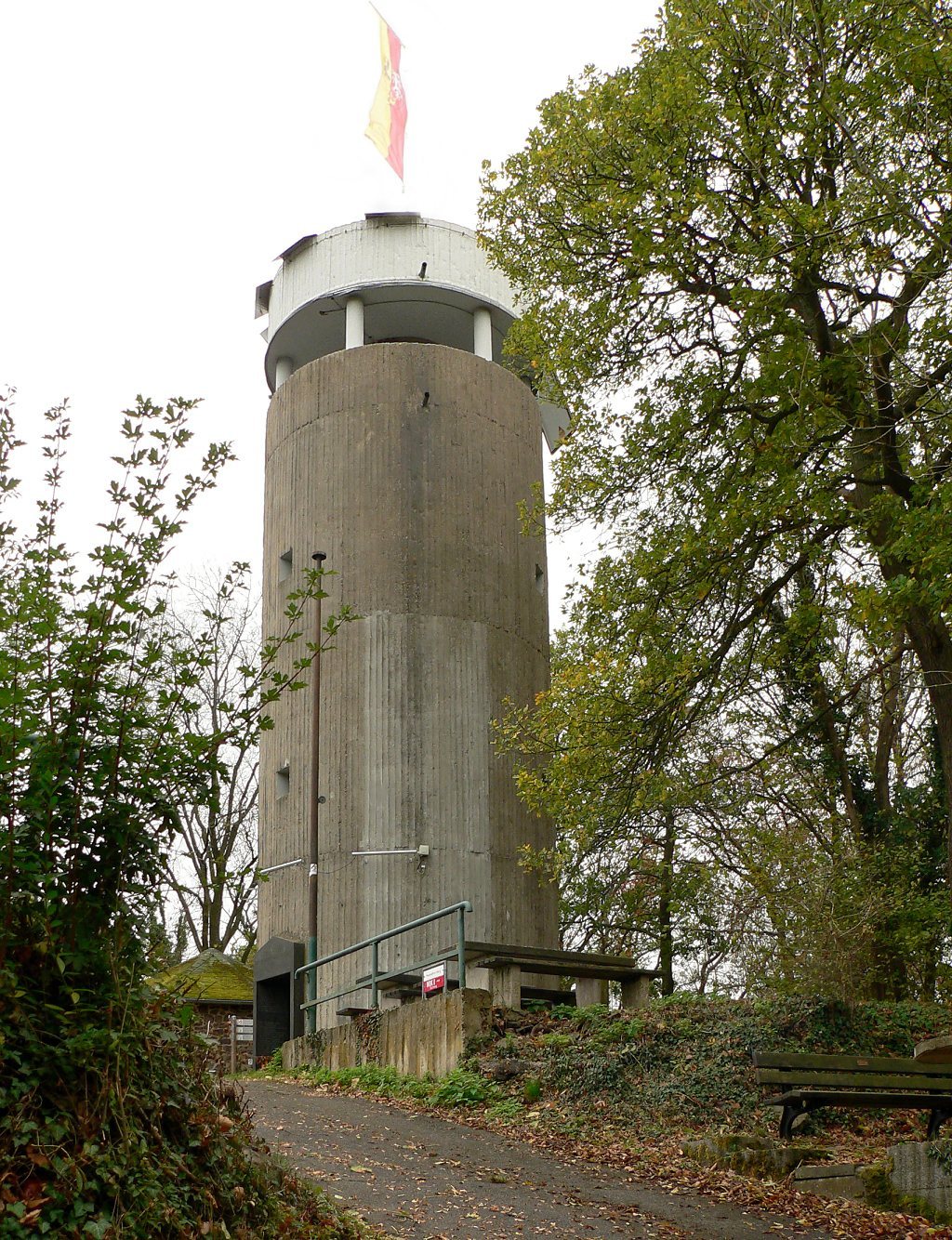
A round observation tower made of reinforced concrete was erected on the castle grounds in 1972. A pavilion belonging to the Eifel Association also stands on the site, providing shelter for hikers and visitors.