Ballybur Castle: A Sixteenth-Century Fortified Tower in Ireland


Site at a Glance
- Rating
- 4.9
- Popularity
- Very Low
- Country
- Ireland
- Primary era
- Early Modern
- External website
- Open
- Eras represented
- Early Modern
- Civilizations
- English, Irish
- Site type
- Military
- Remains
- Castle
On this page5 sections
History
Ballybur Castle in Ireland, approximately 8 km from Kilkenny city, is a five-storey fortified tower built around 1588 by Richard Commerford. Designed as a defensive residence, it protected the estates of the wealthy and influential Commerford family during a period of conflict among Irish clans and feudal landholders.
The Commerford estate
The Commerfords had held land at Ballybur for many years. In the sixteenth century, their castles formed part of prosperous estates that also included houses for local commoners and buildings for livestock. During attacks, people from the surrounding area and their animals could be brought inside the castle for protection. Two other Commerford castles stood nearby.
The Confederate period
The Commerfords were Catholics who supported the 1641 Irish uprising and later displayed the flag of the Irish Confederation, a Catholic political and military organization formed during the wars that followed the rebellion. Ballybur received Cardinal Giovanni Battista Rinuccini, the pope’s diplomatic representative in Ireland during the Confederate Wars, while he was travelling through County Kilkenny. Numerous Irish aristocrats also visited the castle during this period.
Rinuccini presented Richard and Mary Commerford with a rosary, which the family preserved as a relic. The rosary passed to the Marnell sisters in 1970.
Confiscation and later ownership
John Commerford, Richard Commerford’s son, was the last member of the family to live at Ballybur. After the defeat of the uprising, he was exiled to Connacht, a historic province principally in western Ireland, in 1654. The castle and its estates were then confiscated.
Oliver Cromwell, the English parliamentary military and political leader whose regime confiscated land from many Irish Catholic supporters of the rebellion, granted Ballybur Castle and its estate to Brian Manserah. Manserah was related to Martin Manserah of County Tipperary, who had advised the English government during negotiations with leaders in northern Ireland.
Little is known about the castle’s ownership between 1655 and 1841. Thomas Deigan was among its inhabitants, and the Marnell sisters were related to the Deigan family. Frank and Eifric Gray bought the castle in 1979, while the Marnell sisters are also identified as its current owners. The building was subsequently restored with techniques associated with sixteenth-century construction and is now used as a hotel and for weddings and corporate events.
Remains
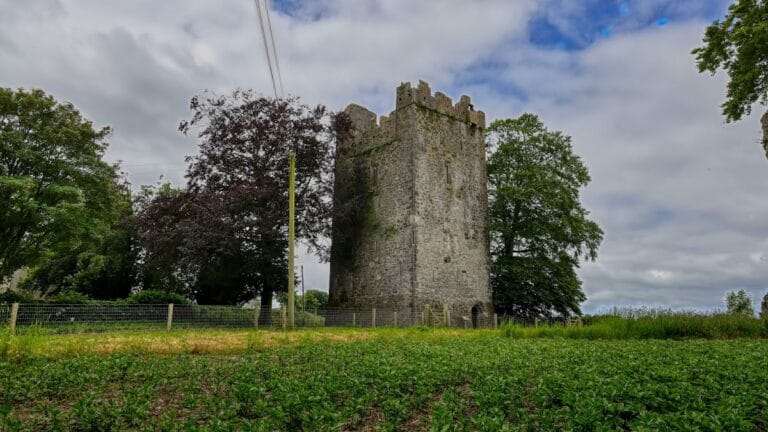
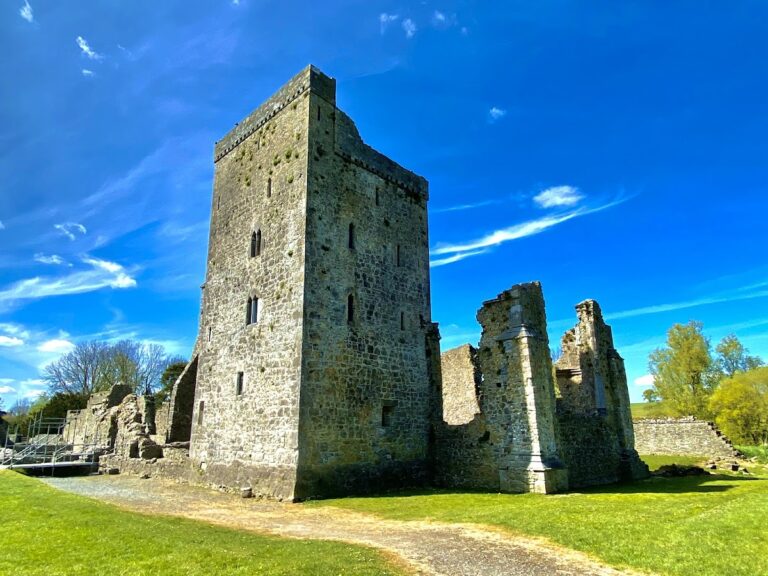
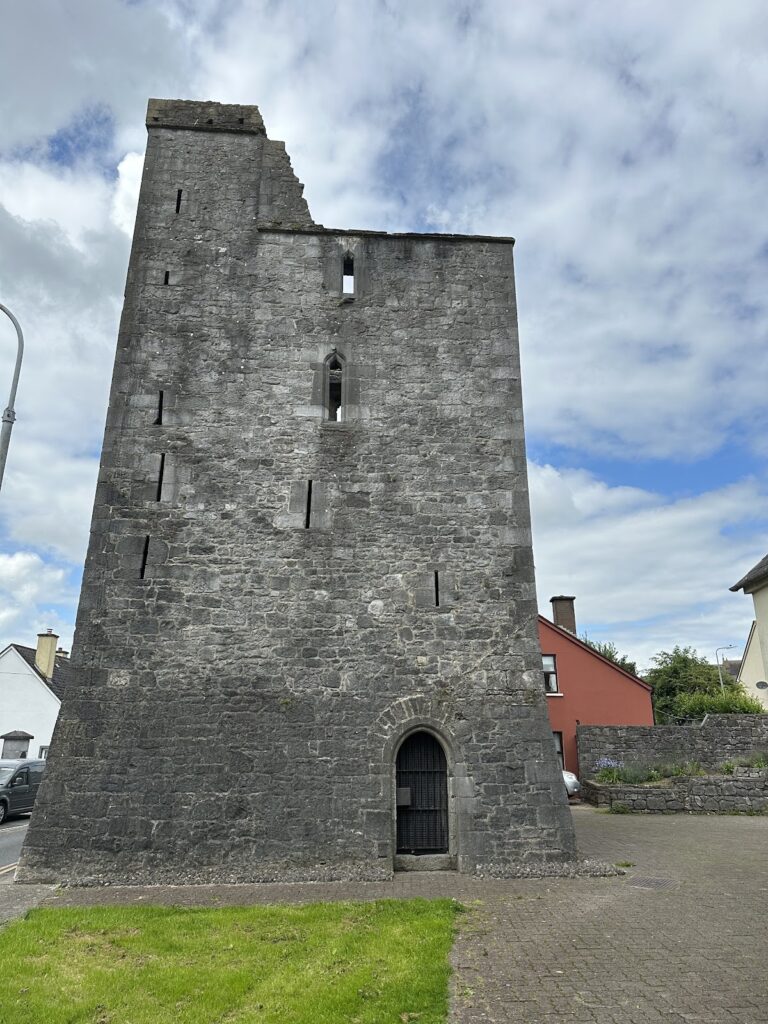
Ballybur Castle survives as a five-storey fortified tower approximately 65 feet high. It is classified as a fortified tower, a defensive residential building designed to protect its occupants and stores during attacks, and is described as being built in the Norman style. Its form reflects its dual purpose as a defensive structure and a Commerford family residence.
The castle has been restored using building techniques associated with the sixteenth century. This work preserves the character of the tower while retaining its connection to the period in which Richard Commerford constructed it.
Nearby sites