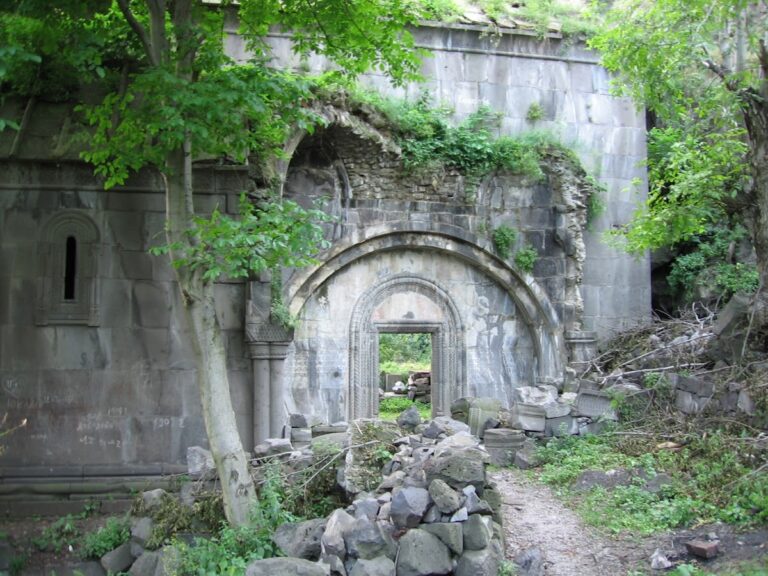
Lori Berd Fortress: A Medieval Armenian Royal Center


Site at a Glance
- Rating
- 4.7
- Popularity
- Low
- Country
- Armenia
- Primary era
- Medieval
- External website
- Open
- Eras represented
- Medieval
- Civilizations
- Armenian
- Site type
- Military
- Remains
- Citadel
On this page7 sections
History
Lori Berd Fortress is a medieval Armenian fortress in Armenia, founded in the tenth century by King David I Anhoghin during the Bagratid period. In 1065, it became the capital and political center of the Kingdom of Tashir-Dzoraget, a medieval Armenian kingdom whose territory included the Lori region. It remained a royal center until 1113 and served as a center of the kingdom from the tenth to the twelfth century.
Royal Capital and Medieval Conflicts
Lori Berd continued to play a role in regional struggles during the twelfth century. In 1177, the Georgian king Giorgi III besieged his rebellious nephew Demna at the fortress. Demna belonged to the Georgian royal family, and his revolt led to the conflict.
Around 1238–1239, Mongol forces besieged and captured Lori Berd. The operation is attributed to Chagatai the Elder, a Mongol military commander, and the fortress was extensively looted. Foreign forces took the stronghold repeatedly in later centuries, contributing to the decline of the fortified city.
Abandonment and Later History
The inhabitants gradually abandoned Lori Berd. By the end of the eighteenth century, only a small village remained on the site, and that village was moved west of the ancient city during the twentieth century.
In 1602, the Lori meliks Nazar and Dai received a firmān, an official decree or charter issued by a Muslim ruler, from the Persian shah Abbas. The decree confirmed their traditional rights in the Lori region. The Armenian noble family of Loris-Melikov is said to have descended from them.
Archaeological excavations in the urban area recovered domestic objects and tools that illuminate the history and culture of medieval Lori Berd. The fortress is a protected cultural-heritage monument of Armenia, and restoration work was under way in 2024 to help preserve it.
Remains
Citadel and Fortified City
Lori Berd stands on a mountainous plateau at approximately 1,500 metres above sea level, on the left bank of the Dzoraget River, amid deep river gorges. The citadel covered about 9 hectares. A powerful defensive wall approximately 200 metres long enclosed it, with a water-filled moat outside the fortifications. The citadel gate stood in the north-eastern part of the fortress. The walls and surviving structures were built from black tuff, a volcanic stone commonly used as a building material.
A larger fortified city surrounded the citadel across approximately 25 hectares and was itself enclosed by walls. Only portions of its foundations survive. The fortified city is described as having once housed approximately 10,000 inhabitants, while excavated domestic objects and tools provide material evidence for life within medieval Lori Berd.
Bridges and Water Systems
Two bridges crossed the surrounding gorges and connected the city with the outside world. One survives through part of its bridge supports. The other remains as a restored, light single-span stone bridge. Its pointed arch rises to an apex rather than forming a semicircular curve, while a small curve at the top joins the two principal arch curves.
Clay pipes set into the city walls formed part of the water-irrigation system. This system supplied the fortified settlement and was associated with the city’s built infrastructure.
Bathhouses and Civic Building
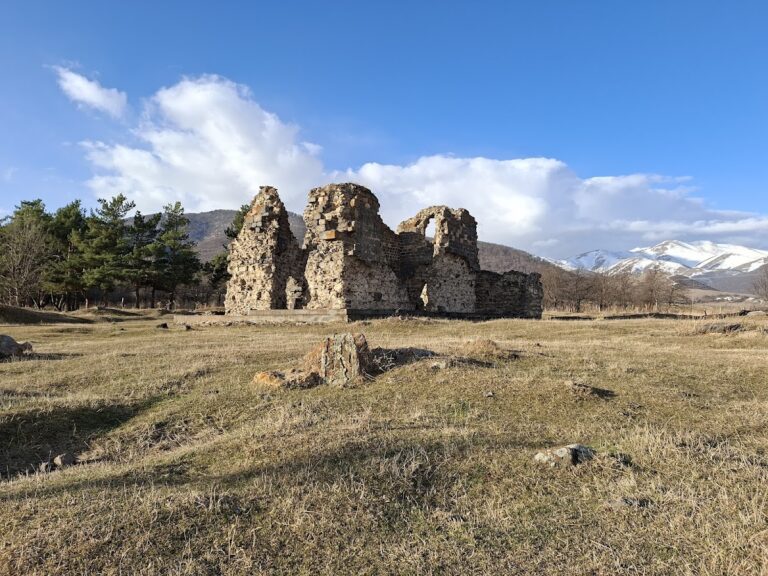
The fortress contains two bathhouses, one larger and one smaller. Each had a heated room, a bathing room, and a changing room, the space used before or after bathing. Domes provided lighting and ventilation. The bathhouses survive in ruined form among the other remains of the fortress.
The surviving civic building has a 14-by-12 layout and five doors. Its original purpose remains unknown. During the fourteenth or fifteenth century, it was converted into a mosque, and in the eighteenth century it was later changed into a church.