Coliath: A Crusader Fortress in Lebanon


Site at a Glance
- Rating
- 3.4
- Popularity
- Very Low
- Country
- Lebanon
- Primary era
- Medieval
- External website
- Open
- Eras represented
- Medieval
- Civilizations
- County of Tripoli, Crusader
- Site type
- Military
- Remains
- Castle
On this page9 sections
History
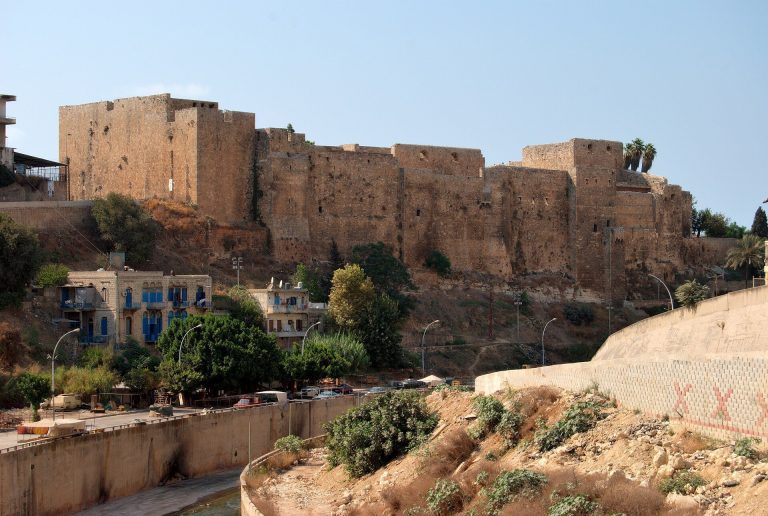
Coliath is a ruined Crusader fortress in Lebanon, built in the County of Tripoli during the first half of the twelfth century. It stood near the route linking Tartus and Tripoli, where it worked with Arqa, about 5 km to the south, to secure movement along the road. The fortress also served pilgrims, housed troops during wartime, supported economic control in peaceful periods, and offered refuge from raiders.
Foundation and Hospitaller control
Count Pons of Tripoli seized the site in 1118. A fortress was then established, probably before 1127, as part of the defenses of the County of Tripoli, a Crusader state centered on Tripoli and its surrounding territory along the eastern Mediterranean coast. In 1127, Pons transferred Coliath to the Knights Hospitaller, a medieval military-religious order that maintained fortified establishments and supported Christian travelers in the eastern Mediterranean.
Coliath’s defensive role was limited, but its position gave it several practical functions. It acted as a way station for pilgrims and could shelter soldiers and local people when raiders threatened the surrounding area. During periods of peace, the fortress also helped regulate economic activity along the route between the coastal centers.
Ayyubid and Mamluk destruction
The Ayyubid ruler al-Adil captured Coliath in 1207 or 1208 and dismantled its fortifications. The Ayyubids were the dynasty that ruled much of the eastern Mediterranean and the Near East after Saladin’s rise. The Franks later reoccupied the site, although the extent and date of any rebuilding remain uncertain. When the traveler Wilbrand of Oldenburg saw Coliath in 1212, it was still in ruins, indicating that the fortress may have remained largely damaged during the later Crusader period.
In the summer of 1266, the Mamluk sultan Baibars captured Coliath and had it completely ruined before the Mamluk advance against Tripoli. The Mamluks were a military ruling elite who governed Egypt and Syria during the later medieval period, and Baibars led major campaigns against Crusader strongholds. Coliath was abandoned by the end of the thirteenth century.
Modern recognition
Max van Berchem surveyed the ruins in 1914, and the historian Paul Deschamps visited them in the early 1930s. Coliath is now an archaeological and historic fortification site in Qlaiaat, in the Akkar district of northern Lebanon. It lies approximately 20 km northeast of Tripoli and about 2 km from the Mediterranean coast, at roughly 40 m above sea level.
Remains
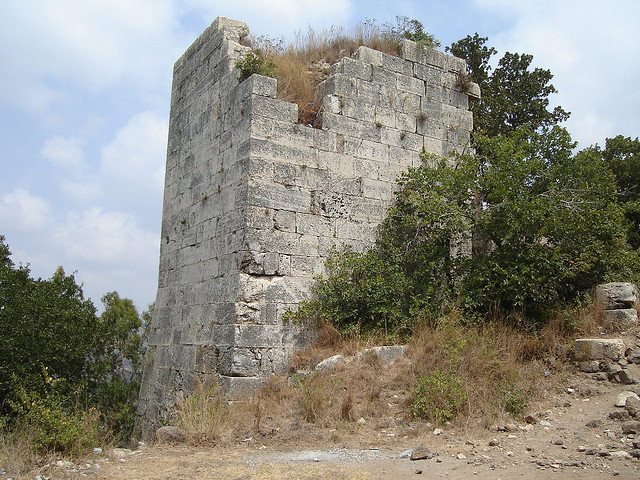
Coliath occupies a slight knoll on a plain. Its surviving plan is a plain square castrum, meaning an enclosed fortress organized around a defended perimeter, with limestone walls, corner towers, additional wall towers, a moat, and internal halls surrounding an open courtyard. The enclosure measures approximately 63 by 56 m.
Fortress layout
Walls and towers
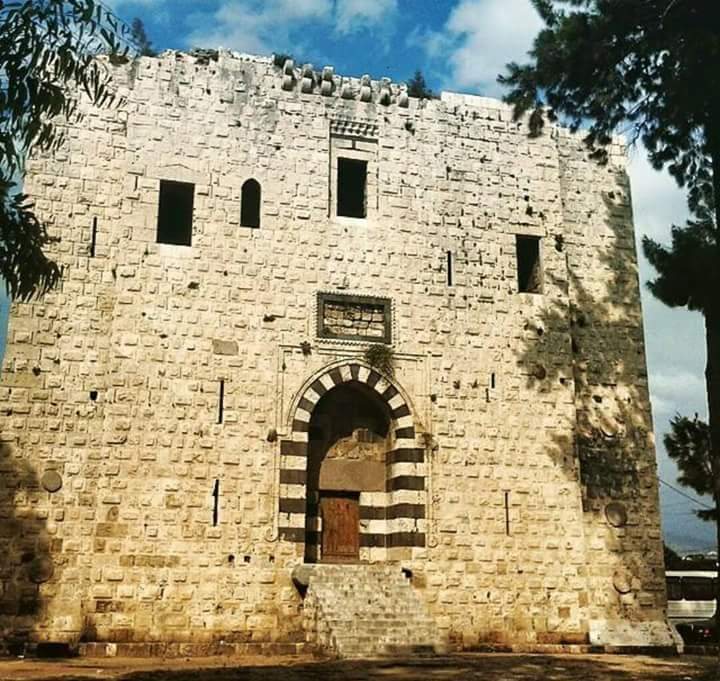
The limestone enclosure was strengthened by a tower at each corner. Three more square towers stood midway along three of the walls. Their projection beyond the main wall line varied, while the southwest corner tower was larger than the others. This arrangement gives the surviving remains the character of an enclosure castle associated with military orders in the region.
Entrance and moat
The entrance opened at the center of the southern wall. A moat cut into the bedrock bordered the fortification walls, adding a defensive boundary around the square enclosure.
Courtyard and vaulted halls
Most of the interior was an open courtyard. Along the northern wall, large halls with barrel-vaulted ceilings survive in ruined form. Smaller surviving traces indicate that comparable buildings also stood against the inner face of the southern wall, creating built spaces along the perimeter while leaving the central area open.