Castillo de Alhabar: A Nasrid Frontier Fortress in Spain


Site at a Glance
- Rating
- 3.5
- Popularity
- Very Low
- Country
- Spain
- Primary era
- Medieval
- Eras represented
- Medieval
- Civilizations
- Nasrid
- Site type
- Military
- Remains
- Castle
On this page7 sections
History
Castillo de Alhabar is a probably thirteenth-century fortress in Cambil, Spain, associated with the Muslim-ruled Nasrid Kingdom of Granada. It may have been built when the first Nasrid frontier was organized around 1246, although its existence during the campaigns of Ferdinand III, the Castilian king whose conquests expanded Christian control in Iberia, is considered unlikely.
Early frontier history
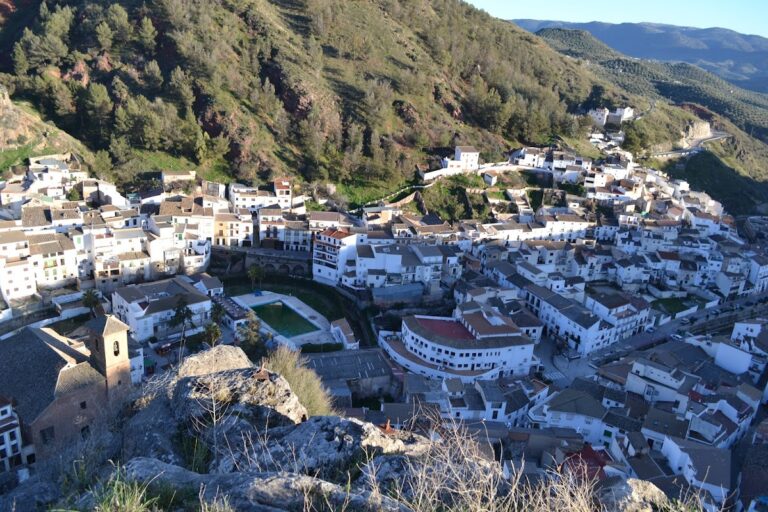
Alhabar and Cambil first appear in written references during the twelfth century, in connection with a dispute over water. They seem to have been two small settlements divided by the Cambil River. Each may have been protected by a small castle formed mainly by the summit of its rocky outcrop, with limited additional reinforcement.
The Chronicle of Alfonso XI, written in the first half of the fourteenth century, states that Infante Pedro, a Castilian royal prince, conquered the castles of Cambil and Alhabar. The two strongholds then became involved in repeated warfare along the frontier between the Nasrid Kingdom and Castile. Nasrid forces later recovered them during the conflict between Peter I and Enrique of Trastámara, rival claimants in a Castilian civil war. Their action formed part of an alliance with the Castilian king during an attack on Jaén, which supported the Trastamaran cause.
Conquest and later administration
Constable Miguel Lucas de Iranzo, a senior Castilian military commander, unsuccessfully attacked the castles in 1462 and again in 1471. In 1485, during the final Castilian conquest of the Nasrid Kingdom, Queen Isabella I of Castile and King Ferdinand II of Aragon, known as the Catholic Monarchs, captured Cambil and Alhabar. The siege lasted twelve days and was supported by the large artillery force Ferdinand had assembled and by military engineers who prepared siege works and artillery positions. The fall of the two strongholds led to the immediate abandonment of the fortress of Arenas. The Castilian chronicler Fernando del Pulgar also referred to Alhabar as Harrabal.
On 21 September 1486, the Catholic Monarchs granted Cambil and Alhabar, along with their jurisdictions, to the city of Jaén. This arrangement continued until Philip II separated Cambil from Jaén on 19 April 1558. By that time, Cambil had incorporated Alhabar. During the Muslim period, Alhabar had functioned as an autonomous fortress command, although it remained militarily subordinate to Castillo de Cambil.
Heritage status
Castillo de Alhabar was declared a monument on 22 June 1993 and is listed under heritage code RI-51-0007890.
Remains
Rocky outcrop and plan
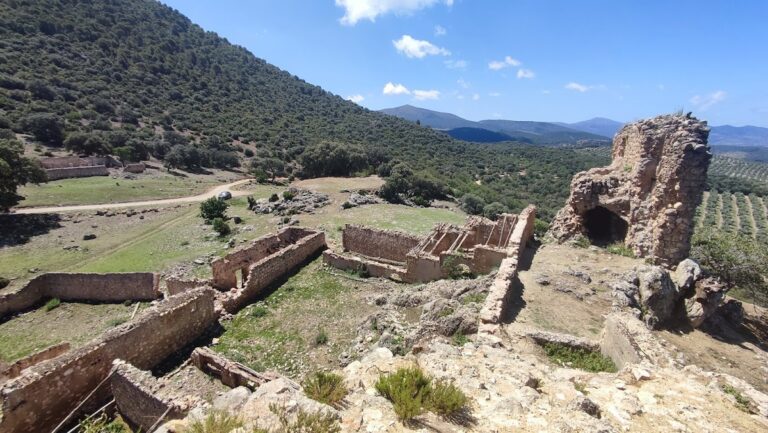
The castle occupies the entire upper plateau of the Alhabar rocky outcrop within Cambil, east of the Cambil River and opposite Castillo de Cambil. Its rectangular plan follows the shape of the rock. Steep slopes and natural cliff walls protect the longer southern and northern sides, leaving most of the surviving structural remains along the eastern and western facades.
Interior levels
The interior is arranged on two levels raised partly through human construction. A central level served as a small citadel, while a peripheral level surrounded it. The surviving interior structures are built from small rubble masonry set in abundant gypsum mortar. The remains are very deteriorated.
Nearby sites