Château Pichon: A Neo-Renaissance Wine Estate in Parempuyre


Site at a Glance
- Rating
- 4.7
- Popularity
- Very Low
- Country
- France
- Primary era
- Medieval
- External website
- Open
- Eras represented
- Medieval
- Civilizations
- Duchy of Aquitaine, English
- Site type
- Domestic
- Remains
- Castle
On this page7 sections
History
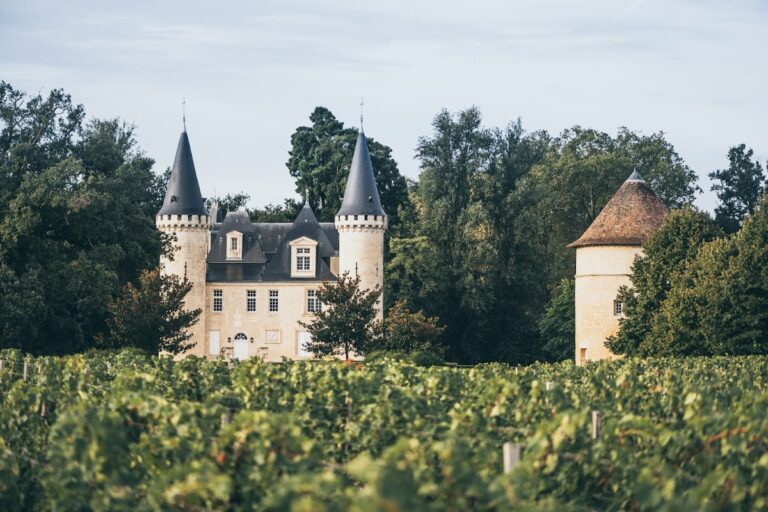
Château Pichon is a historic wine estate in Parempuyre, France, comprising a château, park, and vineyard. Its estate included a château dating from the fourteenth century, while the present building took shape through a Neo-Renaissance reconstruction in the early 1880s.
From the medieval estate to the nineteenth-century reconstruction
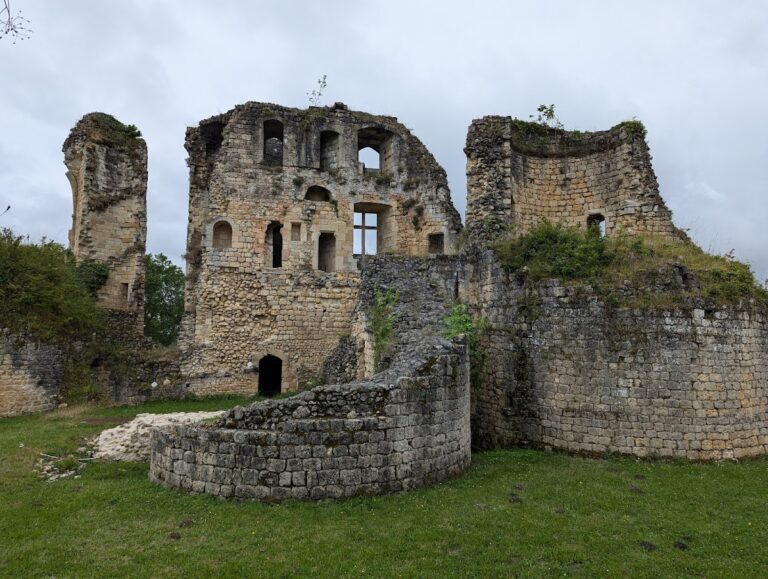
Eugène Durand acquired the Château de Parempuyre from the Pichon heirs in 1878. A fire left the building in ruins in 1881, and Durand commissioned its reconstruction from the architect Louis-Michel Garros around the beginning of the 1880s. The resulting building drew on château architecture from several periods, with particular inspiration from the Loire châteaux.
Inheritance and shared ownership
Between 1893 and 1898, Eugène Durand-Dassier transferred the château, park, and vineyard to his son Philippe Durand-Dassier in exchange for a life annuity. Other parts of the estate went to his daughters. Henriette received most of the marshland, while Louise Durand-Dassier, the wife of wine merchant Frédéric Cruse, received a large cattle farm and three tenant farms.
By about 1898 or 1908, Philippe Durand-Dassier appears to have acquired Henriette’s share. The estate then had two principal co-owners, Philippe Durand-Dassier and Frédéric Cruse. Their wines were sold under the names Château Parempuyre and Château de Parempuyre. In 1908, 50 casks were assigned to the first brand and 35 to the second.
Wine production and twentieth-century changes
The estate brought limited profit to the family, although correspondence from the 1890s describes country gatherings held there. Its wines were initially regarded as moderate in quality and price, but Calvet purchased all 177 barrels of the 1908 vintage. By 1922, the wines were described as having finesse, elegance, and bouquet. Château de Parempuyre was classified as a Cru Bourgeois Supérieur in September 1932. A Cru Bourgeois is a Bordeaux classification for estates outside the top-ranked classified-growth system.
Clément Fayat purchased the property in 1976. In 1985, it was renamed Château Clément-Pichon, recalling the Pichon family and honouring Fayat’s wife, whose maiden name was the same as his first name. The property is now a Haut-Médoc Cru Bourgeois, a classification associated with the northern Médoc wine region and its appellation. It has been protected as a French historic monument since 16 June 2000.
Remains
The château and grounds
The estate is organized around the château, its park, and its vineyard. The present château is a Neo-Renaissance building, a nineteenth-century revival that reinterprets Renaissance forms while combining motifs from different historical periods. Its design reflects the reconstruction carried out by Louis-Michel Garros around the beginning of the 1880s, after the earlier building had been destroyed by fire.
Vineyard and wine facilities
After 1976, the entire 25-hectare vineyard was replanted on sandy and gravelly soil. Merlot accounts for 62 percent of the planting, Cabernet Sauvignon for 33 percent, and Cabernet Franc for 5 percent. The vines are planted at a density of 7,000 to 8,000 per hectare and have an average age of about 30 years. Production is approximately 120,000 bottles.
The wine vat room and cellars formed a distinct part of the estate’s ownership arrangements in 1922. They belonged to Frédéric Cruse, who also retained ownership of the château and park. These facilities therefore belonged to the working wine estate while the principal buildings and grounds remained under Cruse’s ownership.