Snape Castle: A Semi-Fortified Manor House in North Yorkshire


Site at a Glance
- Rating
- 4.7
- Popularity
- Very Low
- Country
- United Kingdom
- Primary era
- Medieval
- External website
- Open
- Eras represented
- Medieval, Early Modern
- Civilizations
- English
- Site type
- Domestic
- Remains
- Castle
On this page8 sections
History
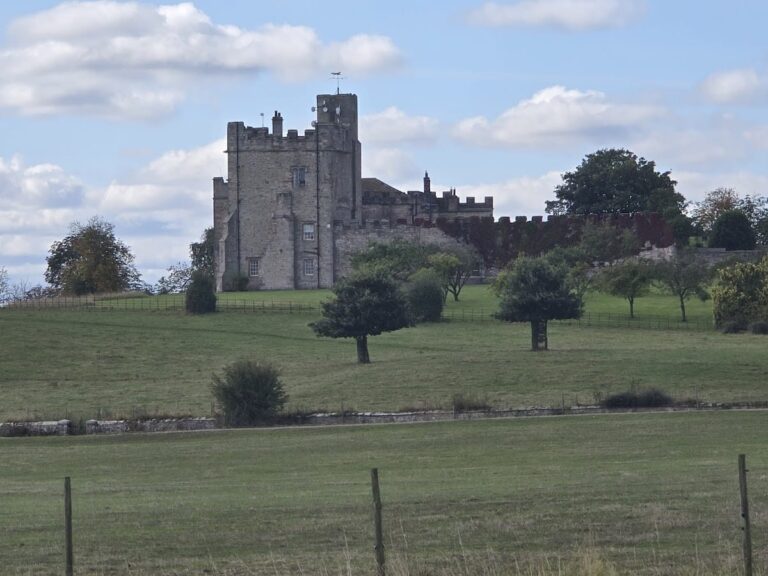
Snape Castle is a semi-fortified manor house in Snape, United Kingdom, built in the early fifteenth century and later rebuilt with Perpendicular-style features. The site stands on the western edge of the village and is associated with the Neville family, Cecily Neville, Queen Anne, and the Tudor political crises of the sixteenth century.
Medieval Origins and the Neville Family
A manor house was reportedly established at Snape by Ralph FitzRanulph of Middleham. Through the marriage of his daughter to a son of Robert Neville, the building and estate passed into the Neville family, a powerful English aristocratic house whose members held extensive estates and influenced fifteenth-century politics.
The castle itself was probably built between 1425 and 1430, after George Neville inherited the land and buildings from his father, Ralph, Earl of Westmorland. During the fifteenth century, Cecily Neville and Anne Neville both lived at Snape. Cecily was the mother of Richard III, while Anne became his queen, giving the castle a direct association with the king through both his mother and his wife.
The Pilgrimage of Grace
Snape became involved in the Pilgrimage of Grace, a large Catholic and conservative uprising in northern England during 1536 and 1537 against Henry VIII’s religious reforms and other royal policies. In January 1537, rebels stormed the castle and took Katherine Parr and her two children hostage. They feared that her husband, John Neville, Third Baron Latimer, would betray them to Henry VIII.
John Neville returned to Snape while attempting to mediate between the king and the northern rebels. He persuaded the mob to withdraw and release his family. Katherine Parr later became Henry VIII’s sixth and final wife. A local tradition also states that she married John Neville in the castle chapel.
Elizabethan Rebuilding and Later Ownership
In 1577, Sir Thomas Cecil inherited the manor through his wife, Dorothy Neville, and began rebuilding the castle. Cecil was an English courtier and politician. The work added towers intended mainly for visual effect rather than defence, leading to the description “sham castle.” He stopped using Snape after 1578, when he inherited the Burghley estate near Stamford from his father, and the rebuilding was probably completed in 1587.
The estate was sold in 1798 to William Milbank, a local landowner from nearby Thorpe Perrow. Snape Castle is now a private residence. It has been a Grade I listed building since 5 May 1952, a category providing England’s highest level of statutory protection for buildings of exceptional architectural or historic interest. The site is also a scheduled monument protected under national heritage law.
The Castle Chapel
The chapel was first used as a private place of worship for the castle’s inhabitants and later served public worship. Between 1837 and 1887, it was renovated. The chapel also contains a memorial to people from Snape who died in the First World War.
Remains
Manor House and Courtyard
Snape Castle is arranged as a semi-fortified manor house around a courtyard measuring approximately 140 feet from north to south and 180 feet from west to east. Its position was associated with marshy, flood-prone ground. The rebuilding led by Thomas Cecil added towers whose principal purpose was visual display rather than military defence. The west wall contains an Elizabethan chimney dated 1587, and the building retains Perpendicular-style windows, a late medieval English form known for strongly vertical tracery, large windows, and rectilinear shapes.
Chapel of St Mary
The chapel dedicated to St Mary stands on the eastern side of the castle and retains its Perpendicular windows. In the late seventeenth century, its fifteenth-century roof was removed and replaced with a plaster ceiling. Antonio Verrio, an Italian Baroque painter active in England, decorated the ceiling with Wonder and War in Heaven, a scene showing angels being expelled from heaven. Damp had badly damaged the painting by 1725, and its deterioration continued while the chapel was used as a store.
Nearby sites