Middleham Castle: A Medieval Fortress and Neville Residence


Site at a Glance
- Rating
- 4.5
- Popularity
- Medium
- Country
- United Kingdom
- Primary era
- Medieval
- External website
- Open
- Eras represented
- Medieval
- Civilizations
- English
- Site type
- Military
- Remains
- Castle
On this page10 sections
History
Middleham Castle is a medieval castle in Middleham, United Kingdom, built around 1190 by Robert Fitzrandolph, 3rd Lord of Middleham and Spennithorne. Its Norman keep and defensive enclosure were created to protect the road between Richmond and Skipton and the surrounding area of Coverdale. The castle stood near an earlier motte-and-bailey, a fortification combining an elevated earth mound with a defended enclosure, known as William’s Hill. That earlier stronghold is believed to have relied on timber defenses, although its position may have been better suited to controlling the route.
From Fitzrandolph to the Nevilles
In 1270, Middleham passed to the Neville family. Its most prominent Neville owner was Richard Neville, 16th Earl of Warwick, who became known as the Kingmaker because of his decisive role in placing and removing monarchs during the Wars of the Roses. These were fifteenth-century dynastic conflicts in England, fought chiefly between the rival houses of Lancaster and York.
After Richard, Duke of York, was killed at Wakefield in December 1460, his younger son Richard, Duke of Gloucester, came into Warwick’s care and lived at Middleham with Warwick’s family. Warwick later captured King Edward IV and briefly imprisoned him at the castle in 1469. Warwick was killed at Barnet in 1471, after which Edward IV was restored. Richard, Duke of Gloucester, then married Anne Neville, Warwick’s younger daughter, and made Middleham his principal residence.
Richard of Gloucester and the royal castle
Richard and Anne’s son, Edward, later known as Edward of Middleham, was born at the castle around 1473 or 1476. He died there in 1484. Richard became King Richard III, but during his two-year reign he spent little or no time at Middleham. After his death at the Battle of Bosworth in 1485, Henry VII seized the castle. It remained in royal hands until the reign of James I.
Decline and preservation
During the reign of Elizabeth I, Lord Huntingdon proposed demolishing Middleham Castle and converting it into a manor house, partly for the Queen’s possible use during royal journeys. The plan did not prevent the castle’s later decline. During the seventeenth century it fell into disuse and disrepair. In 1644, a parliamentary committee in Yorkshire declared it untenable and ordered that no garrison should be maintained there. It was nevertheless occupied during the Civil War in 1654 and 1655 by about thirty men and could hold prisoners, although no action or siege took place at the site.
Stone was later taken from the castle for buildings in Middleham, turning the ruins into a local quarry. Ownership passed to Sir Henry Linley in 1604 and to the Wood family in 1662. The Woods retained it until 1889, when it was sold to Samuel Cunliffe-Lister, and it passed by inheritance in 1906. English Heritage now manages the ruins. Middleham Castle is a Grade I listed building, a designation recorded in 1970.
Remains
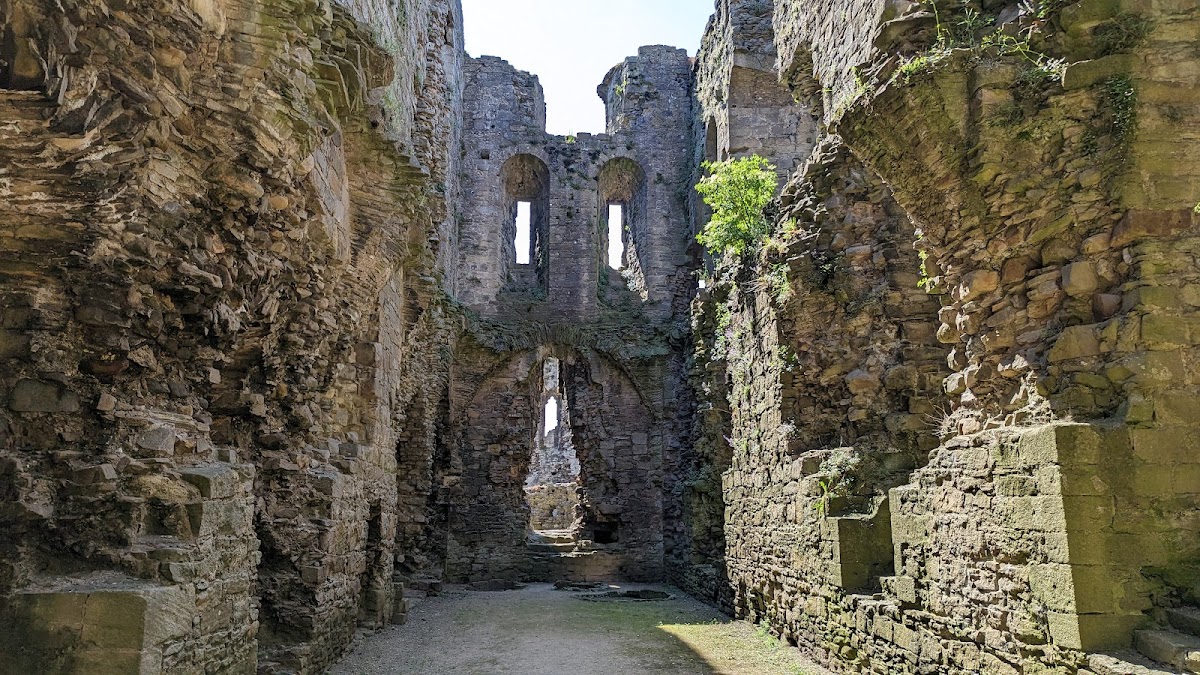
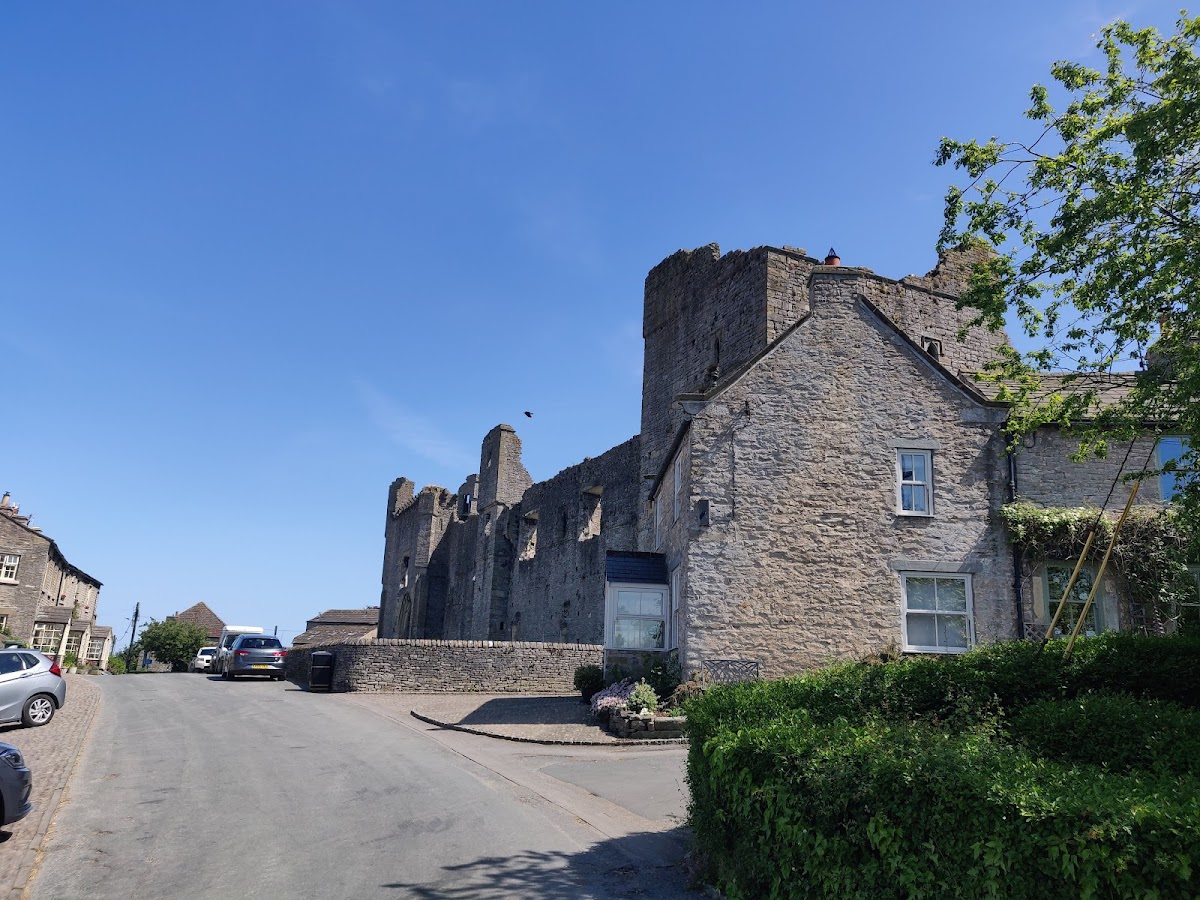
Middleham Castle is a compact, massive rectangular complex organized around a large Norman keep, a concentric thirteenth-century curtain wall, and later residential ranges. A Norman keep was the principal fortified residential tower of a medieval castle, while a curtain wall was the enclosing wall that linked towers and protected the inner complex. Most of the defensive walls remain intact, but the walls of the residential buildings have largely disappeared.
The fortified core
The Norman keep
The keep has two storeys and measures about 105 feet, or 32 metres, from north to south and 78 feet, or 24 metres, from west to east. It is one of the largest square keeps in England. An internal wall divides both floors, while turrets stand at the corners and halfway along each side.
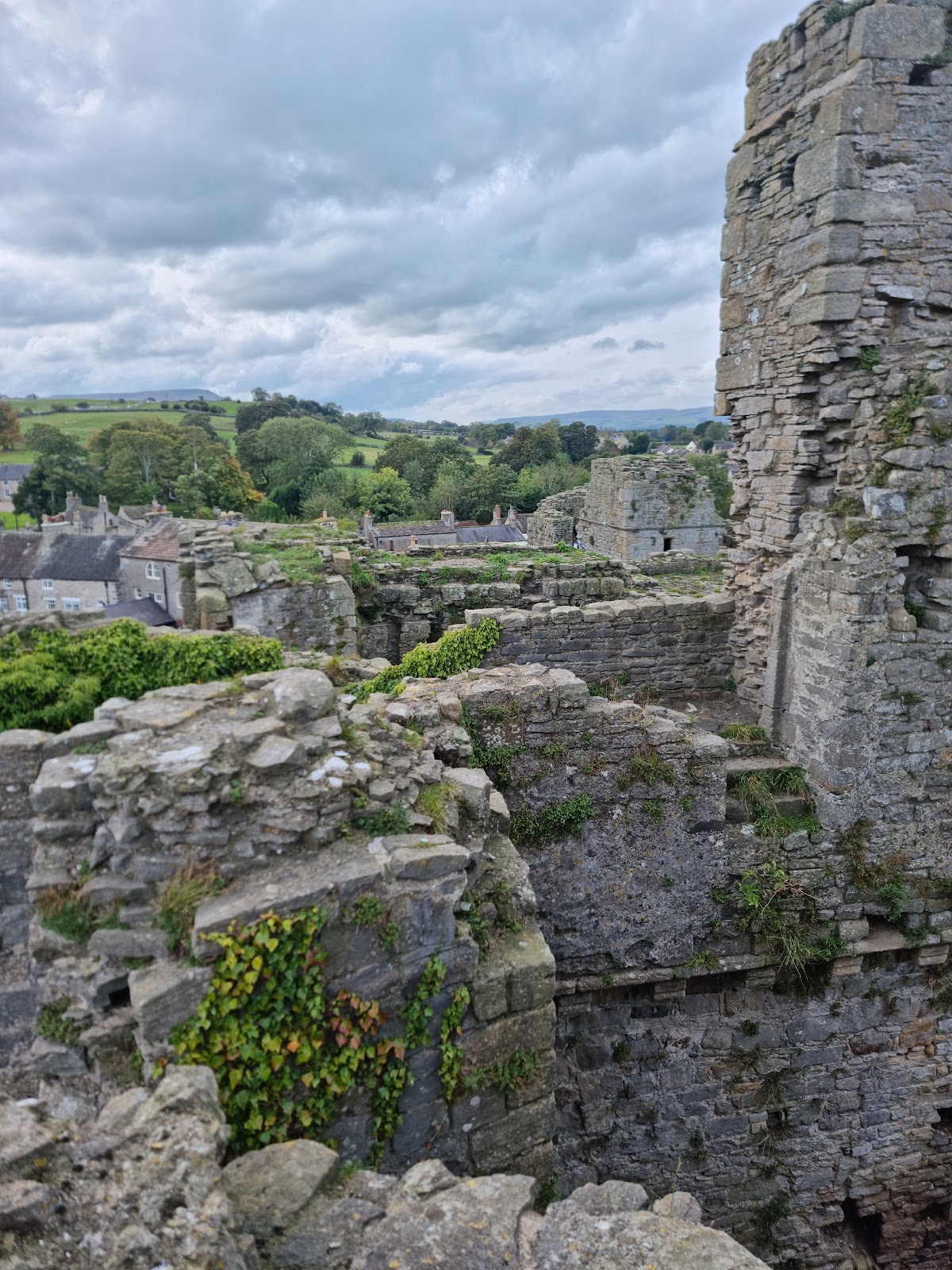
Two large chambers occupied the ground floor and were originally vaulted. Above them were two grand halls with high windows. A staircase gave access to the first floor, and a later chapel outbuilding helped defend this approach. A repaired spiral staircase now reaches the top of the south-east corner tower and gives views over the town and countryside, including the earlier castle motte to the south-west.
The south-west tower
The south-west tower is traditionally called the Prince’s Tower because Edward of Middleham was said to have been born there. The identification remains uncertain, since a 1538 survey referred to it simply as the “Rounde Towre.” The tower nevertheless preserves the association between the castle and the short life of Richard III’s son.
The curtain wall and entrances
The thirteenth-century curtain wall encloses the keep concentrically, forming a compact defensive enclosure. The present entrance runs through a tower at the north-east corner and represents a fifteenth-century alteration. Only the foundations survive of the original gatehouse, which faced east towards an outer ward that has since disappeared.
The gatehouse was remodeled in the fourteenth century with diagonal turrets and a flanking arch. Openings in the masonry allowed defenders to launch missiles at attackers. Apart from the east wall, the circuit of the castle walls remains fairly complete. Two wells also survive within the enclosure.
Aristocratic residential ranges
During the fifteenth century, the Nevilles built extensive halls and outbuildings against the curtain wall. These additions changed the character of the castle, giving residential comfort a larger place alongside military security. First-floor bridges linked the new ranges with the keep, and the ceiling over the great hall was raised, possibly to create a clerestory, an upper band of windows that lights a hall above its main roof or ceiling.
The lower faces of the keep have suffered extensive damage. Windows and doorways have crumbled, floors have collapsed, and the battlements no longer survive. Modern repairs have stabilized parts of the structure, but Middleham remains substantially ruinous, with the surviving keep and wall circuit defining the form of the medieval castle.
Nearby sites