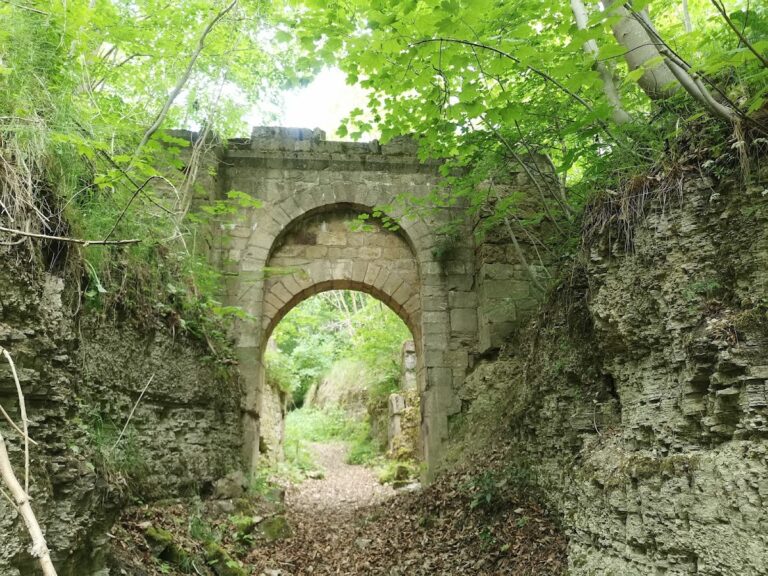
Alte Burg: An Abandoned Medieval Spur Castle in Germany


Site at a Glance
- Rating
- 4.6
- Popularity
- Very Low
- Country
- Germany
- Primary era
- Medieval
- Eras represented
- Iron Age, Medieval
- Civilizations
- Holy Roman Empire
- Site type
- Military
- Remains
- Castle
On this page7 sections
History
Alte Burg is an abandoned medieval spur castle in Germany, near Kleinbartloff in Thuringia, built on a narrow projection of the Dün Plateau. Its medieval form probably dates from the ninth to eleventh centuries, while the summit had already been fortified during the Early Iron Age, approximately between the eighth and fifth centuries BC. The original name of the castle has not survived, and the site is also known as Burghagen.
Early Iron Age Hillfort
An earlier hillfort occupied the summit during the Early Iron Age. This fortified enclosure probably served as a refuge and may also have supported habitation. Its earthworks enclosed an area of approximately 300 by 170 metres, making the summit a defensible place before the medieval castle was established.
Medieval Castle and Monastic Possession
A smaller round castle was later built over the earlier fortification, probably between the ninth and eleventh centuries. It may have been established by a local nobleman who held an estate at Albolderode. That settlement, mentioned in 961, apparently belonged to the castle district, while the nobleman’s estate was recorded in 1123 at the location later occupied by Reifenstein Monastery.
The medieval castle was abandoned or destroyed before Reifenstein Monastery was founded, probably by the end of the eleventh century. The exact date and circumstances remain unknown. Burghagen was associated with the monastery founded at Reifenstein in 1162, appearing in records from 1162 and 1209. Ernst II, Count of Tonna, granted the newly founded monastery the forest called Mittelberg together with the adjacent Burghagen, after which the area remained in monastic possession. The surrounding forest was enclosed to protect the castle and retained the name Burghagen, which continues as a local forestry place-name.
Remains
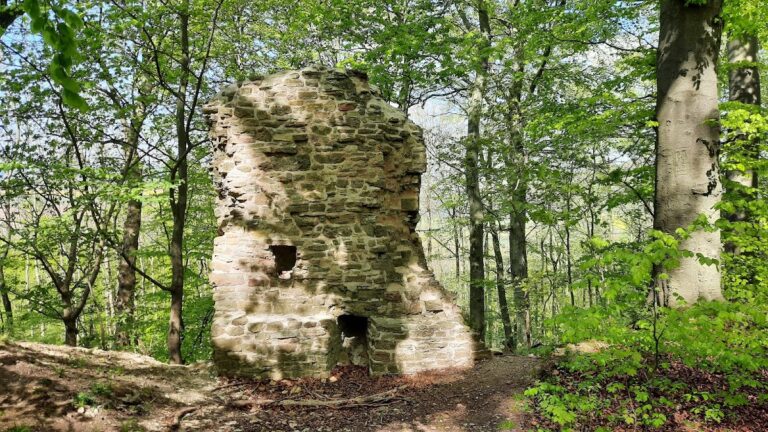
The physical layout combines an earlier hillfort with a smaller medieval castle on a high spur. Ramparts and ditches follow the summit and extend across the plateau and along the less steep western and northeastern slopes. The steep natural sides of the spur formed part of its defenses, while the earthworks controlled access from the higher ridge.
Summit and Natural Setting
Alte Burg stands immediately above Reifenstein Monastery and approximately two kilometres southwest of Kleinbartloff. The site reaches a maximum elevation of 461.2 metres above sea level on a narrow projection of the Dün Plateau. The spur descends steeply toward the southwest, west, and northeast over a Muschelkalk escarpment, a hard shell-bearing limestone formation, into the surrounding valley. Woodland across the area is still known locally as Alte Burg or Burghagen.
Fortifications and Medieval Enclosure
The Early Iron Age hillfort occupied the summit within an enclosure measuring about 300 by 170 metres. At the narrowest point, ramparts and ditches separated the entire spur from the higher ridge. The later medieval castle had a smaller round plan, with additional ramparts and ditches dividing it into an outer courtyard and a main enclosure. Several of these earthworks survive across the plateau and along the western and northeastern slopes.
Archaeological Evidence
Nineteenth-century discoveries from the prehistoric fortification included pottery sherds, weapon parts, and rings. These finds provide material evidence for activity at the earlier hillfort. A separate nearby fortification, the Kleine Alteburg, is distinct from Alte Burg. Its identification as a castle was initially questioned, but pottery found there in 1971 indicated a fortified site dating to the twelfth century.
Nearby sites