Twmpath Motte: A Medieval Norman Defensive Castle in Wales


Site at a Glance
- Rating
- 4.4
- Popularity
- Very Low
- Country
- United Kingdom
- Primary era
- Medieval
- External website
- Open
- Eras represented
- Medieval
- Civilizations
- Welsh
- Site type
- Military
- Remains
- Castle
On this page5 sections
History
Twmpath Motte is a medieval motte-and-bailey castle in the United Kingdom, near Cardiff in Wales, associated with the period from about 1066 to 1540. It began as a Welsh camp called Caer Cynwrig before the Normans captured and occupied it. The Normans, the ruling and military elite who conquered England in 1066 and later established castles and lordships in parts of Wales, made the site the third-largest motte in the Lordship of Glamorgan.
Welsh camp and Norman occupation
The earlier name Caer Cynwrig combines caer, a Welsh place-name element for a fortification, camp, enclosure, wall, or defensive mound, with Cynwrig, an Old Welsh term meaning “high hill.” The later name Twmpath means “hump” in Welsh. Tradition places the mound’s construction around 1089 and connects it with the burial of Iestyn ap Gwrgan, Lord of Glamorgan. A separate legend says that the Devil piled up the earth to create it.
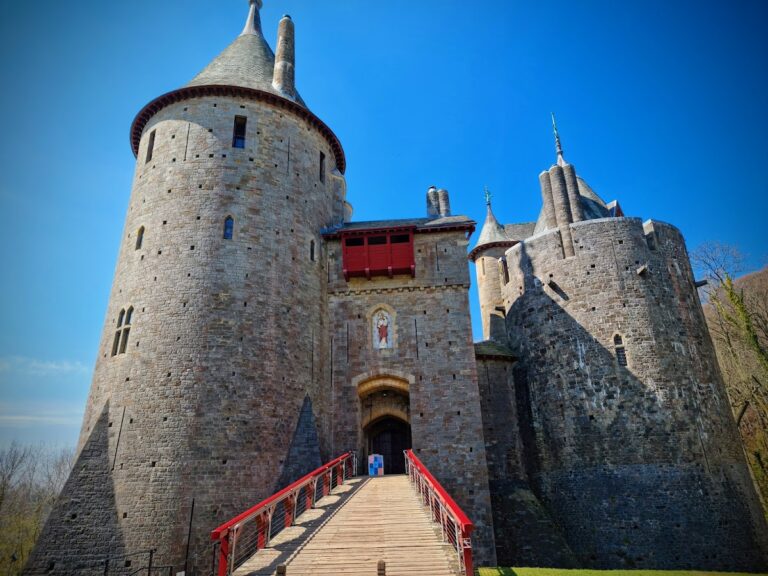
After the Norman conquest of the area, Twmpath Motte became part of the military system protecting Cardiff. Robert Fitzhamon, the Norman lord who established Norman control in Glamorgan, founded Cardiff Castle on the site of the former Cardiff Roman fort. Twmpath Motte then formed one link in a chain of eight smaller earth-and-timber castles defending the newly conquered town. Other strongholds in this network included Caerau Hillfort, Morganstown Castle Mound, Castell Coch, Whitchurch or Treoda, Cae’r Castell near St Mellons, and Rumney Castle.
Protection and archaeological importance
The monument was designated a scheduled monument on 23 July 1930 under the official name “Twmpath, Rhiwbina,” with the reference number GM017. Cadw, the Welsh historic-environment service responsible for protecting and conserving important monuments and sites in Wales, considers it nationally important for the evidence it may provide about medieval defensive practices. The earthwork is also regarded as a well-preserved remnant of the medieval landscape, with potential structural evidence and intact associated archaeological deposits.
Remains
Motte and surrounding ditch
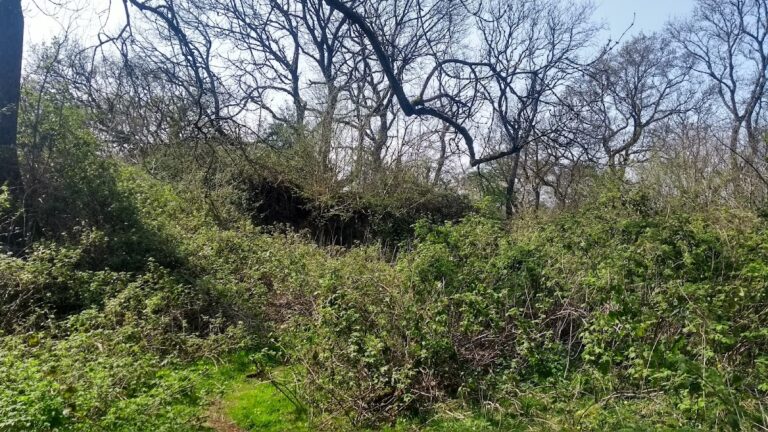
Twmpath Motte is a motte-and-bailey castle, a medieval fortification formed from a raised earth mound carrying a defensive structure and an adjoining enclosed bailey. It stands on the southern slope of Wenallt Hill near Rhiwbina, Cardiff. The surviving motte is overgrown and rises approximately 25 feet, or 7.6 metres, above the surrounding ground. It measures about 130 feet, or 40 metres, around, while its summit is approximately 16 metres, or 52 feet, in diameter.
A ditch surrounds the earthwork. Its depth varies from 1 to 1.2 metres, or 3.3 to 3.9 feet, and its width ranges from 4 to 5 metres, or 13 to 16 feet. The well-preserved earthwork retains the potential to contain evidence of its former structures and associated archaeological deposits, allowing the physical remains to contribute to the interpretation of medieval defensive practice.
Nearby sites