Braunsberg Castle: A Medieval Hill Castle in Italy


Site at a Glance
- Rating
- 4.5
- Popularity
- Very Low
- Country
- Italy
- Primary era
- Medieval
- External website
- Open
- Eras represented
- Medieval, Early Modern
- Civilizations
- Holy Roman Empire
- Site type
- Military
- Remains
- Castle
On this page10 sections
History
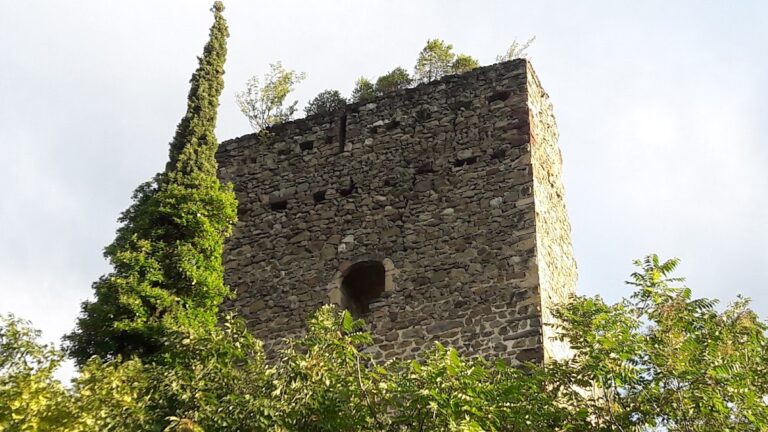
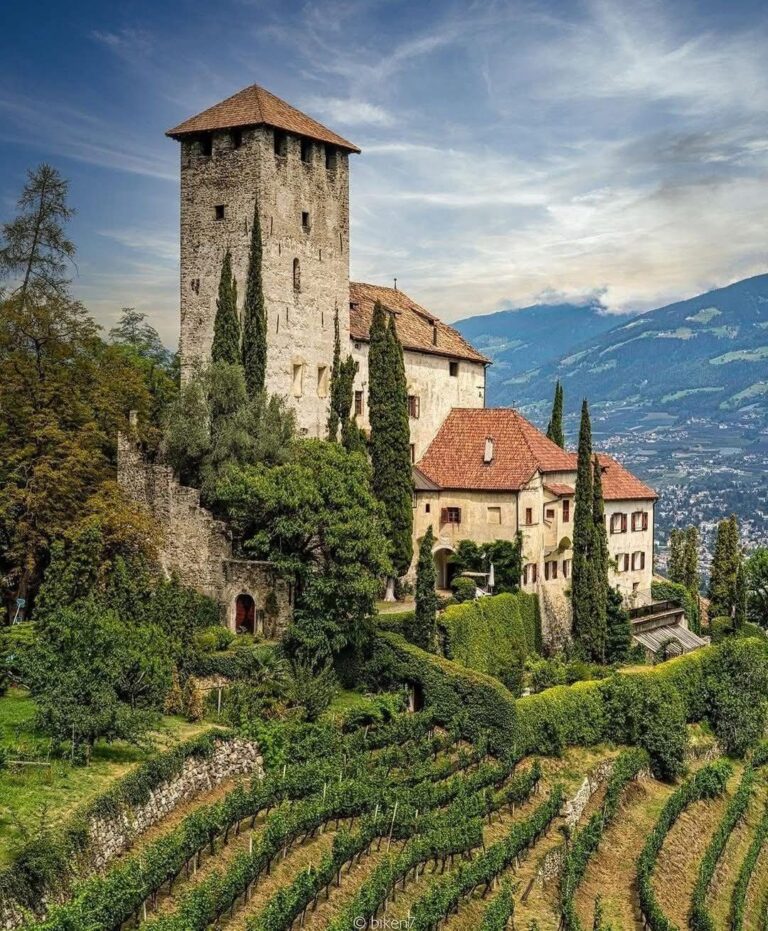
Braunsberg Castle is a medieval hill castle in Italy, at Lana in South Tyrol, built probably in the thirteenth century by the Lords of Braunsberg. It stands beside the Gaul Gorge on the road toward the Ulten Valley and is regarded as a landmark of Lana.
The Lords of Braunsberg
A supposed reference from 1082 to Bertholdus of Lana and Braunsberg comes from a late-thirteenth-century diplomatic forgery and is not accepted as the castle’s first reliable mention. The earliest dependable record dates to 1231, when the castle belonged to Ulrich von Braunsberg. The family were ministerials, members of the medieval service nobility who held land or office while serving a territorial lord, in this case the Counts of Tyrol. They probably built the castle during the thirteenth century and retained the estate for more than 200 years. Their line descended from the Lords of Lana.
Records from around 1300 mention Isolde von Braunsberg, who first married Hugo I von Niedertor. After his early death, she married Konrad Maiser. The Braunsberg family became extinct in 1361 with Paul von Braunsberg. The castle then left the family’s possession and ultimately came under the Tyrolean sovereigns.
Legend and Habsburg Feudal Rule
A local legend places a tragic event at Braunsberg in 1393. Jutta, described as the castle’s lady, is said to have thrown herself into the Gaul Gorge after her husband falsely accused her of infidelity while he was away in Palestine. A votive painting from 1748 commemorates the story.
In 1401, Duke Leopold IV of Habsburg granted the whole castle as a fief, an estate held from a superior lord under specified obligations, to Hans Mareyder. The family subsequently adopted the name Mareyder von Braunsberg. When that family died out in the middle of the fifteenth century, the territorial ruler confiscated the castle.
On 9 February 1492, King Maximilian I, a Habsburg monarch who later became Holy Roman Emperor, granted Braunsberg and the lordship of Ulten to the brothers Jakob V and Jörg Trapp for 15,000 gulden. The grant also gave them the associated rights to administer justice in the Ulten Valley.
Collapse, Repair, and Later Ownership
In 1510, part of the complex, including its tower, reportedly collapsed into the Gaul Gorge and the Falschauer stream below. Gottfried Count Trapp repaired the castle in 1925. Braunsberg has been protected as a monument since 20 November 1950. It passed by inheritance to Oswald Count Strachwitz in 1969 and to his son Rupert Count Strachwitz in 1997. The castle remains privately owned.
Remains
Castle Complex and Defenses
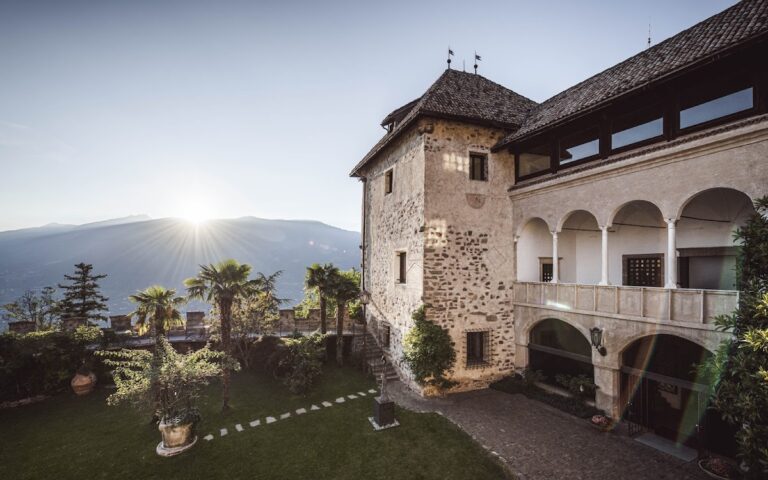
Braunsberg survives as a hilltop complex. On the mountain side, a defensive wall with crenellations, the notched sections of a parapet, probably once enclosed the entire site. The residential building retains walled-up swallowtail crenellations, whose forked, V-shaped merlons preserve evidence of an earlier defensive arrangement.
Chapel and Interior Furnishings
Saint Blaise Chapel
The castle chapel is originally Romanesque, a medieval architectural style characterized by massive walls, rounded arches, and relatively small openings. Dedicated to Saint Blaise, it was enlarged around 1670 through the addition of a choir. The resulting chapel has a polygonal choir, formed from several straight-sided sections, and a stepped bell tower arranged in receding tiers. Frescoes on the front wall display the arms of Austria, Tyrol, and the Counts of Trapp.
Altar and Sacred Objects
Inside the chapel stands a wooden altar dating from about 1660, with a painting of Saint Blaise. The chairs carry metal eagles and Trapp coats of arms, while seventeenth-century paintings remain among the chapel furnishings. Valuable relics, sacred objects or remains associated with saints, include a silver chalice dating to the thirteenth century.
Residential Room
The castle also preserves a fourteenth-century Stube, a traditional heated living room that generally served as the principal domestic room in a Central European residence. Its beamed ceiling survives as part of the building’s medieval residential interior.