Burg Waldau: A Medieval Hilltop Castle in Bavaria


Site at a Glance
- Rating
- 4.3
- Popularity
- Very Low
- Country
- Germany
- Primary era
- Medieval
- Eras represented
- Medieval, Early Modern
- Civilizations
- Holy Roman Empire
- Site type
- Military
- Remains
- Castle
On this page9 sections
History
Burg Waldau is a medieval hilltop castle in Germany, located in Waldau, now a district of Vohenstrauß in Bavaria. Built around 1215 by the Waldau ministerial family, a group of lower-ranking nobles who served territorial rulers in administrative, military, or judicial roles, it developed through successive medieval and early-modern phases. The family was also responsible for constructing Schellenberg Castle. The earliest recorded association with the Waldau family dates to 1223, when Ulricus de Waldowe was mentioned.
Foundation and Medieval Expansion
The Waldau family first established the keep, the principal fortified tower of a medieval castle, in the early thirteenth century. In 1350, the complex was enlarged with a palas, the main residential and representative building, while existing structures were raised by adding further stories. During the fifteenth century, an intermediate building was inserted between the two principal units, joining the keep and palas into a more connected complex.
The castle’s ownership became divided in the early fourteenth century. Half of it passed to the Nothafft family after Albert von Nothafft married a woman from the Waldau family. In 1326, this share passed to King Ludwig IV and was assigned to the Palatinate through the House Treaty of Pavia, the 1329 agreement that regulated shared rule and territorial divisions among the Bavarian and Palatine Wittelsbach lands. In 1394, Elector Rupert III, a prince entitled to participate in the election of the Holy Roman Emperor, enfeoffed Tobias and Heinrich von Waldau with the castle, its blood court, and its game preserve. The blood court possessed authority to impose severe corporal and capital penalties, while the game preserve represented the lord’s hunting rights and jurisdiction over game.
Changes of Ownership and Later Use
Jörg von Waldau, the last member of the family, sold the estate in 1545 to Willibald von Wirsberg. The Köckritz family held the castle briefly between 1560 and 1562. After the Wirsberg line died out, Elector Ferdinand Maria of Bavaria granted the knightly estate to Field Marshal Adrian Baron von Enkevort. The Enkevort family retained property at Waldau until 1681, when Ferdinand Franz Leopold von Enkevort sold the estate to Franz Ferdinand von Rummel.
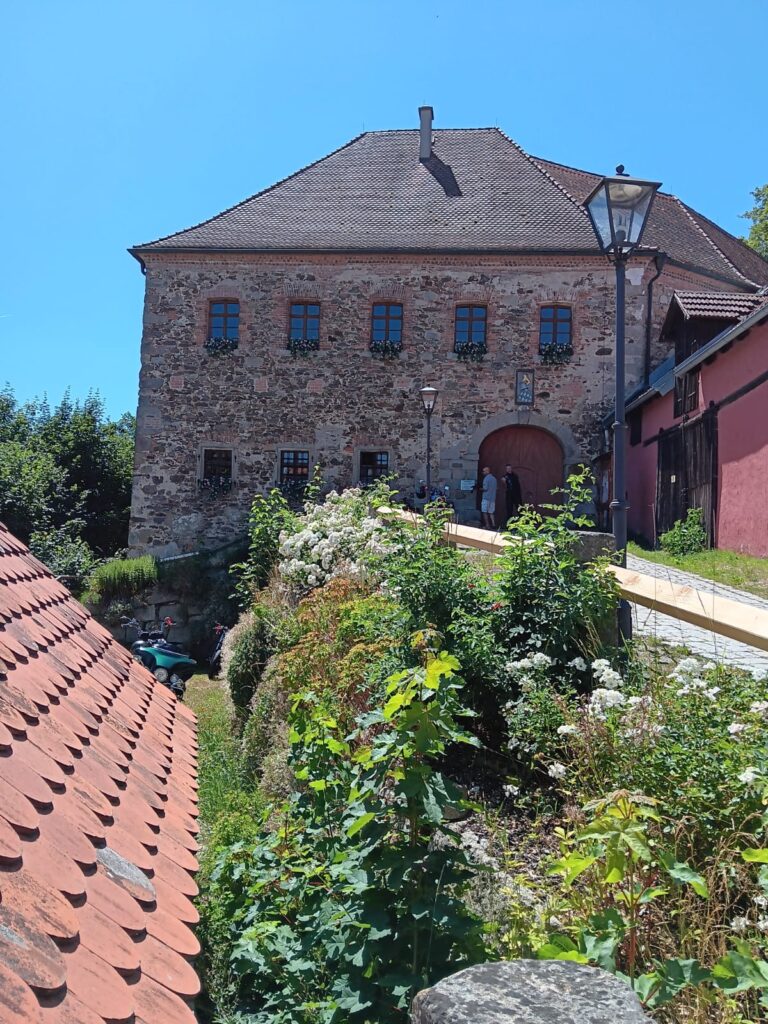
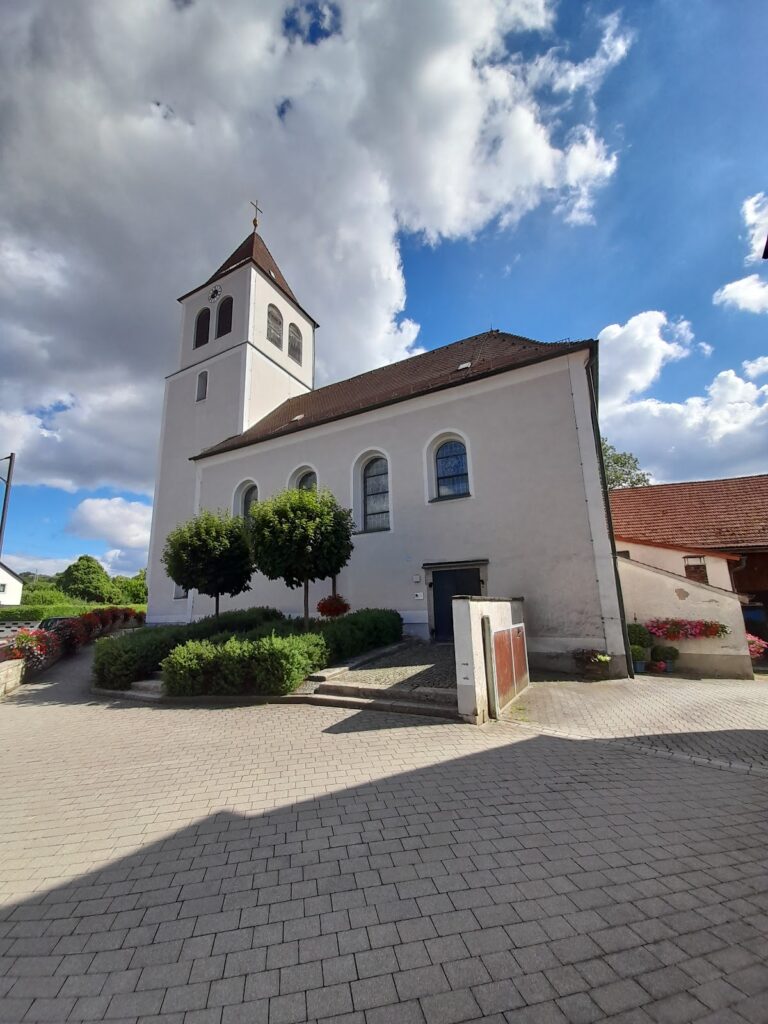
In the second half of the seventeenth century, the New Palace was constructed because parts of the medieval castle had become dilapidated. During the eighteenth century, the keep and adjoining buildings were converted into the local church. That use ended after a new church was built in 1912. The castle is privately owned. Its archaeological remains are protected as a recorded archaeological monument, while the surviving castle and palace complex is also listed as a protected architectural monument.
Remains
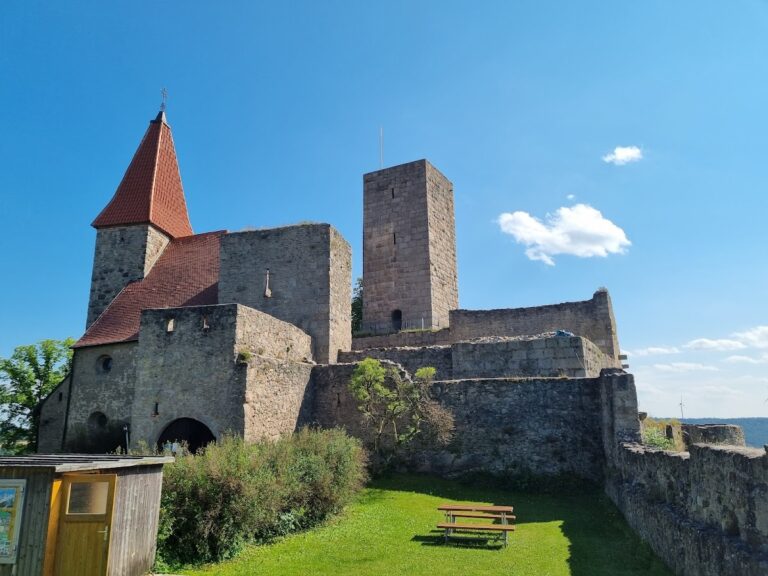
Burg Waldau occupies the 524-metre-high Schlossberg within the village of Waldau, about three kilometres from central Vohenstrauß. The hilltop complex stands on serpentinite rock and lies within the Schlossberg in Waldau geotope. Its buildings are constructed mainly from bossed ashlar and rubble stone. Substantial parts of the castle and palace complex survive, including the medieval building units and the later New Palace.
Medieval Castle Buildings
Keep
The keep forms one of the principal historical units of Burg Waldau. It was established by the Waldau family in the early thirteenth century and later received additional stories as the complex expanded. In the eighteenth century, the keep was incorporated into the former village church along with adjoining castle buildings. The archaeological protection of the site includes findings in the area of this medieval castle.
Palas and Connecting Structure
The palas was added in 1350 as the castle’s main residential and representative building. Further stories were added to existing structures during the same expansion phase. In the fifteenth century, an intermediate structure connected the palas with the keep, creating the principal arrangement of the medieval complex. These structures survive as part of the preserved castle remains.
New Palace
The New Palace was built during the second half of the seventeenth century, when parts of the older castle had deteriorated. It now forms part of the surviving complex alongside the medieval remains. The palace belongs to the early-modern phase of the site and is included within the protected architectural monument. Archaeological findings from the area also relate to the early-modern palace.
Schlossberg Geology
The castle stands on a hard, bronzite-bearing ridge of serpentinite. Serpentinite is a metamorphic rock formed from ultramafic rocks, while bronzite is a magnesium-rich mineral of the pyroxene group. Rock exposures occur at only a few locations around the castle and are largely overgrown. The rock formation is designated as a significant geotope and provides the geological setting for the hilltop complex.
Nearby sites