Burg Schloßböckelheim: A Medieval Hilltop Castle in Germany


Site at a Glance
- Rating
- 4.3
- Popularity
- Very Low
- Country
- Germany
- Primary era
- Medieval
- Eras represented
- Medieval
- Civilizations
- Holy Roman Empire
- Site type
- Military
- Remains
- Castle
On this page9 sections
History
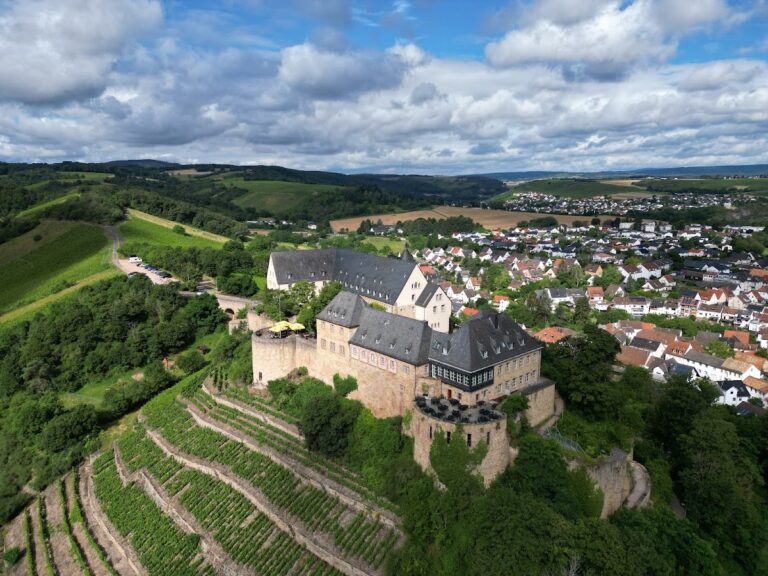
Burg Schloßböckelheim is a hilltop castle in Germany, near Schloßböckelheim in the district of Bad Kreuznach. It was probably built in the ninth century over the remains of a Roman settlement in the Nahegau, a medieval territory along the Nahe River. The nearby settlement of Becchilenheim was first recorded in 824, and the castle later became involved in imperial politics, regional lordship, and conflicts between noble and ecclesiastical powers.
Early lordship and imperial conflict
Around the turn of the first millennium, a document mentions Duke Cuno of Beckilnheim, probably identifiable with Conrad of Swabia. During the eleventh century, the castle became an imperial fief, meaning a lordship granted by the emperor in return for service and allegiance. It was held by Gottfried III the Bearded, Duke of Upper Lorraine, who stood in direct succession through Mathilde of Swabia.
Gottfried’s rebellion against Emperor Henry III led to a decisive change. In 1046, Henry III besieged and destroyed the castle, and the fief was confiscated, returning control to the imperial authority. It is thought that in 1065 the emperor transferred Burg Böckelheim, together with the imperial estate of Kreuznach, to the Bishopric of Speyer. Speyer was both an ecclesiastical territory governed by a bishop and a secular political authority. The new fiefholder was Count Eberhard VI of Nellenburg, who had been rewarded for his loyalty to Henry III during the emperor’s Italian campaign of 1046 to 1047.
Captivity, inheritance, and Mainz rule
In 1105, Henry IV was held captive at the castle by his son and successor, Henry V, and was forced to abdicate. Shortly before this, Henry V had appointed the Hirsau abbot Gebhard as Bishop of Speyer. Hirsau Abbey was an influential reform center, and its Gregorian and Hirsau reforms sought to strengthen clerical discipline and reshape the relationship between the Church and secular rulers. The Counts of Nellenburg supported these reforms and consequently opposed Henry IV.
Through inheritance, the fief passed via Adalbert of Mörsberg to the Counts of Sponheim. After the Sponheim inheritance was divided, Henry of Sponheim-Dannenfels sold the castle to the Archbishop of Mainz. His brother John attempted to overturn the sale, producing a bitter conflict between Sponheim and Mainz in 1279 that included the Battle of Sprendlingen. Sponheim permanently lost the castle, which passed to the Electorate of Mainz, a territory ruled by the archbishop of Mainz as both an ecclesiastical and secular prince.
Under Mainz rule, the administration of Sobernheim and the other Mainz possessions along the middle Nahe was transferred from Disibodenberg Abbey to Burg Böckelheim. The castle thereby became the center of the administrative office of Böckelheim. In 1327, Rhinegrave Siegfried II, a nobleman associated with the Rhine, held the title of burgrave of Böckelheim. A burgrave was responsible for the administration and defense of a castle or fortified territory.
Later control and destruction
Antilmann of Scharfenstein, also known as Grasewege, served as the castle’s official administrator and died in 1388. His widow founded the Disibodenberg Chapel in Sobernheim. After further changes of control, the complex was transferred to the Electoral Palatinate in 1471. The Electoral Palatinate was a major territorial state of the Holy Roman Empire whose ruler took part in electing the German king.
French troops completely destroyed the castle in 1688, at the beginning of the War of the Palatine Succession. This late-seventeenth-century European conflict arose from French territorial claims and expansion within the Holy Roman Empire. Burg Schloßböckelheim was subsequently treated as part of the comital estate and remains a ruin at Schloßböckelheim.
Remains
Hilltop layout and construction
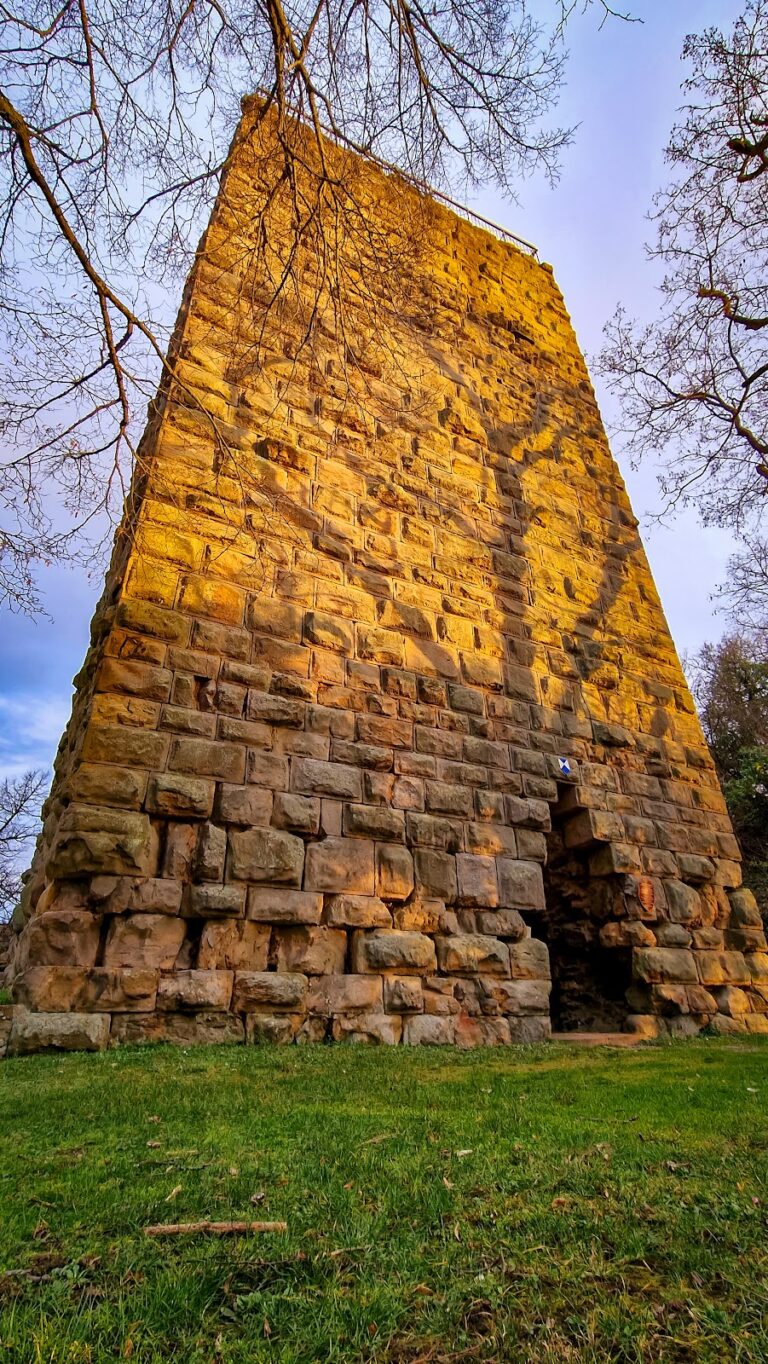
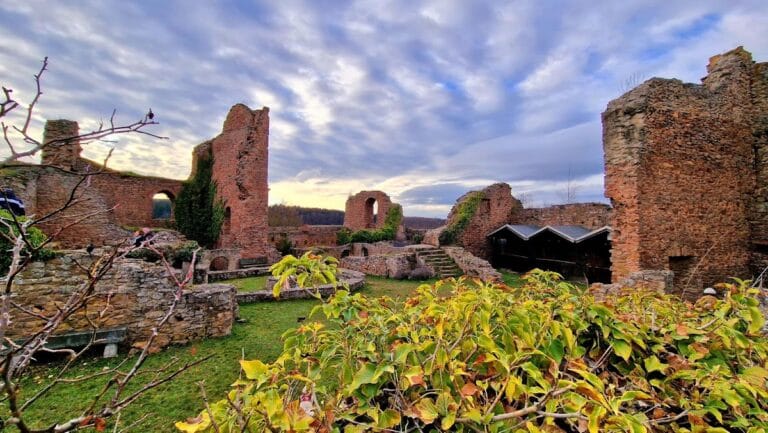
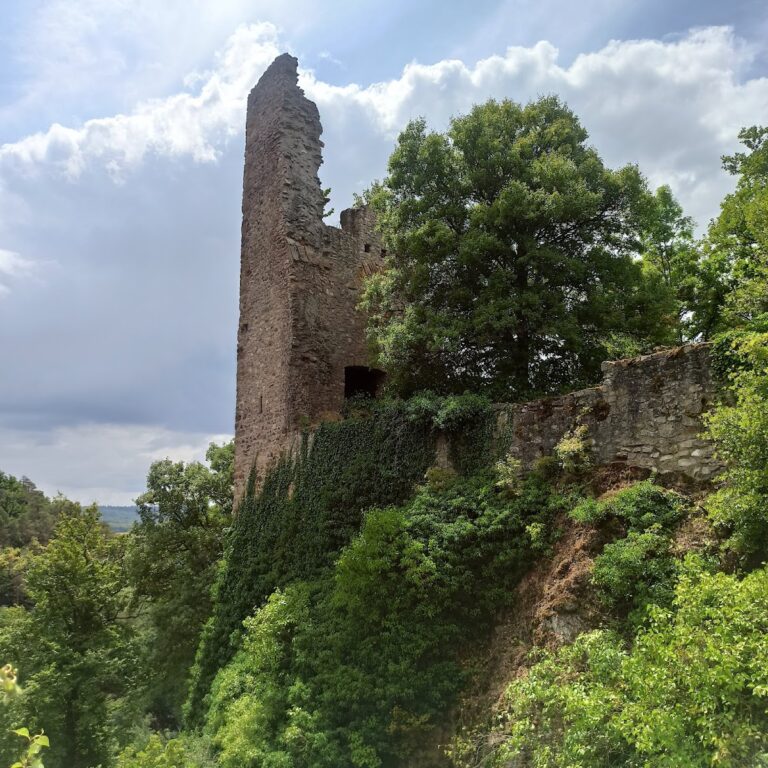
Burg Schloßböckelheim occupies a hilltop on a mountain slope in the Nahegau, near the municipality of Schloßböckelheim. The surviving fabric consists of sections of masonry. These remains preserve part of the castle’s defensive and circulation arrangements and indicate the position of structures that have otherwise been lost.
Surviving structures
Gate tower
The ruins indicate the probable former position of a gate tower. Its surviving evidence consists of masonry remains that help identify the entrance area within the former castle complex.
Stair tower
Part of a stair tower also survives. The masonry preserves a fragment of the vertical access structure, providing evidence of how movement between levels was organized within the castle.
The medieval complex was apparently constructed over the remains of a Roman settlement. The surviving castle masonry therefore forms part of a site with an earlier archaeological occupation beneath it.