Château de Joyeuse: A Renaissance Fortification in France


Site at a Glance
- Rating
- 4.3
- Popularity
- Very Low
- Country
- France
- Primary era
- Early Modern
- External website
- Open
- Eras represented
- Early Modern, Modern
- Civilizations
- French
- Site type
- Military
- Remains
- Castle
On this page8 sections
History
Renaissance construction
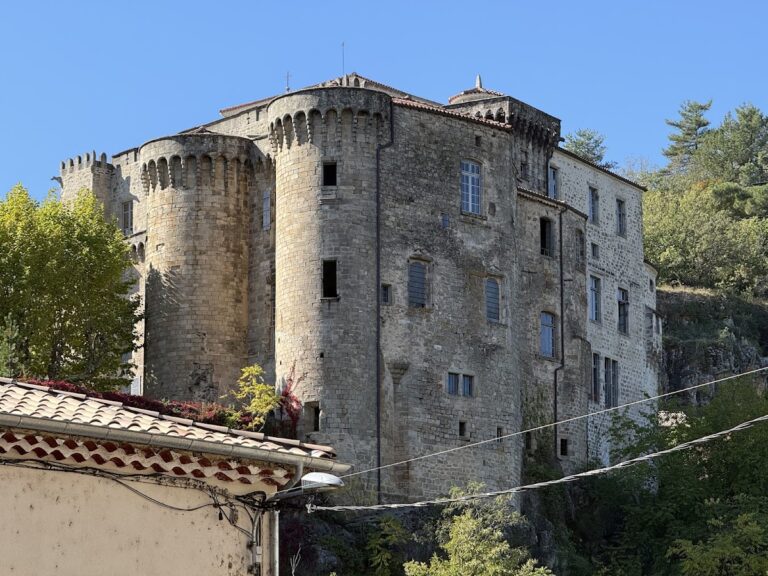
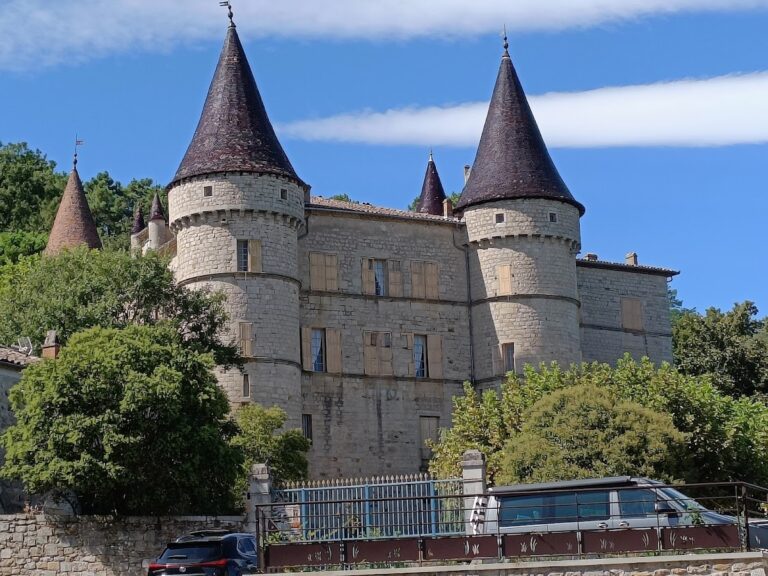
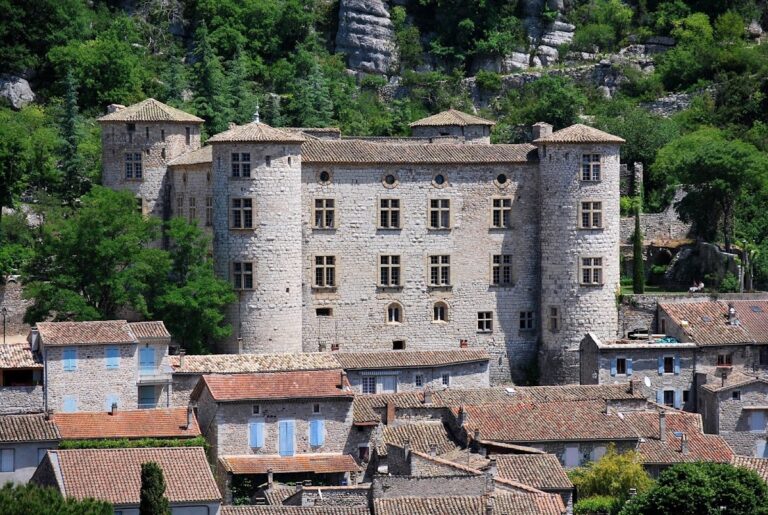
Château de Joyeuse is a Renaissance-style fortification in France, built around 1540 on the site of an earlier fort by Jean de Saint-Sauveur, Viscount of Joyeuse. A viscount was a noble rank historically below that of a count. Jean de Saint-Sauveur held the title from 1518 to 1555 and was the father of Guillaume II de Joyeuse and grandfather of Anne de Joyeuse.
Ownership through the noble families
The castle passed through several noble lines. Its owners included the House of Anduze, the Châteauneuf-Randon family, Guillaume de Joyeuse, his son Anne de Joyeuse, Anne’s brother Henri de Joyeuse, and Henri’s daughter Catherine de Joyeuse. Through Catherine’s daughter, Marie de Lorraine, ownership entered the Lorraine family. Marie’s successors included Charles Louis de Lorraine, Louis Joseph de Lorraine, and François Joseph de Lorraine. Marie de Lorraine died without issue in 1688.
After her death, the castle passed to a collateral branch through Charles-François de Lorraine-Commercy. He entered the service of the Emperor in 1690, and Louis XIV, the Bourbon king of France from 1643 to 1715, confiscated his possessions because of his allegiance. In 1694, Charles-François’s sister Elisabeth de Lorraine, known as Mademoiselle de Lillebonne and Princess of Épinoy, received the castle from the king. It later passed to the Prince of Épinoy, after which the duchy was re-established in 1714. Ownership then went to Béatrice-Hieronyme de Lorraine, abbess of Remiremont, and later to Charles de Lorraine, Count of Armagnac.
The castle subsequently passed to Charles de Rohan-Soubise, a grandson of the Princess of Épinoy. In 1756, he transferred it to his sister Marie Louise de Rohan-Soubise, the wife of Gaston Jean-Baptiste Charles de Lorraine, Count of Marsan. In 1788, the Countess of Marsan sold the castle to Cerice de Vogüé for 100,000 livres.
Remodelling and protection
The castle was remodelled during the nineteenth century. Its façades and roofs have been listed as historic monuments since 19 April 1988.
Remains
Surviving fortification
Château de Joyeuse survives as a Renaissance fortification built on the site of an earlier fort. Only the north-facing wing remains. The other wing was destroyed sometime between the French Revolution, the period of political and social upheaval that began in 1789, and 1832.
Former castle chapel
The former castle chapel survives as the chapel now called Notre-Dame-de-Pitié in the present church. It contains the tomb of Guillaume V, who was Bishop of Aleth from 1524 to 1540.
La Brèchette courtyard
The courtyard known as La Brèchette was enlarged during the nineteenth-century remodelling. Three large arches were added, extending into the Place de la Brèche and altering the courtyard’s relationship with the adjoining square.
Nearby sites