Hohenlandsberg Castle: A Ruined Hilltop Administrative Fortress in Germany


Site at a Glance
- Rating
- 4.6
- Popularity
- Very Low
- Country
- Germany
- Primary era
- Medieval
- Eras represented
- Medieval, Early Modern
- Civilizations
- Holy Roman Empire
- Site type
- Military
- Remains
- Castle
On this page4 sections
History
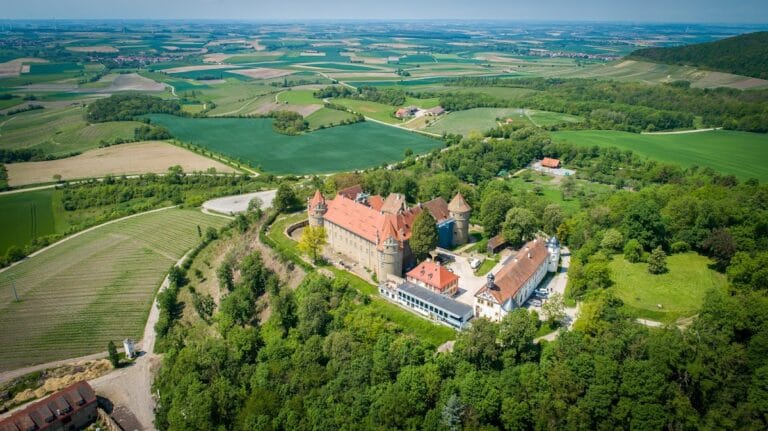
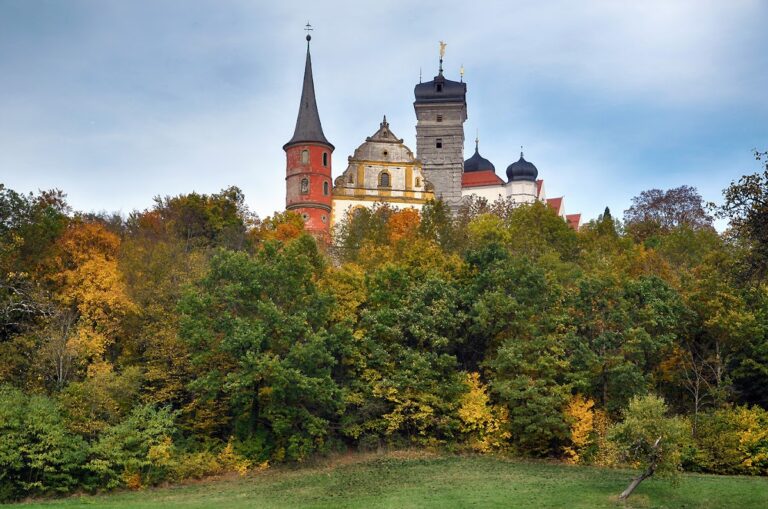
Hohenlandsberg Castle is a ruined hilltop castle in Germany, near Weigenheim, whose foundation is uncertain but is placed in the twelfth or thirteenth century. The Hohenlohe probably acquired or built it in the thirteenth century, although an early-fourteenth-century date is also associated with this phase. The castle served as the base for the Hohenlohe bailiff’s jurisdiction, or Vogtei, over possessions of the Würzburg cathedral provostry around Seinsheim.
Hohenlohe and Schwarzenberg rule
Hohenlandsberg was not the ancestral seat of the Franconian-Bohemian Barons of Schwarzenberg-Hohenlandsberg. From about 1370, the castle was pledged several times, until the Lords of Seinsheim-Schwarzenberg purchased it in 1435. During the fifteenth and sixteenth centuries, it became the administrative center of the Schwarzenberg lordship of Hohenlandsberg.
The lordship exercised high criminal jurisdiction through a regional court over Weigenheim, Seinsheim, Iffigheim, and Herrnsheim. It also held most of the village lordship in Bullenheim, shares in Hüttenheim and Nenzenheim, and probably authority over Dornheim. Around 1511, Johann von Seinsheim-Schwarzenberg rebuilt the castle and partly strengthened it with fortification methods considered modern at the time.
War, destruction, and protection
Hohenlandsberg acquired a long-standing reputation as a robber-knight stronghold because of the Schwarzenbergs’ forceful rule and the conflicts surrounding the Second Margrave War of 1553–1555, a mid-sixteenth-century conflict in the Holy Roman Empire linked to Margrave Albrecht Alcibiades of Brandenburg-Kulmbach and his campaigns in Franconia. During the war, Albrecht Alcibiades’s mercenary troops were stationed illegally at Hohenlandsberg and terrorized the surrounding area.
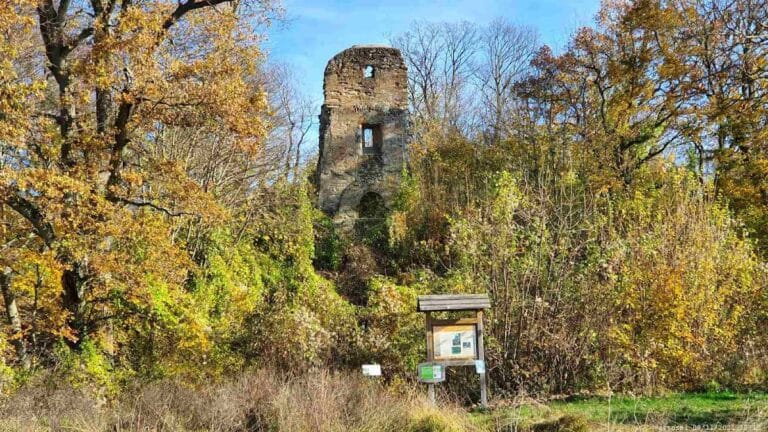
Rebels captured the castle during the German Peasants’ War in 1525, but it was not damaged at that time. Hohenlandsberg was destroyed in 1554 during the Second Margrave War and then fell into ruin. Its archaeological remains are protected as an archaeological monument, a legally protected site containing buried or subsurface historical evidence.
Remains
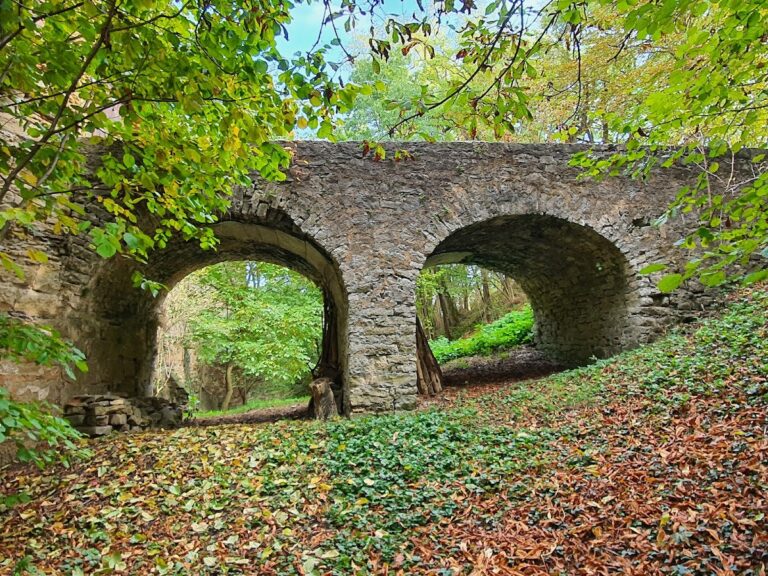
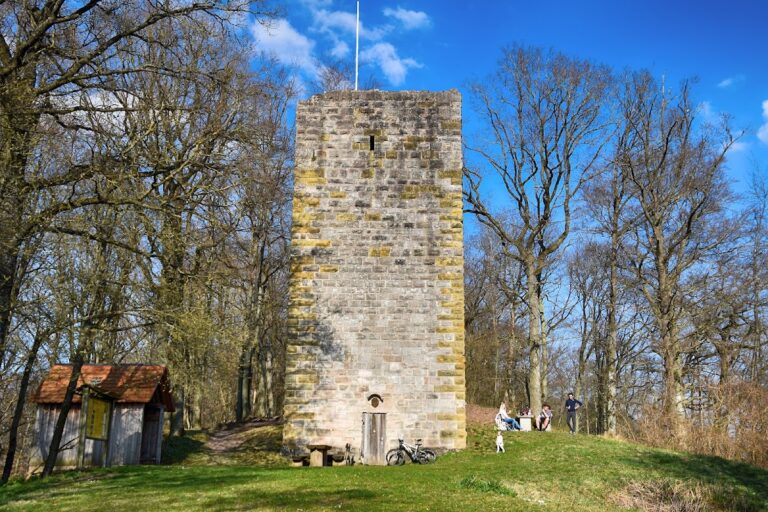
Hohenlandsberg Castle occupies the summit of the 498-metre-high Hohenlandsberg in the southern Steigerwald, near Weigenheim in Bavaria’s Neustadt an der Aisch-Bad Windsheim district. It was a summit-position fortification, and its surviving layout is represented by foundation fragments, sections of fortification walls, casemates, cellars, and earthworks.
The casemates are vaulted or enclosed defensive spaces incorporated into fortifications for protected movement, storage, or weapons. They belong to the rebuilding and modern defensive works carried out around 1511. Foundation-wall fragments and other ruinous remains now define the physical survival of the castle on the hilltop.