Speckfeld Castle Ruins: A Medieval Hilltop Castle in Germany

Site at a Glance
- Rating
- 4.4
- Popularity
- Low
- Country
- Germany
- Primary era
- Medieval
- External website
- Open
- Eras represented
- Medieval
- Civilizations
- Holy Roman Empire
- Site type
- Military
- Remains
- Castle
On this page10 sections
History
Speckfeld Castle Ruins are the remains of a medieval hilltop castle in Germany, built around 1200 on the Schlossberg near Markt Einersheim by the noble lords of Speckfeld. The castle occupied a defensible spur position, using a projecting ridge and elevated ground for protection. The Speckfeld family, descended from the nobles of Uffenheim and mentioned in records from 1155, died out around 1300.
Feudal lordship and Hohenlohe residence
During the fourteenth century, the bishops of Würzburg and Bamberg were the castle’s feudal overlords, meaning that they held the superior rights over its fief. A bailiff, an official who administered a lord’s authority, is recorded at Speckfeld from 1306. Between 1370 and 1384, the castle served as the widow’s residence of Elisabeth of Hohenlohe, a residence assigned to a noble widow after her husband’s death.
In 1399, the castle was temporarily confiscated from Elisabeth’s grandson, Johann of Hohenlohe, because of highway robbery. Johann bequeathed the lordship to his brothers-in-law in 1412, Count Leonhard of Castell and Friedrich, Schenk of Limpurg. Friedrich acquired the Casteller half in 1435, and his descendants, the Schenks of Limpurg, retained the castle until 1713.
War, fire, and rebuilding
The German Peasants’ War, a widespread uprising in the German-speaking lands during 1524 and 1525, brought destruction to Speckfeld. The castle was destroyed on 16 May 1525 and later rebuilt. A fire in 1558 then destroyed its northern and eastern sides, prompting another rebuilding campaign in 1580.
Speckfeld was repeatedly plundered by Swedish and Imperial troops during the Thirty Years’ War, the major European conflict fought from 1618 to 1648. The castle was repaired in 1624, but its role as the seat of the lordship eventually ended. In 1693, Vollrath Schenk of Limpurg-Speckfeld moved to the new Schloss Einersheim and abandoned Speckfeld as his seat.
Abandonment and conservation
After the lordship moved away, the castle fell into decay. Parts of the structure were demolished and reused as a quarry. A daughter of the Limpurg-Speckfeld family married the Dutch Imperial Count of Rechteren in 1711, and from 1745 the family used the name Rechteren-Limpurg-Speckfeld.
A local legend tells that treasure was buried beneath the ruins after the castle burned during the Peasants’ War. A farmer claimed it lay under a hazel bush and received permission from a bishop to excavate. Two servants were sent to assist him, but nothing was found, and people throughout the surrounding area ridiculed the farmer. The surviving ruins are owned by the Bavarian State Forests, and restoration has been carried out since 1991. Speckfeld is protected as an architectural monument and as an archaeological monument covering the medieval and early-modern castle ruin.
Remains
Castle layout and masonry
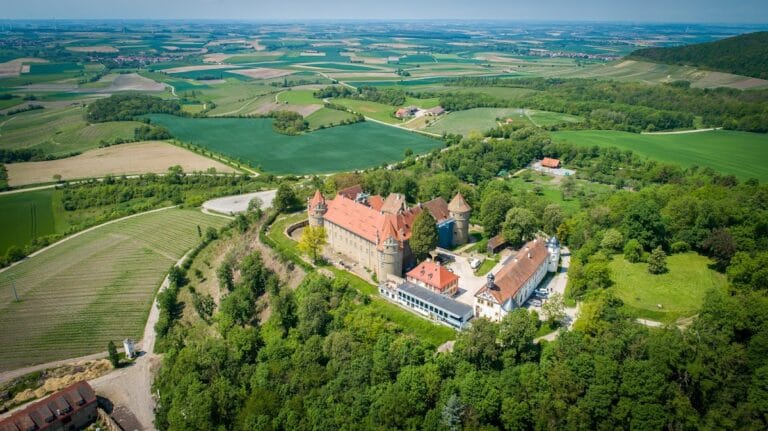
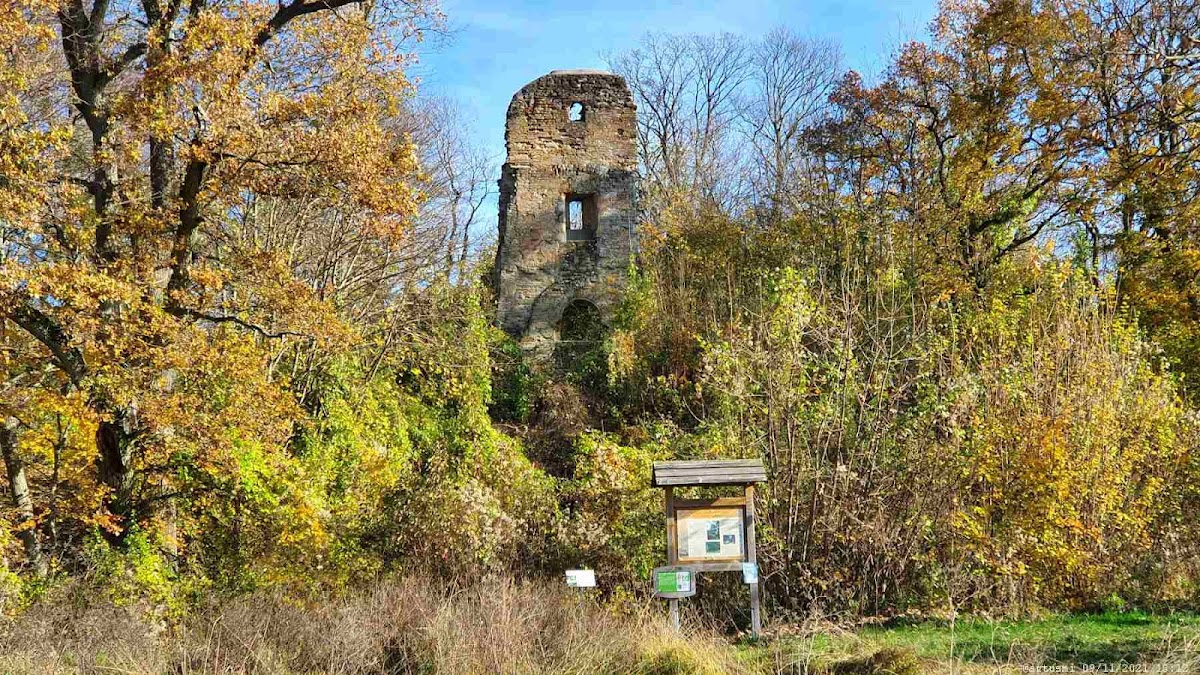
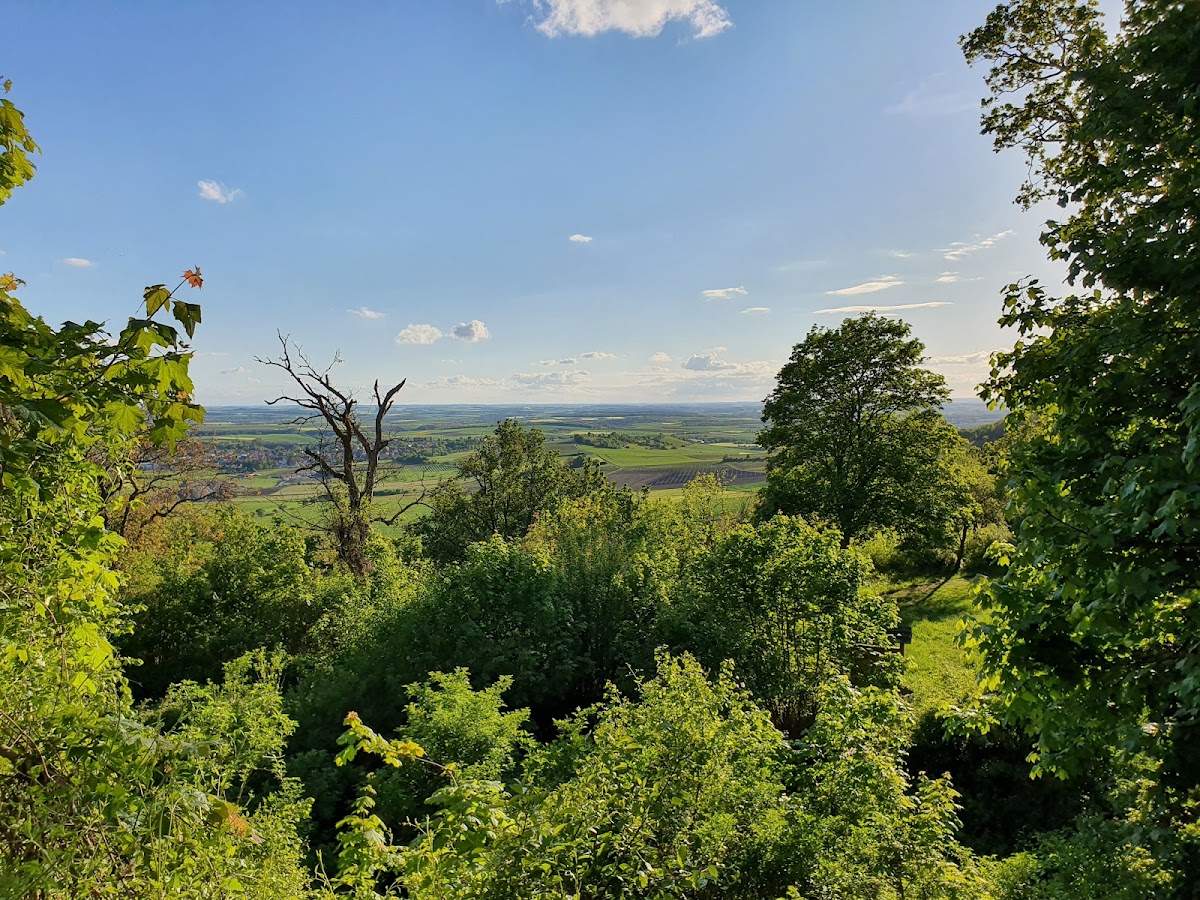
The ruin stands on the wooded, conical Schlossberg, which rises to 420 metres, approximately 2,550 metres northeast of Markt Einersheim in Lower Franconia, Bavaria. Speckfeld was a hilltop castle in a spur position. Only masonry remains survive, but the surviving elements indicate the former fortified complex and its principal structures.
Wall and gate tower
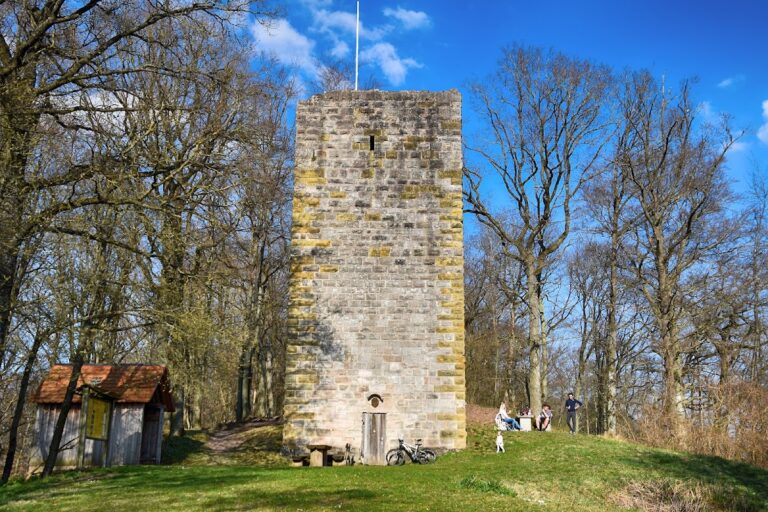
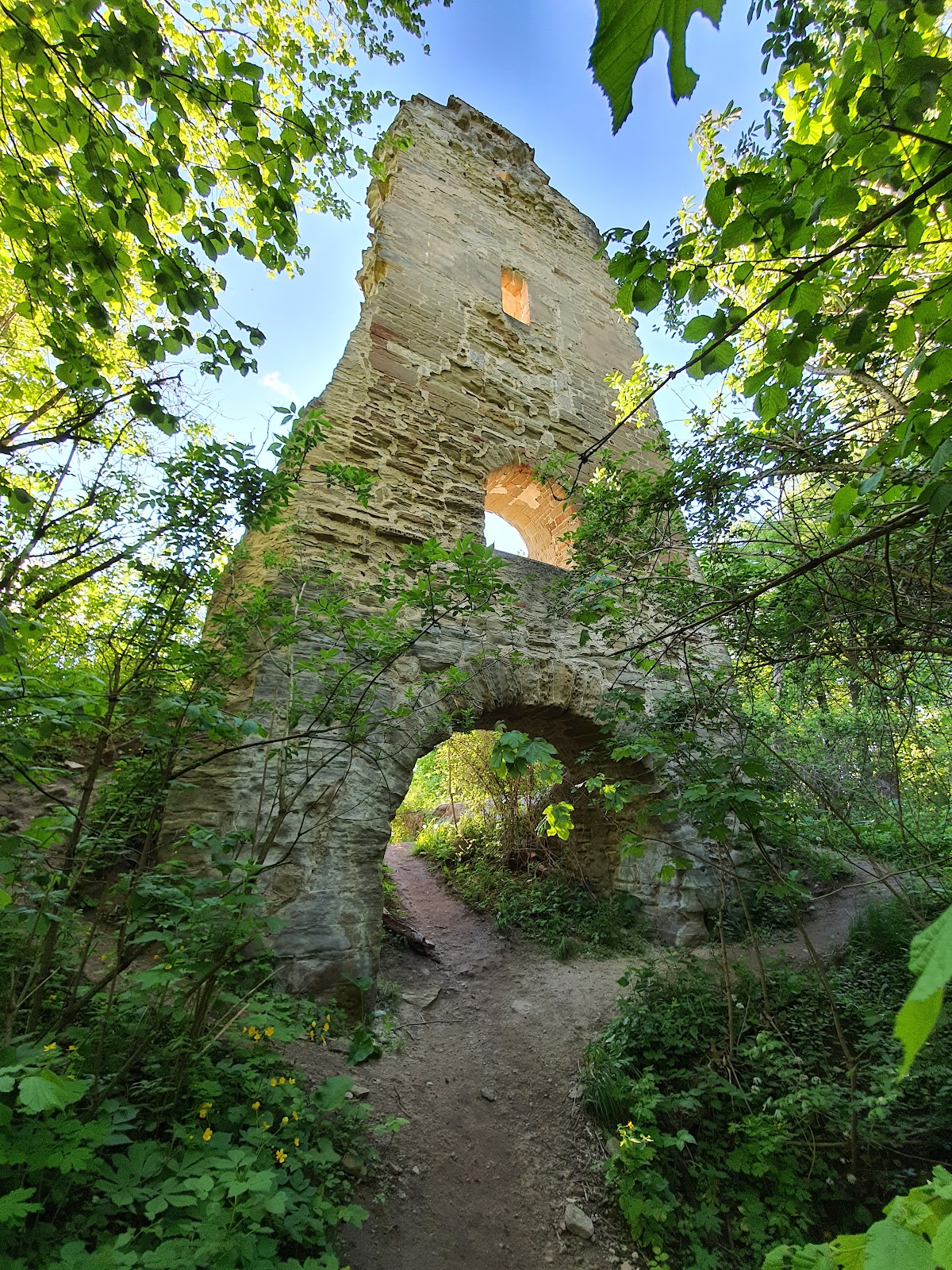
A wall preserved to a height of 15 metres contains an arched doorway and three window openings. Beside it stands the side wall of the gate tower, identified as the castle’s keep, the principal fortified tower. The four-storey tower known as Frankenland also survives in ruinous form, with its eastern side preserved.
Cellar, vaults, and well
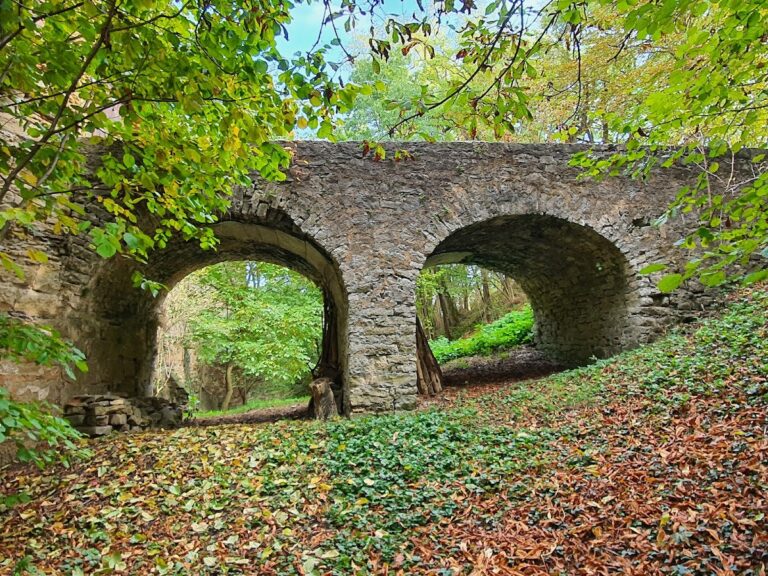
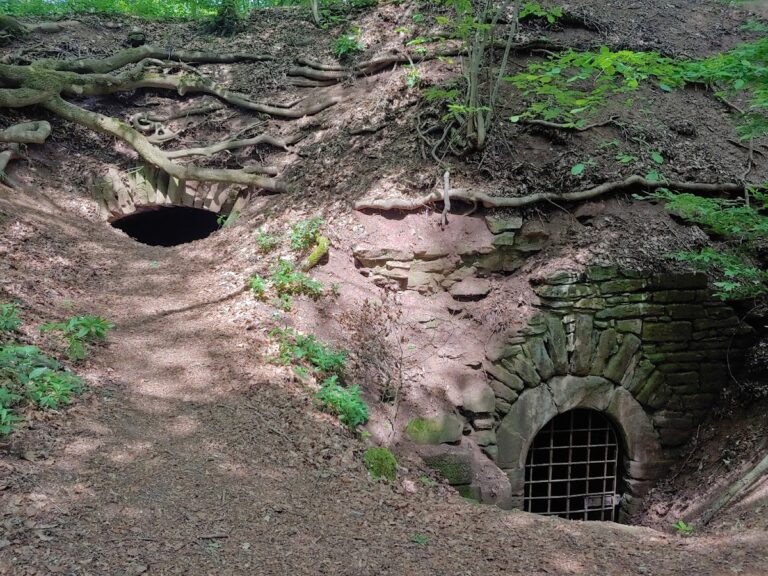
Other surviving features include parts of a castle cellar, small vaulted sections, and the castle well. Together with the standing wall and tower remains, these elements preserve parts of the castle’s internal structures and former defensive arrangement.
Castle ditch
A castle ditch, a defensive excavation around a fortified complex, remains recognizable on three sides of the former castle. Its surviving course helps define the extent of the hilltop enclosure.
Forest setting
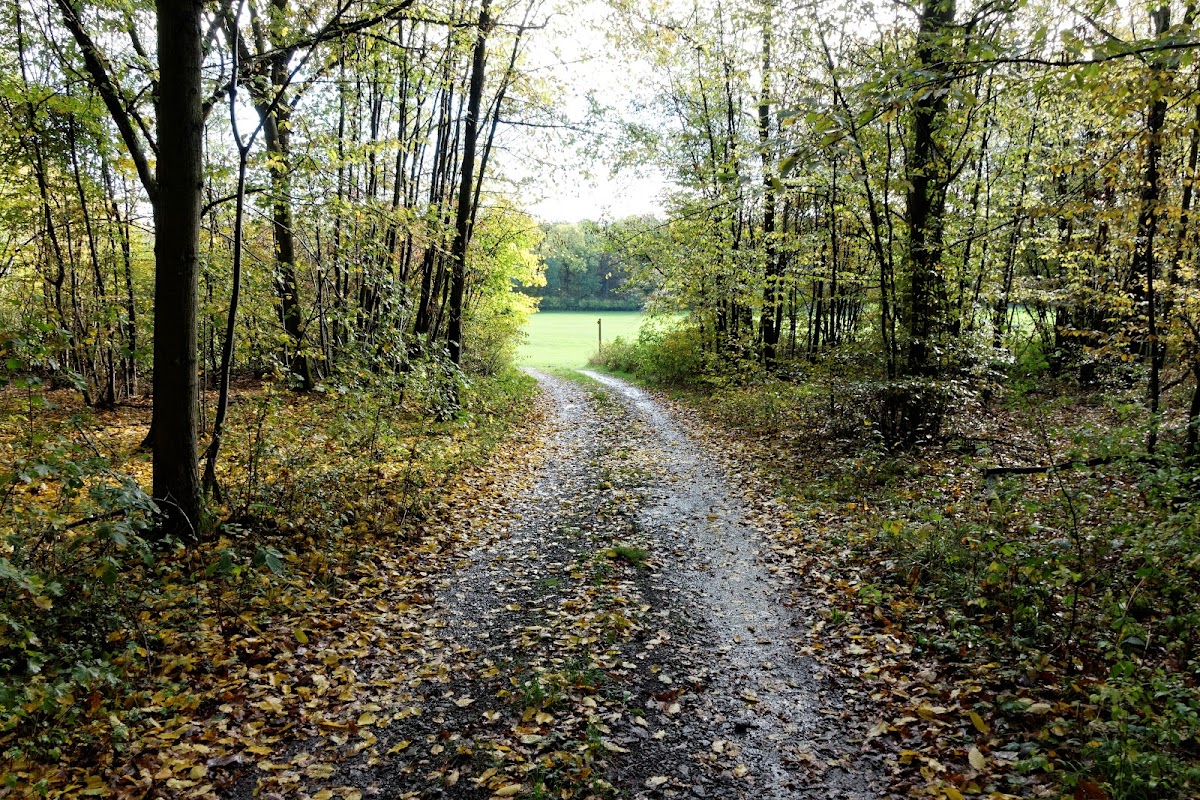
The ruins lie within Speckfeld natural forest, which is also designated as a natural forest reserve. The protected woodland provides habitat for species including Bechstein’s bat, a large-eared woodland bat associated with mature forests.