Schloss Ehrenfels: A Baroque Summer Residence in Germany


Site at a Glance
- Rating
- 4.7
- Popularity
- Low
- Country
- Germany
- Primary era
- Early Modern
- External website
- Open
- Eras represented
- Early Modern, Modern
- Civilizations
- Duchy of Württemberg, Holy Roman Empire
- Site type
- Domestic
- Remains
- Elite Residence
On this page9 sections
History
Schloss Ehrenfels is a simple Baroque summer residence in Germany, built between 1735 and 1740 for Zwiefalten Abbey near Hayingen. Augustin Stegmüller, the abbey’s abbot, commissioned it in place of a monastic farm estate. The building occupied land associated with a former monastery and served as a retreat and estate residence for the abbey.
From abbey estate to ducal property
In 1803, the secularization of Zwiefalten Abbey transferred its institutions and property to secular authorities. Schloss Ehrenfels then passed to Duke Friedrich II of Württemberg. In the same year, Friedrich gave the building and Wimsen to his state minister, Philipp Christian Friedrich, Baron von Normann, in recognition of his negotiations with Napoleon Bonaparte, the French military ruler and emperor.
Normann secured territorial gains that doubled Württemberg’s area and helped Friedrich obtain the royal title. He was later raised to the rank of count as Normann-Ehrenfels. He made Schloss Ehrenfels an aristocratic seat, removed the altar, and commissioned a grand staircase leading toward the Baroque park.
The Normann-Ehrenfels inheritance
The residence remained with Normann’s great-grandson, Roland Baron von Saint-André, until 2015. After his death in September of that year, his daughter and heir, Nicoletta Baroness von Saint-André, arranged the approval and establishment of the Schloss Ehrenfels Saint-André Foundation in accordance with his wishes. Established under civil law and based at Schloss Ehrenfels, the foundation supports art, culture, historical heritage, monument protection, and monument conservation. The estate is also used for events and may be visited by arrangement.
Alt-Ehrenfels and its destruction
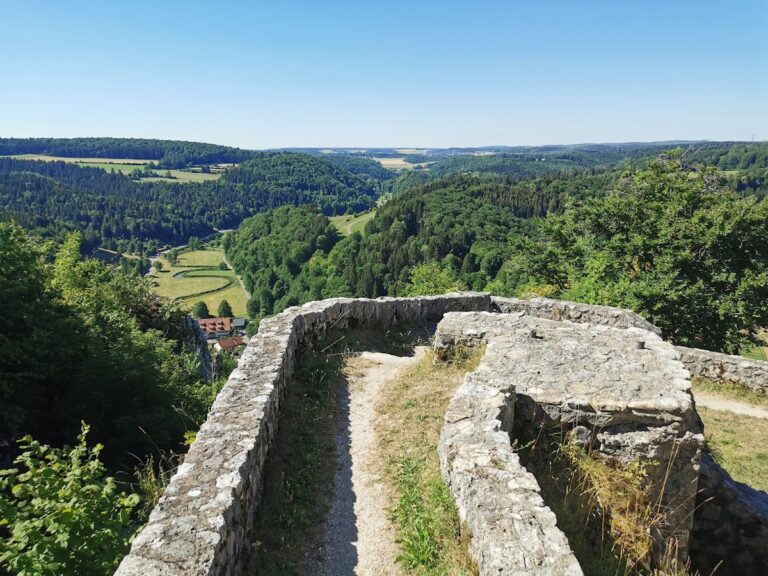
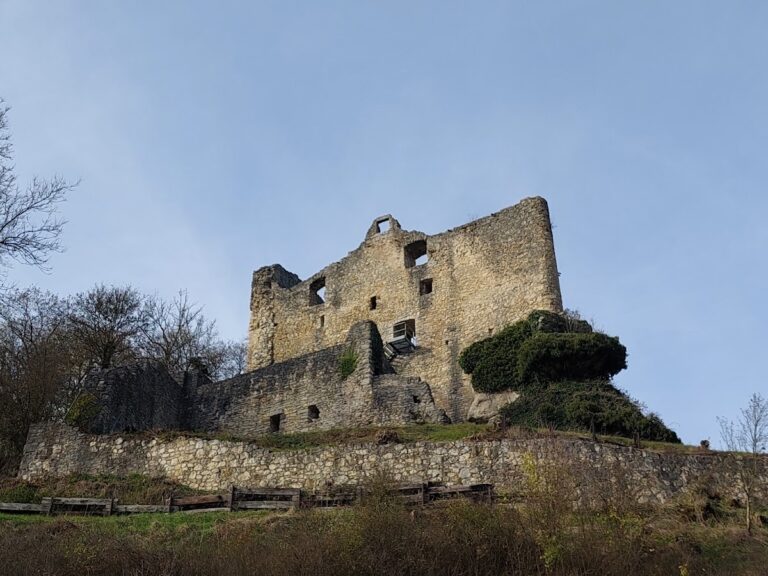
About one kilometre from Schloss Ehrenfels stands the ruin known as Alt-Ehrenfels, or Ehrenfels Castle. Retainers of the Gundelfinger family built this separate medieval castle in the thirteenth century and adopted the byname Ehrenfels. The site later belonged to the Hohenstein family and to Württemberg before being sold to Zwiefalten Abbey in 1474.
After the sale, Alt-Ehrenfels fell into ruin. Robbers were said to have used it as a refuge and to have raided the historic trade route passing nearby. On the orders of Abbot Sebastian of Zwiefalten, the castle was destroyed in 1516.
Remains
Setting and cellar
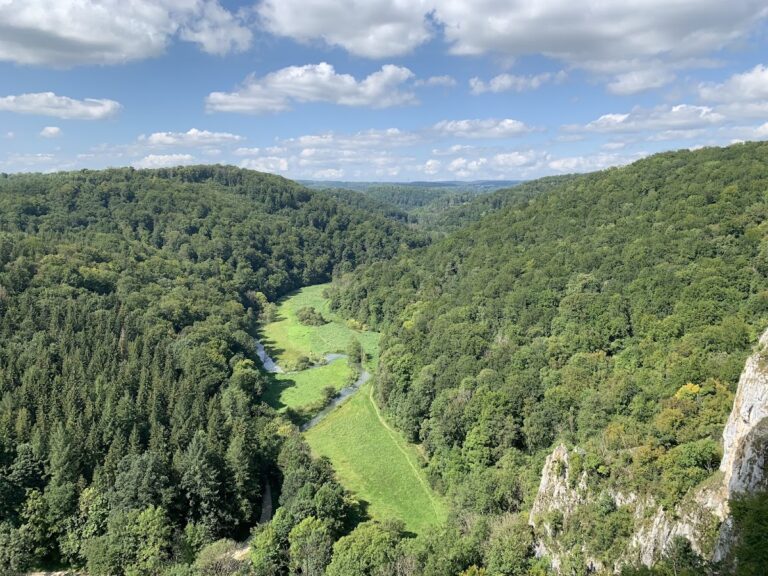
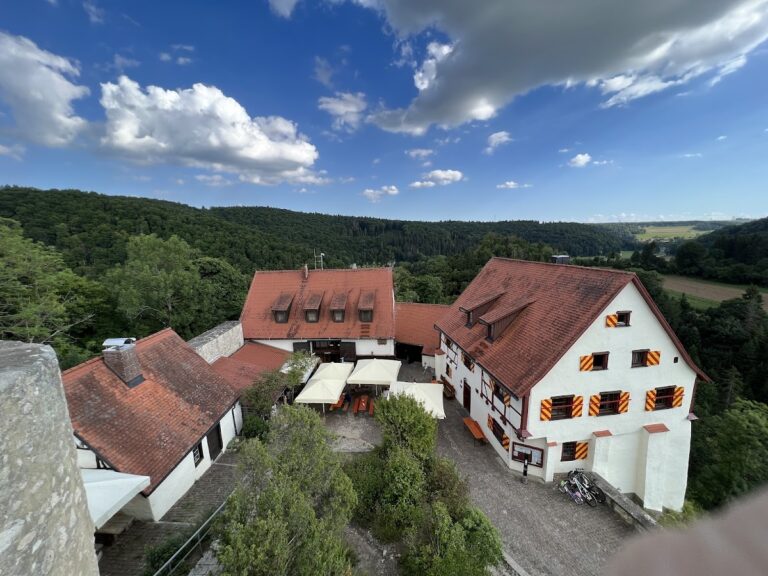
Schloss Ehrenfels stands on a rise above the Hasenbach, at the boundaries of the Glastal and Werftal valleys, near Wimsener Cave. Its outward appearance resembles a large agricultural estate, and the building is difficult to see from the road. Beneath it lies a 66-metre-long cellar cut into the rock. Zwiefalten Abbey used this cellar for storage because the abbey’s marshy ground did not allow a cellar to be dug there.
Surviving monastic and residential features
The former monks’ chapel remains recognizable within the building. Worn floors on the ground floor, especially toward the monks’ kitchen, preserve visible evidence of the earlier monastic use. After the conversion into an aristocratic residence, the former monks’ living quarters received coats of arms and wooden panels. A grand staircase leads from the residence toward the Baroque park.
Heraldic details
The coat of arms of Abbot Augustin Stegmüller remains above the entrance on the courtyard side. Another coat of arms, belonging to Philipp Christian Friedrich von Normann, is visible on the side facing the park. These details reflect the building’s transition from an abbey estate to a noble residence.
Alt-Ehrenfels ruin
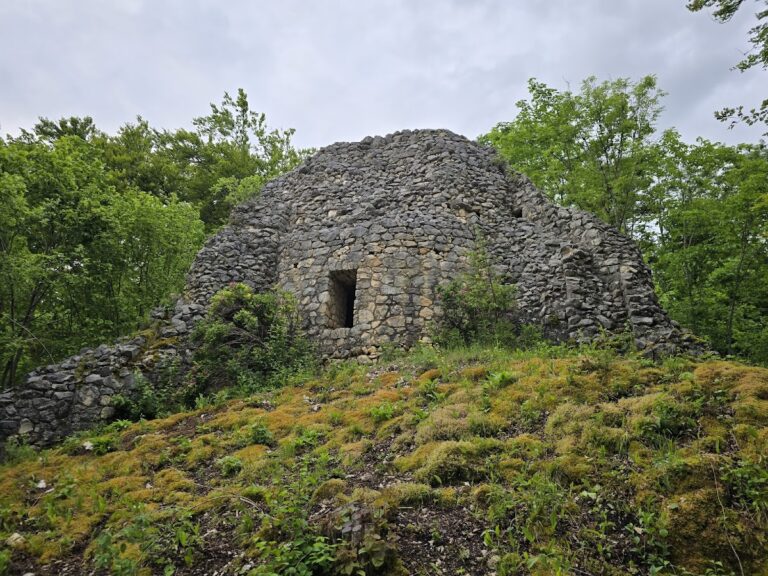
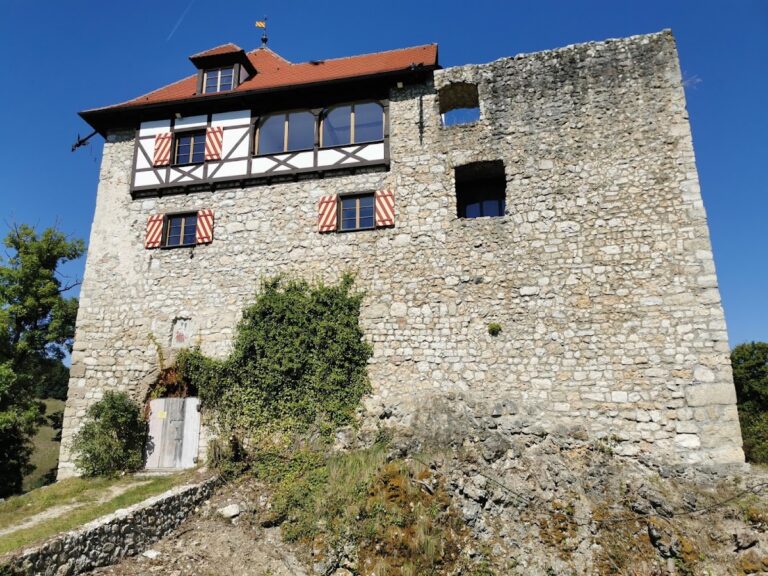
The remains of Alt-Ehrenfels lie approximately one kilometre from Schloss Ehrenfels. They represent the surviving fabric of the separately built medieval castle associated with the Gundelfinger family, later acquired by Zwiefalten Abbey and destroyed in 1516.
Nearby sites