Besora Castle: A Romanesque Castle in Catalonia


Site at a Glance
- Rating
- 4.6
- Popularity
- Low
- Country
- Spain
- Primary era
- Medieval
- External website
- Open
- Eras represented
- Medieval
- Civilizations
- Unclassified
- Site type
- Military
- Remains
- Castle
On this page8 sections
History
Besora Castle is a Romanesque castle in Spain, located above Santa Maria de Besora in Catalonia. The earliest references to Besora date from the late ninth century, while the first specific reference to the castle comes from 921. For centuries, the castle governed a territory that corresponds to the present municipalities of Santa Maria de Besora, Sant Quirze de Besora, and Montesquiu.
Origins and the Monastery of Sant Joan
The names castro Bisora and castro Bisaura appear in notices from 885 and 887, during the time of Wifred the Hairy, a ninth-century count of Barcelona who played a major part in the formation of the medieval Catalan counties. A more specific reference followed in 898, when Gomar, bishop of Vic, consecrated the churches of Santa Maria and Sant Quirze at the request of Emma, abbess of the monastery of Sant Joan de Ripoll, later known as Sant Joan de les Abadesses.
From 898 onward, the two Besora parishes formed part of the endowment of Sant Joan de les Abadesses, a historic Catalan monastery that began as a female religious foundation. The original upper parish church of Santa Maria stood beside the castle, and its surviving ruins date from the eleventh century. The name Bisaura later came to designate the natural region around Sant Quirze de Besora.
Lords and Royal Authority
The first specific reference to Besora Castle dates to 921, when land belonging to Besora was sold to Abbess Emma. In civil administration, the territory belonged to the counts of Barcelona. Their representative there held the title of veguer, a medieval official exercising delegated judicial and administrative authority, and served as lord of the territory and castle.
Ermemir, recorded in 975, is the first known lord of Besora. He was married to Ingilberga, who during his lifetime had an illegitimate daughter by Oliba Cabreta, count of Cerdanya and Besalú. That daughter, also named Ingilberga, later became the last abbess of Sant Joan.
In 1136, Ramon Berenguer IV entrusted Besora and several other castles to Guillem Ramon, the great seneschal. A seneschal was a high-ranking officer responsible for administering a ruler’s household or domains. Later castellans and feudatories again took the territorial name Besora. Gombau de Besora, for example, was recorded in 1201.
During the reign of James I of Aragon, known as James the Conqueror, Guillem de Besora participated in the conquest of Valencia in 1238. In 1243, Ramon de Besora reached an agreement with Ramon de Milany after a dispute, and later generations of the Besora and Milany families were joined by marriage.
Royal authority repeatedly reshaped control of the castle. In 1276, King Peter the Great ordered its return to Gaston de Moncada, viscount of Béarn. In 1285, the king reclaimed Besora and Curull for the Crown. In 1329, royal commissioners seized the honors, rents, and possessions of the lord of Besora in the castle territory because of his severe financial difficulties. Possession subsequently alternated between the lords of Besora and the counts-kings of the Catalan-Aragonese Crown, including Peter IV, John I, Martin I, and Ferdinand I.
Decline and Protection
Besora remained the historical center of its surrounding territory, but the castle later fell into physical decline. Carreras y Candi published information about the site and its deterioration in 1892. The decay continued until the castle was reduced to ruins. It was declared a monument on 8 November 1988, preserving its status as an important surviving landmark of the medieval territory.
Remains
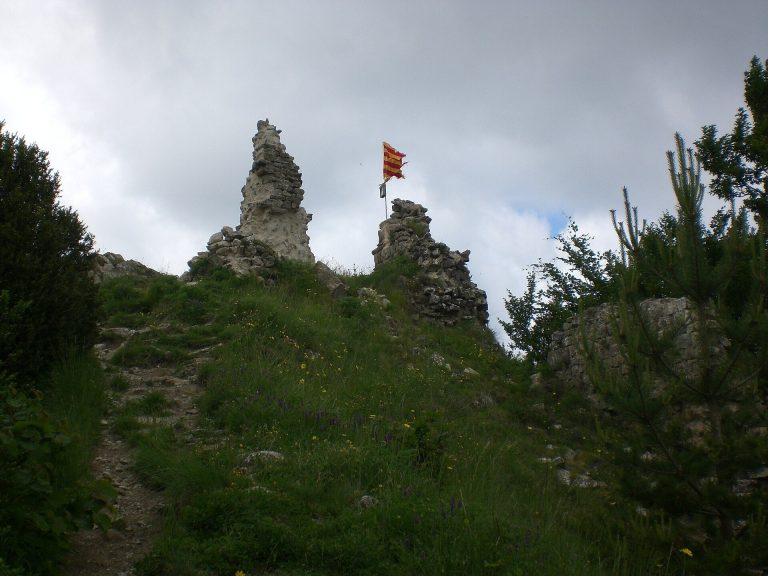
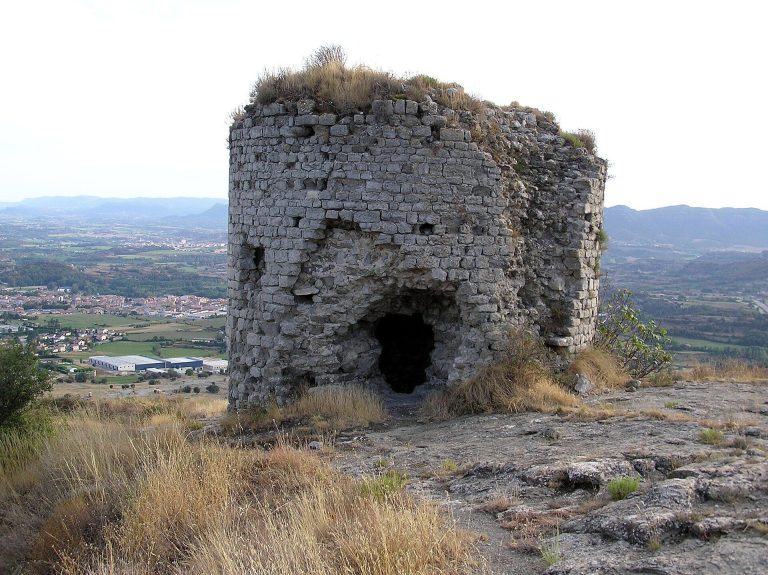
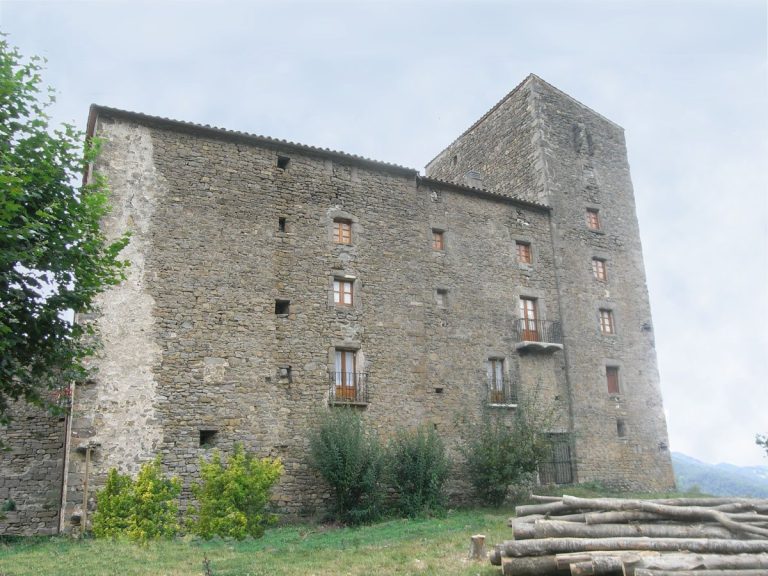
Besora Castle crowns a hill west of Santa Maria de Besora at an elevation of 1,023 metres. The surviving site consists of fragmentary castle walls and the ruins of the associated Romanesque church. Together, these remains occupy the elevated setting of the former territorial center.
Castle and Ecclesiastical Remains
Castle Walls
The castle fabric survives as wall remains on the summit of the hill. These fragments represent the physical remains of the medieval castle whose territory was administered under the counts of Barcelona and later contested by noble lords and the Crown of Aragon. The site is now in ruins, reflecting the long deterioration described in the late nineteenth century.
Church of Santa Maria
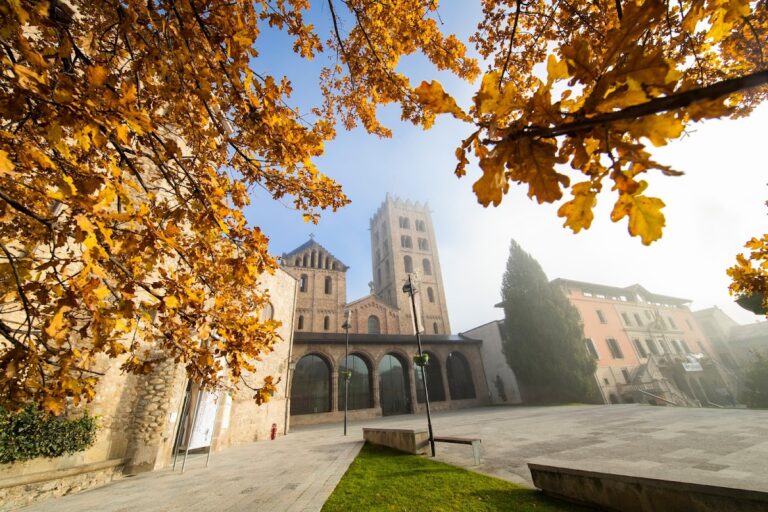
The upper parish church of Santa Maria stood beside the castle and is represented by eleventh-century Romanesque ruins. The associated church retains its apse, the semicircular end of the building, together with several Lombard bands on a side wall. These narrow, slightly projecting strips of masonry form a repeated Romanesque exterior decoration. The surviving apse and wall details preserve the connection between the castle and the parish church that formed part of the endowment of Sant Joan de les Abadesses.