Schloss Waldeck: A Medieval Hilltop Castle in Germany


Site at a Glance
- Rating
- 4.5
- Popularity
- Medium
- Country
- Germany
- Primary era
- Medieval
- External website
- Open
- Eras represented
- Medieval, Early Modern
- Civilizations
- Holy Roman Empire
- Site type
- Military
- Remains
- Castle
On this page10 sections
History
Medieval origins and the Counts of Waldeck
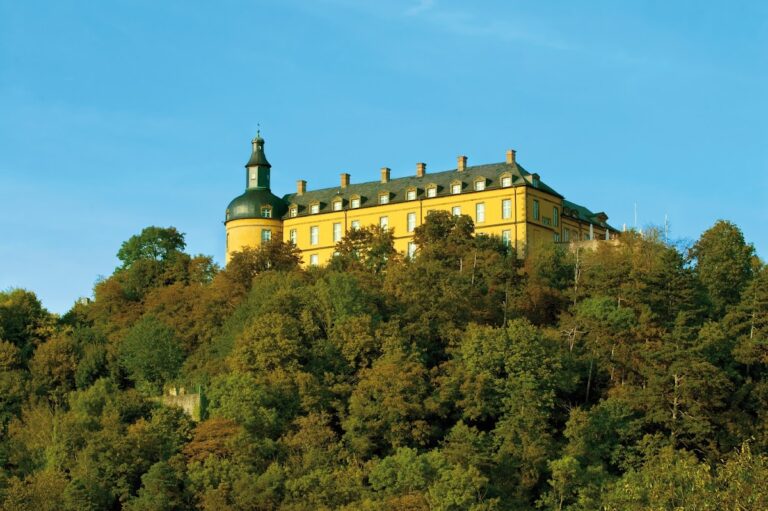
Schloss Waldeck, also known as Waldeck Castle, is a medieval hilltop castle in Waldeck, Germany. Its origins lie before 1120, the year in which it was first documented. Through the marriages of Count Widekind I of Schwalenberg to Lutrud of Itter and of his son Volkwin to Luitgard, daughter of Count Poppo I of Ziegenhain, the castle came into the possession of the Schwalenberg family. From 1180, a branch of that family adopted Waldeck as its dynastic name.
The castle was repeatedly renewed and enlarged. It served as the residence of the Counts of Waldeck until 1655, when the counts moved to Arolsen. This long period of comital occupation shaped the complex and left it with buildings and features associated with several stages of its development.
Fortress, barracks, and prison
After the counts left, Schloss Waldeck continued to serve military and administrative purposes. It first became a fortress and the seat of a castle commander, and later functioned as a barracks. From 1734 to 1868, the complex housed a penitentiary and a women’s prison, giving the former comital residence a new institutional role.
Public administration and present use
Since 1920, the complex has belonged to the Waldeck Domanial Administration, the public body responsible for managing the former territorial estates of Waldeck. Schloss Waldeck is treated as public property, and parts of the complex now serve as a hotel and museum.
Remains
Hilltop setting and entrances
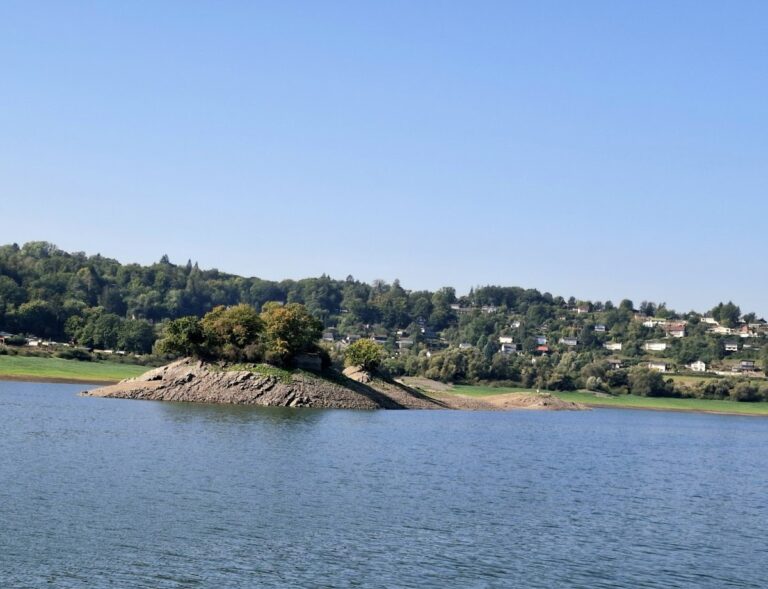
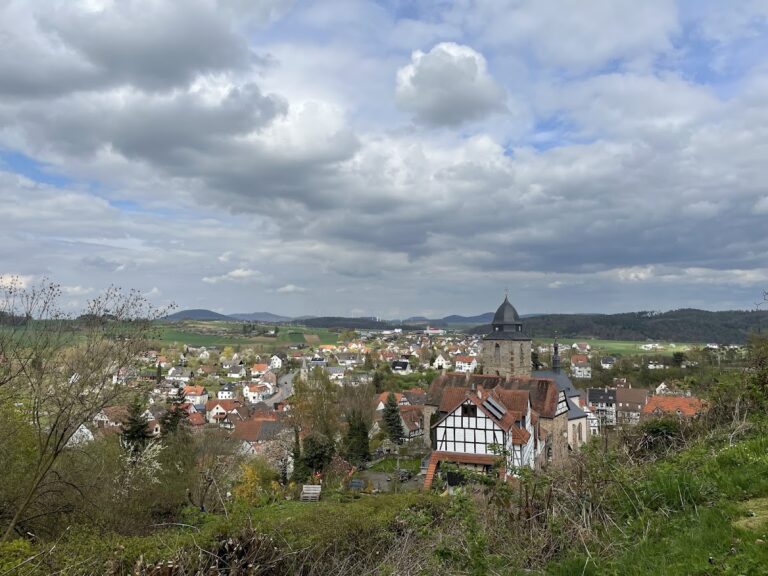
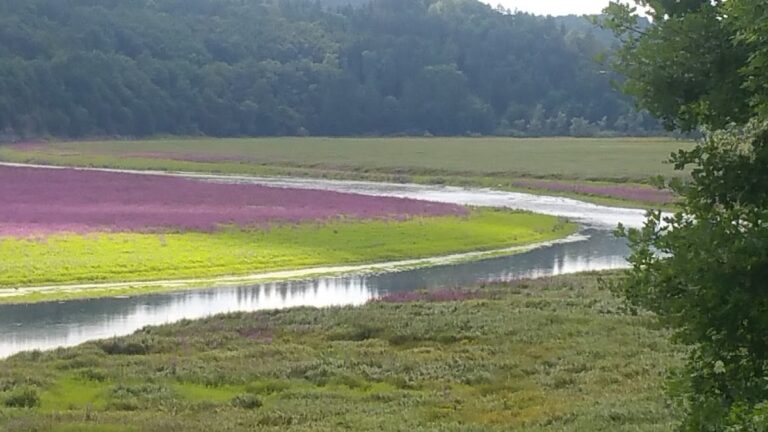
The castle occupies a steep, rocky, wooded hill at the western edge of Waldeck, above the northeastern shore of the Edersee in the northern part of the Kellerwald-Edersee Nature Park. The lower round gate beside the Powder Tower dates from 1637. The adjoining gatehouse was also built in 1637 and retains loopholes beside the arched entrance. A coat of arms belonging to the Waldeck-Pyrmont line, dating from around 1830, was added to the lower gate. The Upper Gate dates from 1756. Beyond it stand heavily altered buildings, including the present hotel complex, and the route continues into the castle courtyard.
Water supply and the Wildungen Wing
A castle well laid out in the sixteenth century reaches approximately 120 metres into the ground. Buckets were raised with a wheel mechanism. In 1612, a pumping system was planned to bring water from the Herrentränke in the valley to the castle, although whether the plan was completed remains uncertain.
The northern section is known as the Wildungen Wing, after the Wildungen branch of the Counts of Waldeck. Its basement is built into the rock and contains a water reservoir, an oil mill, and several ovens. The stair tower bears a coat of arms with the monogram of Andreas Herber, created in 1577. The wing’s octagonal tower displays the arms of three Waldeck lines: Waldeck and Runkel, Waldeck and East Frisia, and Waldeck and Hesse.
Keep and archive tower
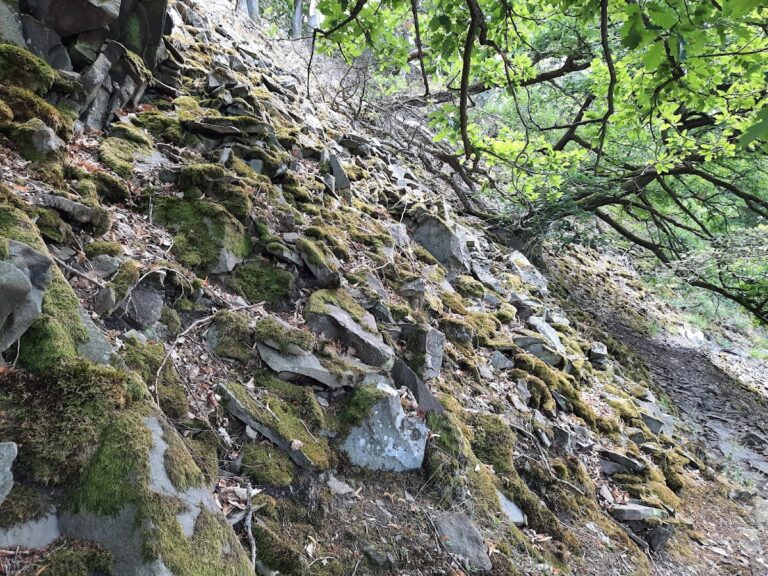
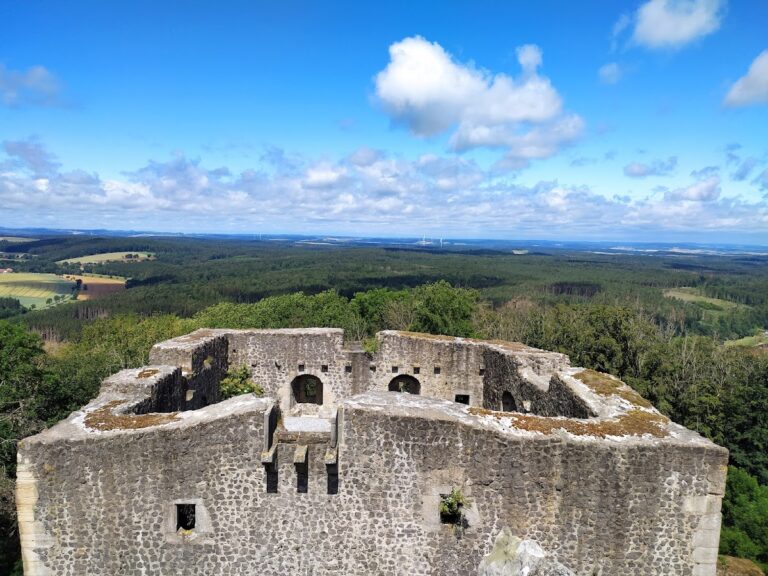
The keep stands on the eastern side of the complex. This three-storey defensive tower is built from Edersee greywacke, a hard, dark sandstone, and its walls are more than three metres thick. Dating from the late thirteenth or early fourteenth century, it is among the oldest surviving parts of Schloss Waldeck. The building is also called the Archive Tower because the counts’ archive was kept there from 1745 to 1761. Between 1952 and 1997, it was used as a water tower. A museum occupies a redesigned building beside it.
Southern terrace and Eisenberg Wing
The southern side opens onto the Altane, an elevated terrace attached to the castle. It looks toward the Eder dam to the south and across the Edersee to the west in suitable weather. Two guns made in Liège in 1862 stand on the terrace; they were used during the Franco-Prussian War of 1870 to 1871. A reconstructed pillory, a public punishment device, stands beside them. Its iron neck collar identifies it as a Kaak.
Until 1734, the southern side also contained the Eisenberg Wing, named after another principal branch of the Waldeck comital family. The wing now survives in the form of thirteenth-century vaulted cellars.
Western buildings and clock tower
The western part of the complex contains the Upper Gate Building, which served as an administrative office during the nineteenth century. It also includes an octagonal clock tower built after 1500 in the Late Gothic style. The surrounding buildings have been heavily altered and now house a restaurant.
Nearby sites