Burg Hohenschramberg: A Medieval Spur Castle in Germany


Site at a Glance
- Rating
- 4.6
- Popularity
- Low
- Country
- Germany
- Primary era
- Medieval
- External website
- Open
- Eras represented
- Medieval, Early Modern
- Civilizations
- Holy Roman Empire
- Site type
- Military
- Remains
- Castle
On this page8 sections
History
Burg Hohenschramberg is a medieval castle ruin in Germany above Schramberg, whose existing fortress was developed from 1457 as one of the last castles built in Germany. Also called Nippenburg, it became the central stronghold of the lordship of Schramberg.
Foundation and expansion
Hans von Rechberg acquired the medieval castle site in 1455 after obtaining Falkenstein, Schilteck, and Ramstein. These acquisitions enabled him to establish the lordship of Schramberg, with Hohenschramberg developed as its principal fortified seat. In 1464, Count Eberhard im Bart, the Württemberg ruler who later became its first duke, unsuccessfully besieged the castle.
The lordship and castle passed to the von Landenberg family of Thurgau in Switzerland in 1526. In 1547 they passed to Rochus Merz von Staffelfelden, chancellor of Further Austria in Alsace. He expanded the castle, and Emperor Charles V granted him market rights in the same year.
Habsburg rule and wartime capture
Hohenschramberg and the lordship of Schramberg remained under Further Austria, the Habsburg territories west of the Austrian hereditary lands, from 1583 to 1805. During the Thirty Years’ War, the major European conflict of 1618 to 1648, Württemberg forces under the commander Konrad Widerholt besieged and captured the castle in 1633.
In 1648, the castle and lordship were pledged to the Counts of Bissingen and Nippenburg. The counts initially lived at Hohenschramberg, but their first residence in the valley was built in 1772–1773. After that change, the hilltop castle was no longer their principal seat. French troops serving King Louis XIV set fire to it in 1689 during the War of the Palatine Succession, a conflict fought from 1688 to 1697 between France and a European coalition.
Ruins and preservation
Between 1957 and 1983, the Burgpioniere civic group carried out numerous excavations and preservation measures with support from the city of Schramberg and the state of Baden-Württemberg. The ruined castle is regarded as a symbol of Schramberg and as a surviving remnant of the former Further Austria territories.
Remains
Hilltop setting and defensive areas
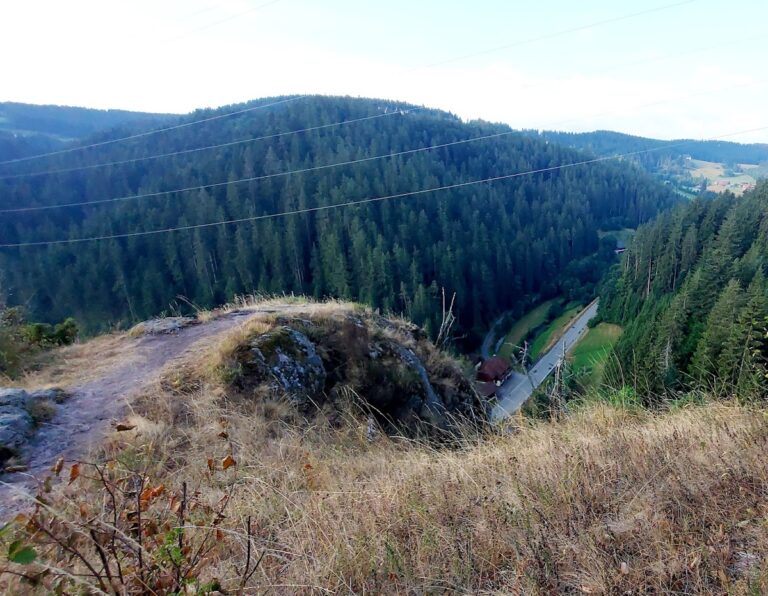
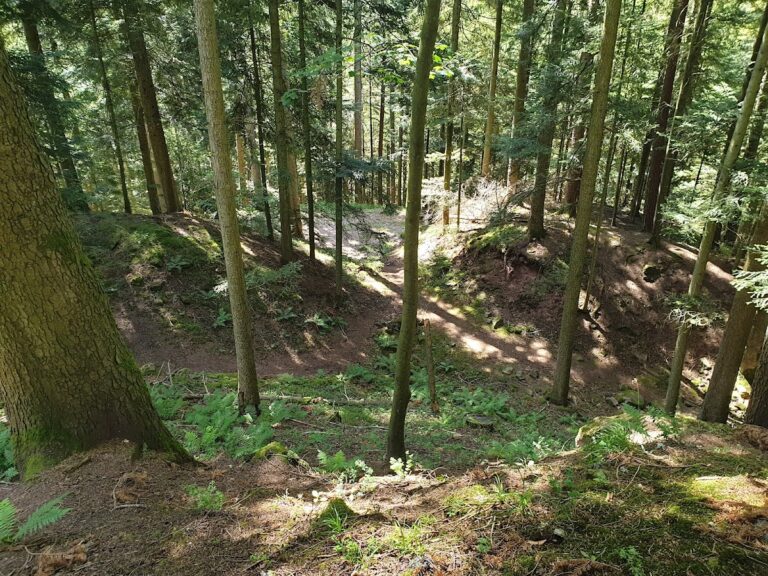
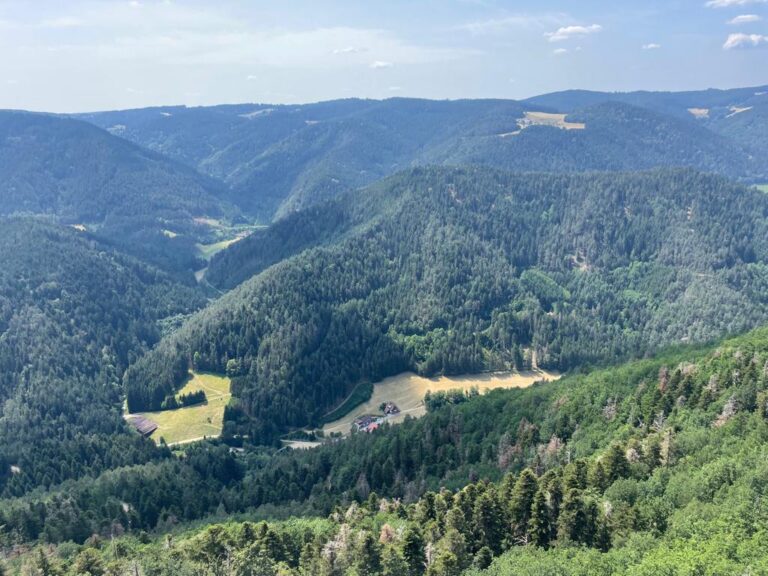
Burg Hohenschramberg is a spur castle, a fortified site built on a projecting ridge or mountain spur. It occupies the 636.2-metre-high southeastern spur of the Schlossberg, whose summit reaches 683.1 metres, in the Black Forest above the confluence of the Lauterbach and Schiltach at Schramberg. The elevated position provides extensive views over Schramberg, known as the “city of five valleys.” The surviving defensive areas include parts of the western outer bastion and its upper courtyard.
Central and residential buildings
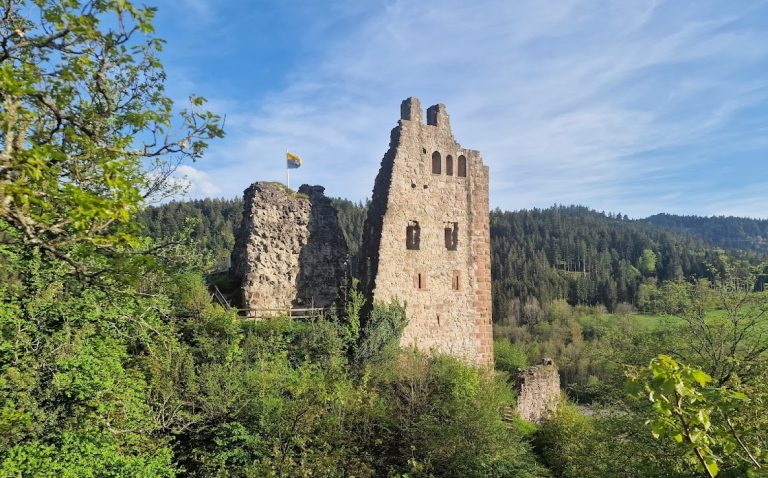
The surviving complex includes the chapel tower, the middle and rear castle, and part of the palas, the principal residential and representative building of a medieval castle. These remains form part of a ruined but comparatively well-preserved and extensive castle site.
Service buildings and eastern remains
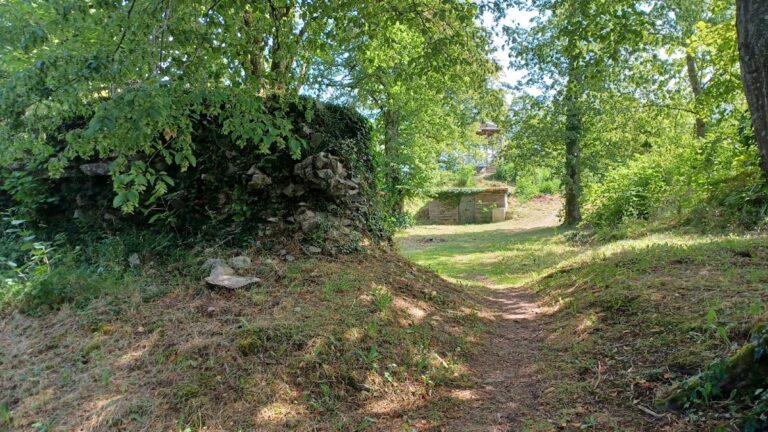
The Roßstall, or horse stable, survives within the complex. Foundations of the bathhouse, bakehouse, and additional buildings remain on the eastern and northern sides, extending the visible archaeological layout beyond the principal castle buildings.