Storchenturm Lahr: Remnant of a Medieval Water Castle in Germany




Site at a Glance
- Rating
- 4.4
- Popularity
- Low
- Country
- Germany
- Primary era
- Medieval
- External website
- Open
- Eras represented
- Medieval
- Civilizations
- Holy Roman Empire
- Site type
- Military
- Remains
- Castle
On this page10 sections
History
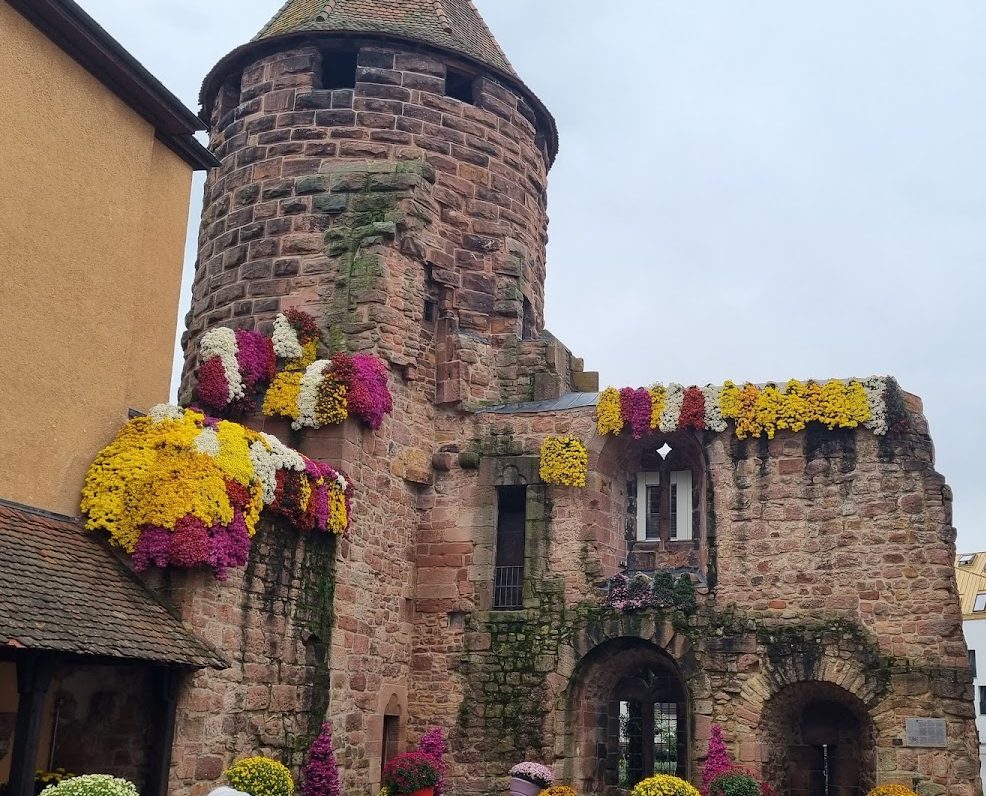
Storchenturm Lahr in Germany is the surviving northern tower of a medieval water castle, possibly built by the Lords of Geroldseck between 1220 and 1235 in the late Staufer period. Also known as Burg Lahr, the aristocratic lowland castle became a landmark of Lahr and the ancestral seat of the Lower Lordship, later called the Lahr-Mahlberg lordship.
The Geroldseck lordship
The castle was already involved in conflict by 1250, when Walter I of Geroldseck and his son were detained there by Conrad of Freiburg. After the Geroldseck family divided its holdings in 1277, the castle became the principal seat of the Lower Lordship.
When the Lahr-Mahlberg line ended in the male line with Henry III of Geroldseck in 1426, the inheritance passed to Count John I of Moers-Saarwerden. The counts pledged half of the inheritance to the Margraves of Baden in 1442, and Baden purchased that share in 1497. The Lahr-Mahlberg lordship was then jointly held by Baden and Moers-Saarwerden.
Partition and destruction
The political arrangement changed as the ruling families changed. The Margraves of Baden were succeeded by the Margraves of Baden-Baden in 1533, while the Counts of Moers-Saarwerden were succeeded by the Counts of Nassau-Saarbrücken in 1527. In 1629, religious tensions between Catholic Baden-Baden and Protestant Nassau led to the division of the joint lordship by lot. Mahlberg went to Baden-Baden, while Lahr passed to different Nassau lines.
The castle survived the Thirty Years’ War, the European conflict of 1618 to 1648 shaped by religious and political struggles, without damage. French forces led by François de Créquy destroyed it on 15 September 1677. An earthquake on 3 August 1728 caused further severe damage. After Lahr acquired the property, the castle was dismantled in 1757, with the Storchenturm left standing.
Later use and conservation
The surviving tower continued to serve as a prison until 1861. Its present name refers to the storks that regularly bred there until the 1960s and fed in the wetlands around the city. In June 2011, the tower was closed after sandstone fragments threatened to fall and cracks were found in its masonry. A major conservation project stabilized the structure and extensively restored its sandstone.
Remains
The castle was a regular rectangular lowland-water-castle complex with four round corner towers. Its plan belongs to a late Staufer type, a regular castle layout associated with the later period of the Staufer dynasty, a medieval ruling family connected with the Holy Roman Empire. The surviving complex includes the Storchenturm, remains of another tower, and remnants of the castle walls.
Towers and wall remains
The Storchenturm
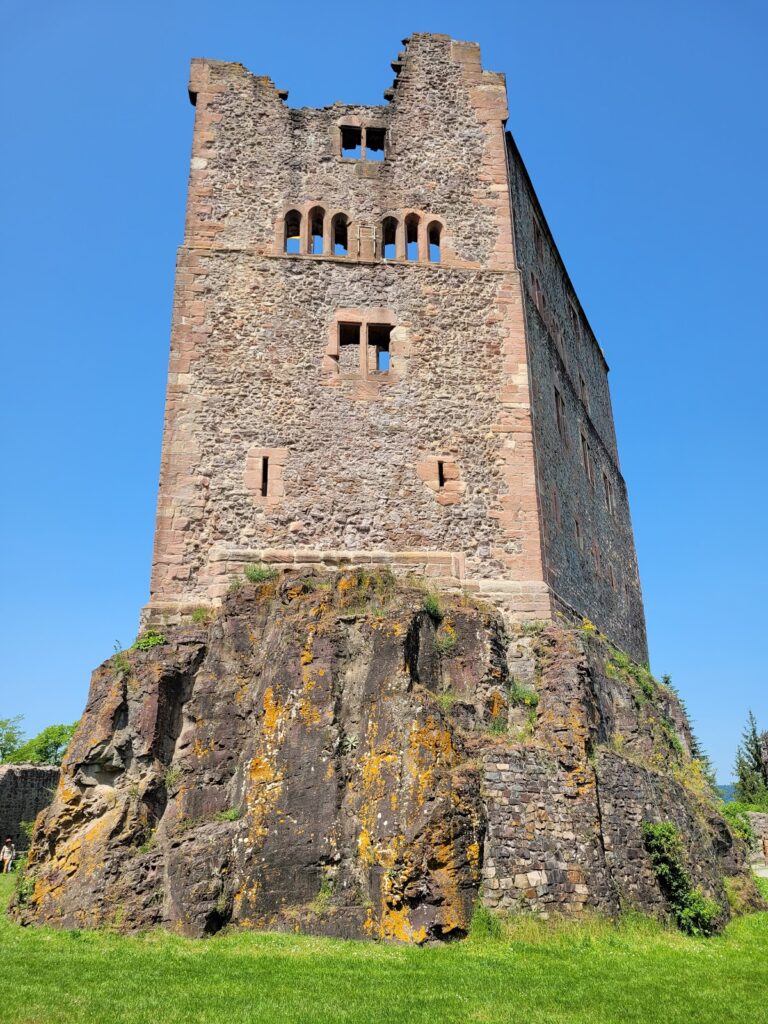
The Storchenturm formed the northern corner of the original castle. It now contains a small exhibition about the history of the water castle, while its viewing platform overlooks Lahr’s old town and the foothills. The tower’s sandstone masonry was extensively restored and stabilized during the conservation work carried out after the damage identified in 2011.
The eastern tower
The remains of the eastern tower were uncovered in the 1980s. They lie in the basement of the former Café Kopf on Marktstrasse and are no longer open for viewing.
The southern tower
Foundations of the southern tower were discovered during the construction of a department store in the 1960s. They were subsequently removed.
The western tower and castle walls
The western tower was buried beneath a concrete cover in 2003. Along with the surviving tower remains, fragments of the castle walls preserve part of the rectangular complex that once surrounded the water castle.
Nearby sites