Rocca Paolina: Renaissance Fortress and Underground City in Perugia


Site at a Glance
- Rating
- 4.7
- Popularity
- Medium
- Country
- Italy
- Primary era
- Early Modern
- External website
- Open
- Eras represented
- Classical, Early Modern
- Civilizations
- Etruscan, Papal States
- Site type
- Military
- Remains
- Fort
On this page14 sections
History
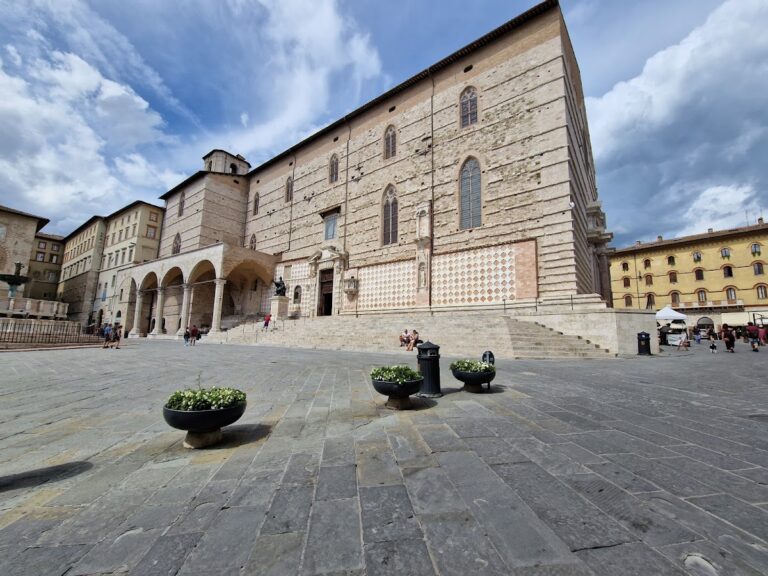
Rocca Paolina is a Renaissance fortress in Perugia, Italy, built between 1540 and 1543 at the command of Pope Paul III, who led the Catholic Church from 1534 to 1549. Designed by Antonio da Sangallo the Younger and Alessandro Tomassoni da Terni, it enforced papal authority over the old city after the Baglioni family’s revolt and remained an expression of that authority until the upheavals surrounding Italian Unification in 1860 and 1861.
Papal fortress and urban destruction
The Baglioni were a powerful Perugian family that dominated the city during the fortress’s construction and led the uprising against the pope. Rocca Paolina was placed across much of Perugia’s southern slope, occupying the site of the Baglioni residences. Its construction required the demolition of about 300 houses, the whole settlement of Santa Giuliana, several towers and churches, and the Baglioni palaces.
Santa Giuliana’s churches and convents were demolished completely, while their building materials were reused in the new fortress. The complex enclosed streets, courtyards, houses, and other earlier urban structures within its perimeter. In this way, the fortress not only imposed a new military structure on the southern part of the city but also incorporated substantial parts of the older urban fabric beneath it.
Destruction and transformation
Rocca Paolina was partly destroyed during the upheavals of 1848 and rebuilt in 1860 at the request of Pope Pius IX, who headed the Catholic Church from 1846 to 1878. After Perugia was annexed to the Kingdom of Italy, systematic demolition continued from the initial post-1848 phase through the late nineteenth century. The three principal sections of the fortress, the Palazzo Papale, the Corridore, and the Tenaglia, were ultimately eliminated as standing structures.
The demolition made room for nineteenth-century urban developments including Piazza Italia, Via Masi, the Carducci Gardens, and Viale Indipendenza. The sixteenth-century Palazzo Papale was replaced by the present Palazzo della Provincia, while other nineteenth-century buildings and gardens were established above earlier medieval structures. Underground areas belonging to the former Palazzo Papale remained buried and neglected for several decades.
Rediscovery and modern use
Clearance, restoration, and the removal of accumulated debris began in 1932 and continued until 1965. The recovered spaces then opened to the public as the “underground city.” Since 1983, a mechanized pedestrian route has linked the bus station and Piazza Italia with Piazza Partigiani and the Etruscan-Roman acropolis through the fortress. The surviving spaces are also used for cultural events.
Rocca Paolina later became associated with Giosue Carducci’s poem Il canto dell’amore. The poem presents the fortress as the expression of Pope Paul III’s military response to Perugia’s unruly population, preserving a literary interpretation of the building’s political purpose.
Remains
Rocca Paolina was built as a Renaissance fortress of ashlar masonry, meaning carefully dressed stone blocks, and brick. Its original plan had three principal parts: the Palazzo Papale, the Corridore, and the Tenaglia. The Tenaglia faced the countryside and the approaches beyond Perugia. Houses, streets, towers, and courtyards that predated the fortress were enclosed beneath powerful vaults, forming the underground level that survives as the principal physical remnant.
Underground fortress and earlier city
Palazzo Papale
The surviving underground complex consists chiefly of subterranean spaces belonging to the former Palazzo Papale. These vaulted areas preserve the lower level of the fortress and form the restored “underground city.” The spaces retain the enclosed remains of earlier urban features, including parts of the streets, houses, towers, and courtyards absorbed into the fortress during its construction.
Porta Marzia
The ancient Etruscan Porta Marzia, an Etruscan gateway incorporated into the later fortifications, remains along the street that bears its name. The Etruscans were an ancient people of central Italy whose civilization preceded Roman control of the region. At Rocca Paolina, the gateway forms part of the brick defensive works of the later fortress.
Giuoco del Pallone
Stone remains of the former Giuoco del Pallone are preserved within the fortress. This was a wooden stadium built for a historical ball game played in a purpose-built arena, adding evidence of a sporting space to the complex’s military and urban remains.
Routes, waterworks, and modern artworks
Underground route
The underground route begins at Piazza Partigiani, at the base of the Etruscan-Roman acropolis, and continues through the fortress toward Piazza Italia. Escalators installed from 1983 run along the outer side of the walls before reaching the subterranean areas, connecting the surviving spaces with the city’s upper and lower levels.
Grande Nero
The former water hall served as a reservoir for potable water during the 1950s. It now houses Alberto Burri’s Grande Nero, installed in 1984 at the artist’s recommendation. The work is a polyhedron more than seven metres high, formed from six black-painted, box-shaped steel elements. A lunette in the upper element turns through an electrically powered mechanism.
The Flight of Doves
Massimo Pierucci’s The Flight of Doves, dated 1986, is installed along the escalator route and can be seen from its first sections. Perugia dedicated the work to Olof Palme, the Swedish political figure associated with pacifist positions, in memory of his violent death in 1986.
Monument to Umbrian democrats
At the entrance to the CERP Rocca exhibition centre stands Romeo Mancini’s bronze monument of 1985. It commemorates Umbrian democrats who were victims of Fascist squad violence in 1921 and 1922. Mancini donated the monument to the city, giving the fortress a further commemorative layer within its surviving underground setting.