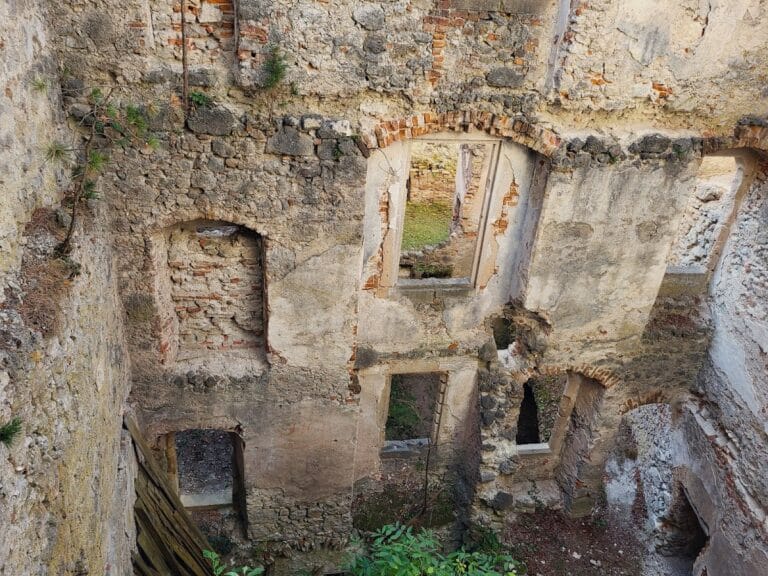
Araburg Castle Ruins: A Hilltop Fortress in Austria


Site at a Glance
- Rating
- 4.7
- Popularity
- Low
- Country
- Austria
- Primary era
- Medieval
- External website
- Open
- Eras represented
- Medieval, Early Modern
- Civilizations
- Habsburg, Holy Roman Empire
- Site type
- Military
- Remains
- Castle
On this page7 sections
History
Araburg Castle Ruins are the remains of a hilltop castle in Austria, near Kaumberg in Lower Austria, built by medieval German-speaking nobles in the twelfth century and expanded through the seventeenth century. The name derives from the Araburg family and is explained as meaning “Eagle Castle.” Its position above the Triesting Valley gave the fortress a defensive role and later connected it with the region’s religious history.
Medieval origins and expansion
Araburg was established in the twelfth century and grew through repeated additions until the seventeenth century. The castle’s changing form reflects its long use as a fortified residence and administrative centre under successive owners.
Sebald Pögl and the sixteenth century
In 1528, the sixteenth-century nobleman Sebald Pögl the Younger acquired Araburg. He then adopted the title “von Reifenstein und Arberg,” linking his name to his possessions and status.
During the first Ottoman siege of 1529, a major Habsburg-Ottoman campaign that affected fortified places across Central Europe, Araburg provided refuge for the local population. The castle also became involved in the Counter-Reformation, the Catholic Church’s institutional response to the spread of Protestantism, and in the religious conflicts between Catholics and Protestants.
Abbey ownership and destruction
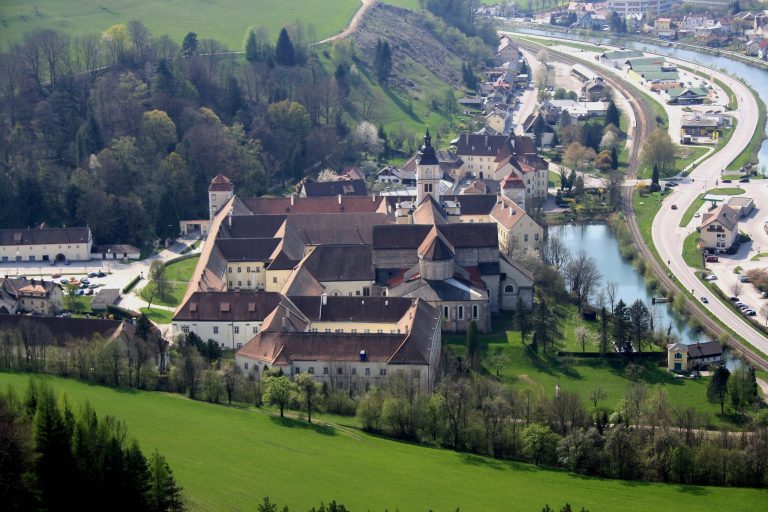
Araburg passed through the hands of several owners, including the Ruckendorffer family. From 1625 onward, it belonged to Lilienfeld Abbey, a Cistercian monastery. The castle was completely destroyed during the second Ottoman siege in 1683 and has remained a ruin since that event.
Further damage occurred during the Second World War. Renovation work in the 1960s helped preserve the surviving remains. Araburg is protected as a monument under Austrian heritage law. The summit is also crossed by the Wiener Wallfahrerweg and the Via Sacra, a traditional pilgrimage route to Mariazell, connecting the ruin with established regional pilgrimage traditions.
Remains
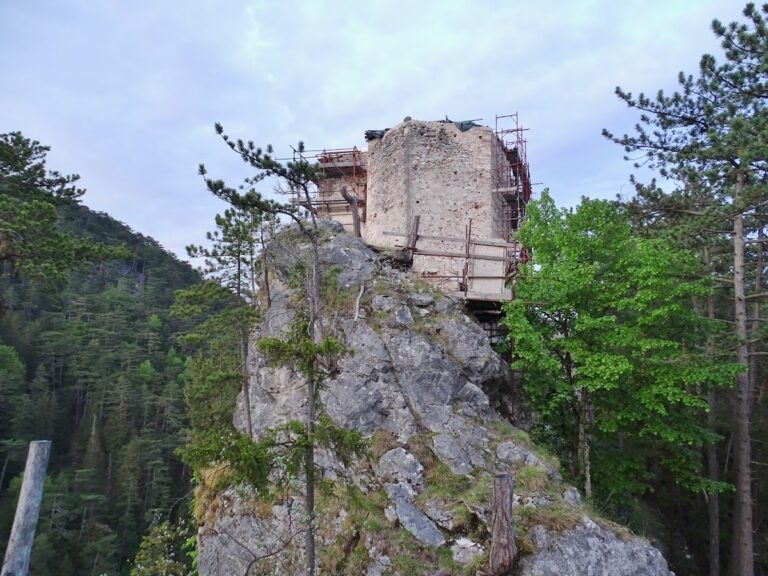
The ruins occupy the summit of Araberg in Laabach, near the settlement of the same name in the municipality of Kaumberg. The castle stands in the Triesting Valley within the Vienna Woods, at approximately 800 metres above sea level and above the Triesting River. It is described as the highest castle ruin in Lower Austria.
Surviving complex
The surviving castle is arranged around a first courtyard, a second courtyard, and an inner courtyard. The remains include St George’s Chapel, the castle chapel, together with a former farm estate. These elements preserve the distinction between the fortress’s enclosed internal spaces, its religious building, and its agricultural functions.
Defensive tower and summit
The principal surviving defensive structure is a 27-metre-high bergfried, a tall, generally non-residential defensive tower characteristic of medieval Central European castles. In 1901, the tower was converted into a lookout tower. Its elevated position provides views toward Schneeberg and across large parts of the Alpine foothills.