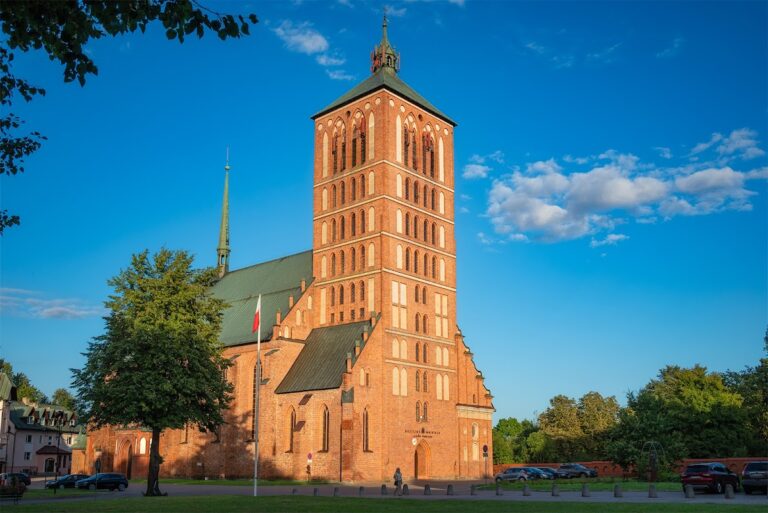
Citadelle Pillau: A Coastal Fortress in Russia


Site at a Glance
- Rating
- 4.6
- Popularity
- Medium
- Country
- Russia
- Primary era
- Early Modern
- External website
- Open
- Eras represented
- Early Modern, Modern
- Civilizations
- Swedish
- Site type
- Military
- Remains
- Citadel
On this page12 sections
History
Citadelle Pillau is a coastal fortress in historic Pillau, now Baltiysk in Russia, founded during the seventeenth century and established by Swedish forces during the Thirty Years’ War. Its foundation is dated to 1625 or 1626, and the fortress controlled the passage between the Vistula Lagoon and the Baltic Sea.
The strait and Swedish occupation
The fortress occupied a position shaped by major changes in the local waterways. The earlier Lochstedt passage began to silt up in 1311, while a storm surge created the Pillau Strait in 1497. The new channel, about 550 metres long and 360 metres wide, allowed Hanseatic cogs to reach the lagoon and Königsberg. Whoever controlled it could regulate shipping, collect customs duties, or interrupt Königsberg’s maritime commerce.
The Thirty Years’ War was a European conflict fought from 1618 to 1648 amid religious, dynastic, and territorial struggles. On 6 July 1626, Sweden’s King Gustav II Adolf arrived at Pillau with 37 ships and captured the town in three hours. Swedish forces held Pillau for ten years, enlarged the existing earthworks, and established the fortress. Formal construction is also dated to 1632, when the Dutch military engineer Matias Ventz directed the work.
Transfer to Brandenburg
After the 1635 truce with Prussia, Pillau residents purchased the unfinished fortress for 10,000 thalers, financed by an annual charge of three guilders on each household. Brandenburg troops entered Pillau in 1636. During the supply crisis of the winter of 1637–1638, Elector George William reorganized provisions for the garrison, imposed a tax of two marks, and required peasants to provide half a Schaffel of grain. A Schaffel was a historical grain measure whose capacity varied by locality.
Under the Treaty of Labiau in 1656, Frederick William, the Great Elector of Brandenburg, received the fortress from Sweden and developed Pillau as a Brandenburg naval base. The Great Elector was the ruler who consolidated Brandenburg’s military and naval power. Construction was completed in 1670, although modernization continued for roughly three centuries. Stone came partly from Balga Fortress and partly from Swedish suppliers. By order of King Frederick I, quarries near Balga and Lochstedt were established from 1701.
The fortress remained dedicated to military use and contained an arms arsenal. The settlement expanded during the Swedish period and acquired its first wooden church. A stone replacement with an organ was built in 1660. Population growth resumed after Pillau became a Brandenburg naval base, drawing pilots, merchants, and former officers.
Expansion, war, and military renewal
In 1725, King Frederick William I granted Pillau town rights and expanded the fortress to approximately its later extent. Russian forces occupied the town and fortress from 1758 to 1762 during the Seven Years’ War, a European conflict fought from 1756 to 1763. French troops unsuccessfully besieged Pillau in 1807 during the War of the Fourth Coalition, part of the Napoleonic Wars. The fortress remained Prussian under the Peace of Tilsit.
The surrounding sand created a continuing problem. Coastal vegetation was cleared in 1657 to improve observation of approaching ships, but drifting sand then threatened the fortifications. Trees and shrubs were planted intensively from 1670, and by the beginning of the Seven Years’ War some defensive works had been buried by sand.
In 1770, Frederick II ordered that Pillau should no longer be treated as a fortress town. Its guns were transferred to Kolberg and Graudenz in 1777, while the artillery regiment moved to Königsberg. A battalion returned for garrison duty in 1788, and on 30 May 1789 Frederick William II ordered the fortress to be revived. The resulting project was largely new construction rather than a simple restoration. General of Infantry Wichard Joachim von Möllendorff directed the work in 1790, Paul von Gonzenbach took over in 1791, and Major von Laurens later continued it. Rebuilding and dune stabilization proceeded from 1790 to 1805 and cost 645,000 thalers.
During the period of reduced military status, approximately 500 civilians lived inside the fortress by 1790, while 100 soldiers remained to guard prisoners. By the beginning of the twentieth century, the fortress had been restored but was militarily obsolete, and barracks stood within its walls. From 1888 it was also known as Fort Stiehle, named after the nineteenth-century Prussian general Gustav von Stiehle. On 1 April 1921, the fortress was transferred to the navy.
Twentieth-century changes
On 25 April 1945, the Red Army captured Pillau and its fortress as the last city in East Prussia, following the site’s exposed wartime position. The fortress was closed to civilians from 1945. A branch of the Baltic Fleet Museum opened there in 1999, and the fortress became a cultural heritage property of regional significance in Russia in 2007.
Remains
The surviving fortress is organized around a nearly regular pentagon with sides about 80 metres long. Each corner carries a projecting bastion, a fortified platform designed to provide flanking fire along the walls. Broad ditches and ramparts enclose the main citadel, while detached outer works and later coastal defenses extended the system beyond it.
Citadel and outer works
The five bastions are named Albrecht, Preussen, König, Königin, and Kurprinz, also called Kronprinz. Five external ravelins, detached outer works placed beyond the main walls to protect gates or curtain walls, were known as Ludwig, Storchnest, Faulwinkel, Kronwerk, and Schinkenschanz. Faulwinkel and Kronwerk had been completed and enclosed by stone walls by 1647. The other three initially consisted of earthworks, and construction of Ludwig began in 1658.
Gates and interior buildings
Main gate
The fortress had three gates: Haupttor, the main gate, together with Faulwinkeltor and Plantagentor. Haupttor was renovated in 1688 and decorated with Mars, the Roman god of war, between sculptures of the Brandenburg Electors George William and Frederick William. A nearly life-size equestrian statue of the Great Elector was placed beside the gate in 1690. Designed by the architect Kirschkopf, it was partly damaged by wind and rain. A watchtower was added above the gate in 1730, and the Mars sculpture was moved to Faulwinkeltor. Local tradition later interpreted the figure as Gustav II Adolf looking toward Sweden.
Arsenal
An arsenal, or building for storing weapons and military equipment, was constructed in 1707 to designs by Ludwig Schaltheiss von Unfried, chief director of the East Prussian building administration. It stood for two centuries, until 1916, and was later used as a local history museum.
Military buildings
A plan from 1638 shows the governor’s house, a church, stables, and residential barracks within the fortress. The governor’s house, built in 1657, was replaced by a commandant’s office in 1739. The main guardhouse and the prisoners’ Stick House were both built in 1730 and demolished in 1888. A provisions store dating from 1731 collapsed in 1738. Armouries, magazines, barracks, administrative buildings, and other military installations formed part of the wider complex, substantial portions of whose historic fortifications survive.
Forward batteries and coastal defenses
By the beginning of the twentieth century, the defensive system combined the seventeenth-century citadel with forward batteries and other fortifications. A redoubt stood on the Russian Dam, while a crownwork on the opposite side of the strait consisted of two bastion fronts with wings. An open coastal battery there mounted five 210-millimetre guns, later replaced by gun turrets.
Further batteries and fortifications occupied an elevated ridge along the northern shore of the spit. They carried 28 guns ranging from 150 to 210 millimetres. Fort Stiehle strengthened the landward front toward the Samland Peninsula, between the seashore and Pillau. The wider defensive system contained as many as 125 guns and housed one infantry battalion and one artillery battalion in peacetime.
Nearby sites