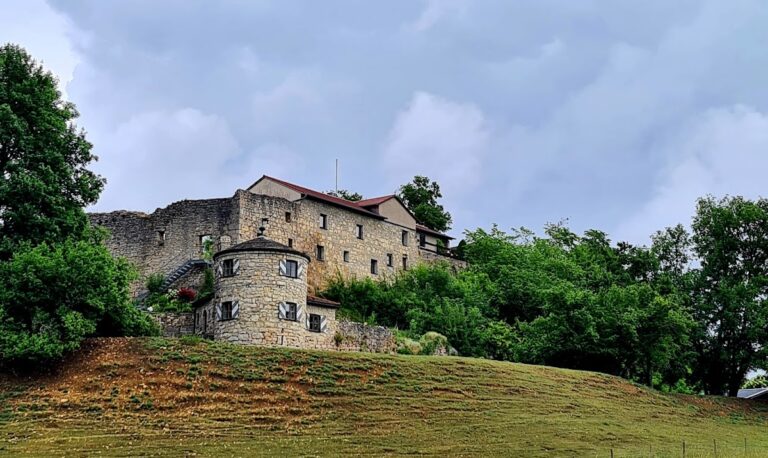
Burgruine Graisbach: Medieval Hilltop Castle Ruins in Marxheim, Germany


Site at a Glance
- Rating
- 3.5
- Popularity
- Very Low
- Country
- Germany
- Primary era
- Medieval
- Eras represented
- Medieval
- Civilizations
- Duchy of Bavaria, Holy Roman Empire
- Site type
- Military
- Remains
- Castle
On this page10 sections
History
Origins and the Lechsgemünd Counts
Burgruine Graisbach is a medieval hilltop castle ruin in Germany, built by the Lords of Graisbach around 1130 at the northern edge of Graisbach, a district of Marxheim. Its elevated position made it a fortified residence and stronghold.
During the thirteenth century, the castle passed to the Counts of Lechsgemünd. Their ancestral seat, Burg Lechsend at the mouth of the Lech near Marxheim, was destroyed by Regensburg merchants in 1248. The counts then adopted the name Lechsgemünd-Graisbach, linking their new designation to Graisbach.
Wittelsbach Administration and Decline
Gebhard III of Graisbach, Bishop of Eichstätt and the last descendant of the Lechsgemünd family, died in 1327. The property consequently passed to the Wittelsbachs, the German ruling dynasty that held the Bavarian ducal title. Under their authority, Graisbach became an administrative seat for ducal officials.
The castle was enlarged during the thirteenth and fourteenth centuries, but parts of it were destroyed in the fifteenth century. In 1523, the regional court was moved from Graisbach to Monheim, reducing the castle’s administrative role. During the eighteenth century, the remaining castle was dismantled and its materials were used as a quarry.
Modern Preservation
The ruins are owned by the Donau-Ries district. In 2005, the site was leased to a private individual under hereditary building rights, a long-term arrangement allowing use of buildings on land owned by another party. A dispute with the municipality over alleged alterations took place in 2009, the same year that a cellar vault collapsed. Burgruine Graisbach is designated as an architectural heritage monument in Bavaria.
Remains
Layout and Surviving Fabric
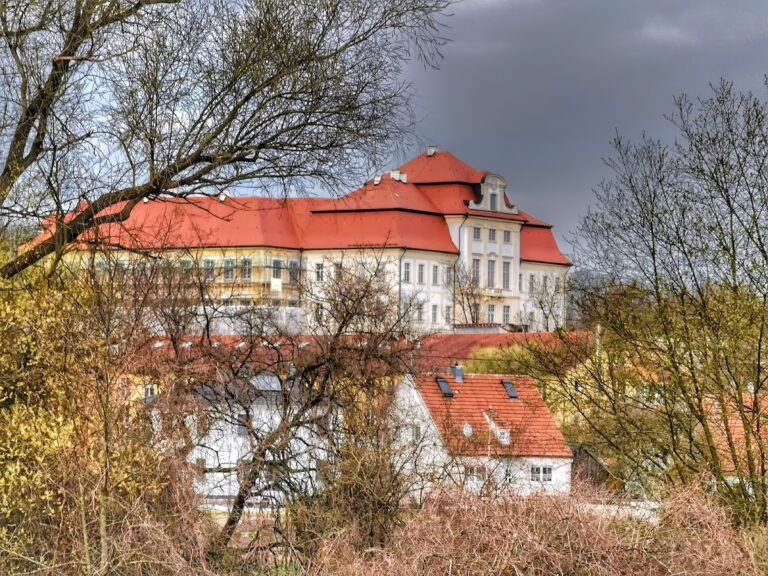
The ruin occupies the approximately 430-metre-high Schlossberg at the northern edge of Graisbach. The former hilltop castle consisted of a core castle, the principal fortified area, and an adjoining outer bailey used for defensive or service purposes. Substantial wall remains survive, and parts of the complex have been incorporated into houses.
Principal Structures
Castle Gate and Walls
The castle gate remains among the identifiable elements of the complex. It forms part of the surviving masonry, which also includes significant sections of the former castle walls. The preserved fabric reflects the castle’s earlier fortified arrangement and its later incorporation into houses.
Chapel of St Pankratius
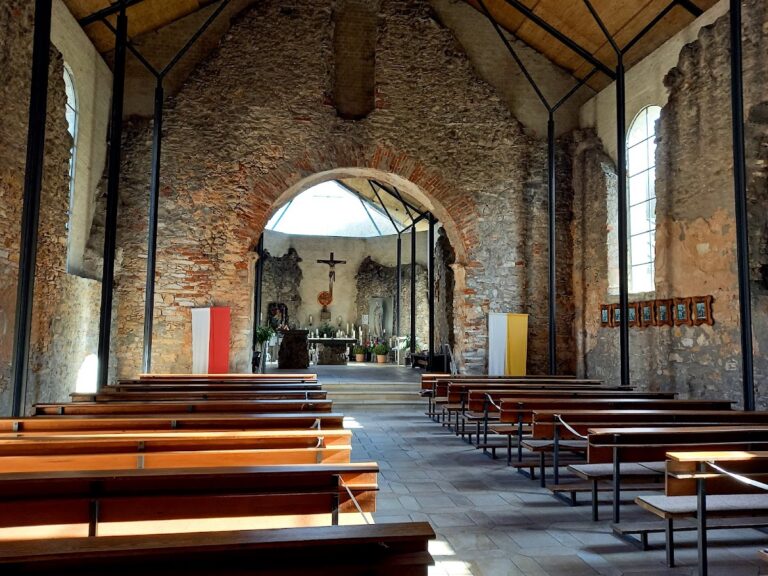
The Romanesque chapel of St Pankratius survives within the castle complex. Dating from the twelfth century, it belongs to the medieval architectural tradition known for massive masonry and rounded arches. Its dedication is to St Pankratius, an early Christian martyr and saint widely venerated in medieval Europe.
Sixteenth-Century Depiction
A drawing by Philipp Apian, a sixteenth-century Bavarian cartographer and artist, depicts Burg Graisbach during the sixteenth century and provides a historical representation of the castle before later dismantling reduced the complex.